
Most wrong AI descriptions trace back to a source you can find: an outdated page, a review profile in the wrong category, a third party article, missing facts on your own site, or a company with a similar name. Ask the engines what they say about you, check what they cite, and fix the error where it starts.
This is for the founder or marketer who’s asked ChatGPT about their own product and didn’t recognize the answer.
Maybe it quoted a pricing plan you retired last year. Maybe it filed you in the wrong category, or said you don’t integrate with a tool you’ve supported for years. It feels random, and it isn’t. AI engines build answers from what they can find about you, so somewhere out there, a source says exactly what the engine repeated.
Key Takeaways
- AI engines rarely invent a product description from nothing. Most errors repeat a real source that is wrong, old or ambiguous.
- Engines that search the web, such as Perplexity and ChatGPT with search, show their sources, so you can trace most errors in minutes.
- Fix your own site first. If your pricing, category and integrations aren’t stated plainly on your pages, engines fill the gap from elsewhere.
- Third party sources carry heavy weight. In Growfusely’s analysis of 1,739 AI citations, independent content and vendors’ own comparison pages drove about 79% of citations.
- Expect web search answers to change after the sources are recrawled, often within a few weeks. Answers from a model’s built in knowledge change only when it’s retrained.
What Does “Describing Your Product Wrong” Look Like?
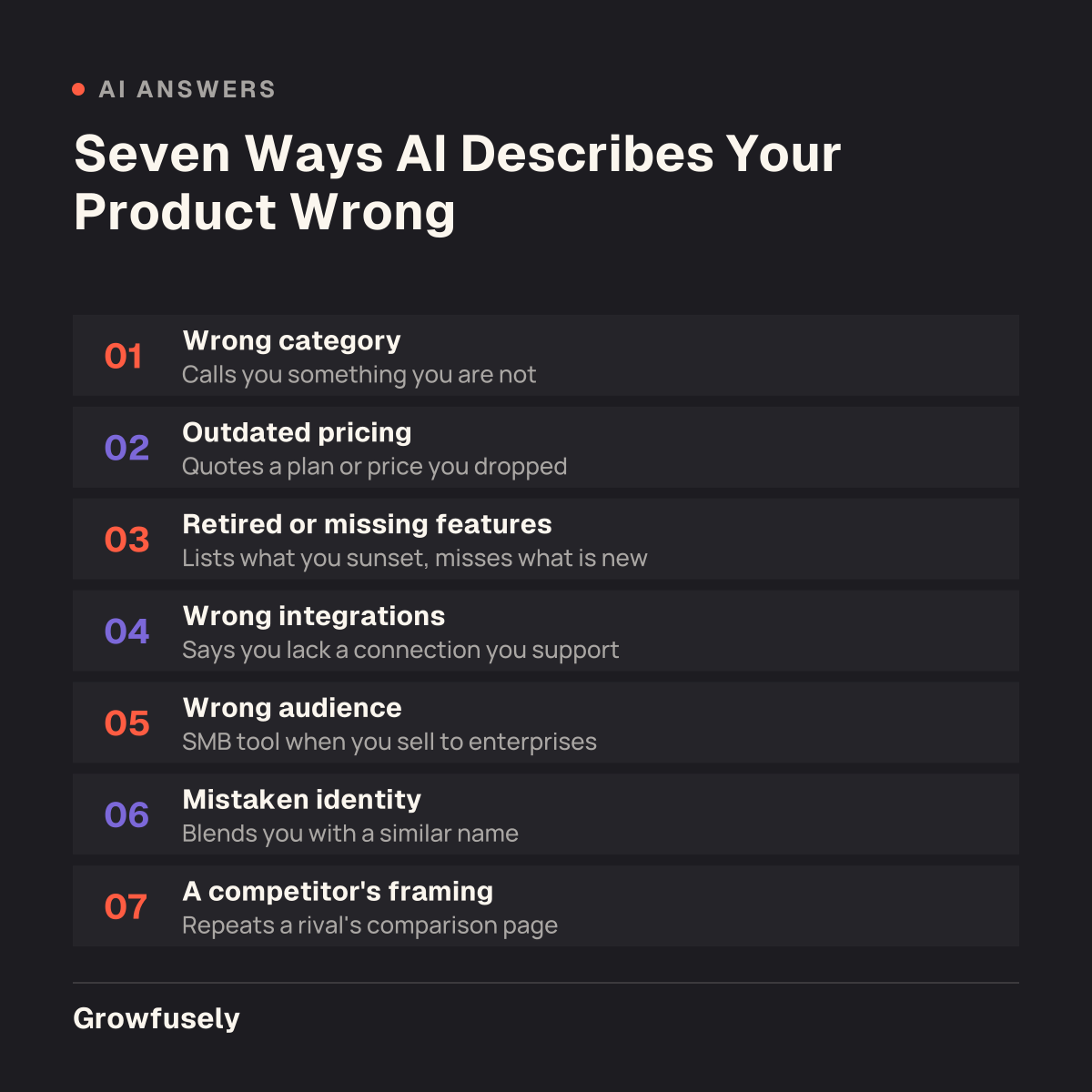
It usually falls into one of seven patterns.
Knowing which one you’re looking at tells you where to look for the source.
- Wrong category. You sell revenue intelligence software and the engine calls you a CRM, or you run a logistics network and it calls you a courier.
- Outdated pricing or plans. It quotes a tier or price you dropped.
- Retired or missing features. It lists something you sunset, or misses what you launched this year.
- Wrong integrations. It says you don’t connect to a tool you’ve supported for years.
- Wrong audience. It calls you an SMB tool when you sell to enterprises, or the reverse.
- Mistaken identity. It blends you with a company that has a similar name.
- A competitor’s framing. It describes you the way a rival’s comparison page does.
Here’s a composite example: a security SaaS company repositioned from compliance automation to a broader trust platform. A year later, ChatGPT still described it as a SOC 2 checklist tool, quoted its old starter price and listed a competitor as the “more complete” option. Every one of those claims came from a page that was once accurate.
Why Does AI Get It Wrong in the First Place?
Engines answer from two places: the web pages that they retrieve at the time of the question, and knowledge built into the model during training. Both of these can carry errors.
Retrieved answers repeat whatever the cited pages say. If a 2024 review roundup still ranks and lists your old pricing, the engine passes it on.
Built in knowledge has a cutoff date. If you repositioned after that date, the model may still know the older version of you.
Inconsistency makes both problems worse. When your homepage, review profiles, LinkedIn page and press coverage describe you differently, engines lose confidence in any one description. That problem has a name, entity drift, and it often produces vague or hedged answers more than outright wrong ones.
How Do I Find Out What AI Is Saying About Us?
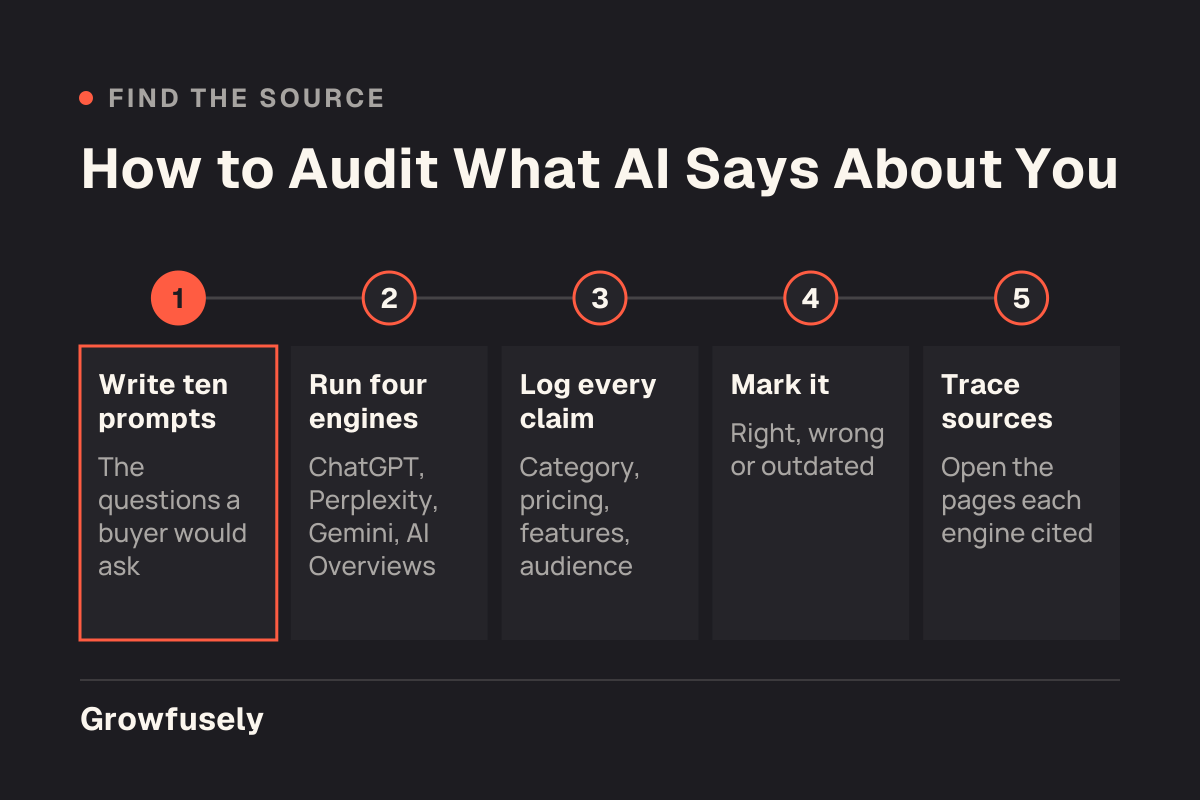
Run a short, repeatable audit across the engines your buyers use.
It takes about an hour the first time.
- Write ten prompts a buyer would actually type. Include “What is [your product]?”, “[Your product] pricing”, “[Your product] vs [competitor]”, “Best [category] for [use case]”, “Does [your product] integrate with [tool]?” and “Who is [your product] for?”
- Run each one in ChatGPT, Perplexity, Gemini and Google’s AI Overviews or AI Mode.
- Log every factual claim in a sheet: category, pricing, features, integrations, audience and competitors named.
- Mark each claim right, wrong or outdated.
- Record the sources each engine cited next to each wrong claim.
Save screenshots. You’ll need them later to measure whether your fixes worked.
How Do I Trace a Wrong Claim to Its Source?
Start with the citations.
Perplexity lists its sources by default, and ChatGPT shows them when it searches the web. Open each one and look for the wrong claim.
Most of the time you’ll find it on one of these: an old page on your own site, a review profile, a “best tools” roundup, a directory listing, a competitor’s comparison page or old press coverage.
If an answer cites nothing, the claim probably comes from the model’s built in knowledge. You can’t edit that directly. What you can do is make sure every current source agrees on the correct version, so the next model update has the right information to learn from.
Error by Error: Where It Comes from and How to Fix It
| What AI gets wrong | Usual source | Fix |
|---|---|---|
| Wrong category | Review profile category, old homepage copy, LinkedIn tagline | Choose one category phrase and update it on every surface |
| Outdated pricing or plans | Old pricing page still indexed, third party roundups | Redirect old pricing URLs, state current pricing plainly, ask roundup authors to update |
| Retired or missing features | Old feature pages, outdated comparisons, changelog gaps | Publish current feature and integration pages, keep a dated changelog, retire old pages with redirects |
| Wrong integrations | Missing integration pages, partner directories | Create one page per integration, update partner marketplace listings |
| Wrong audience | Case studies and reviews that skew to one segment | State who you serve on key pages, add proof from the segment you want |
| Mistaken identity | Similar company names, shared acronyms | Use your full name consistently, add Organization schema with sameAs links to your official profiles |
| A competitor’s framing | Rival comparison pages, sponsored roundups | Publish your own fair comparison page, request corrections where facts are wrong |
How Do I Fix It on Our Own Site?
Make the correct facts easy to find and hard to misread.
Engines quote clear, plain statements more readily than overdone marketing copy.
- State the basics in plain sentences: what you are, who it’s for, what it costs and what it integrates with. Put them on your homepage, product pages and an About page.
- Redirect or update old pages. A retired pricing page that still loads is a live source of wrong answers.
- Keep a dated changelog so engines can see what changed and when.
- [Publish your own comparison pages.] (https://growfusely.com/blog/competitor-comparison-pages-for-saas/) In Growfusely’s citation study, vendors’ own pages made up about 18% of all citations. A fair comparison you publish is one of the few sources about you, that you fully control.
- Add structured data such as Organization and Product schema. It supports clear copy and works alongside it.
How Do I Fix It on Other Sites?
Work through the sources the engines cited, starting with the ones they cite more often.
Update your review profiles first: category, description and pricing. Then directory and marketplace listings. Then email the authors of roundups and comparisons that state wrong facts. Keep the request short, factual and linked to the current page. Most editors will update a factual error when it’s easy to verify.
For a competitor’s comparison page, ask for corrections only on facts. Arguing about their opinions rarely works. Publishing a better comparison of your own is usually more effective.
Can I Ask OpenAI or Perplexity to Correct It?
You can send feedback, and you should, but don’t rely on it.
Most AI tools let you rate or report an answer. That’s a signal to the company. It doesn’t change what the engine tells the next person.
The fixes that last change the sources. When the pages engines retrieve say the right thing, the answers follow.
How Long Until the Answers Change?
For answers built from web search, it can take a few weeks after the corrected pages are recrawled. For answers from a model’s built in knowledge, it can take until the next model update, which may be months away.
Rerun your audit six weeks after the fixes. Compare the new screenshots with the old ones. That before and after is the most honest measurement available.
What I’d Do in Your Situation
I’d run the ten prompt audit across four engines this week and log every wrong claim with its cited source. That will usually give you a short list of three or four pages causing most of the problems.
Then I’d fix our own site first: plain statements of category, pricing, audience and integrations, plus redirects for anything retired. After that, review profiles, then outreach to the roundups.
What I wouldn’t do is start with schema markup or a press release. Neither one fixes the old page an engine is quoting.
Why Partner with Growfusely to Fix What AI Says About You?
We treat this as a source problem, because that’s where the fix lives. We find the pages behind each wrong answer and work from there.
- An AI answer audit across ChatGPT, Perplexity, Gemini and Google AI Overviews, with every wrong claim traced to its source.
- One agreed description of your category, audience and pricing, rolled out across your site and profiles.
- Correction outreach to the roundups and directories engines cite.
- Before and after measurement six weeks later.
Our research behind it includes an analysis of 1,739 AI citations across 128 B2B software buying queries.
Schedule a call and we’ll show you what AI currently says about your product.
Read Next
- What AI engines cite for B2B software, the 1,739 citation study
- Entity drift, why inconsistent descriptions make AI hedge
- You rank well and get no leads, when buyers decide inside AI answers

Pratik Dholakiya is the Founder of Growfusely, a SaaS SEO and AI Search Visibility agency.
