
ChatGPT leans on vendors’ own pages and tech media. Perplexity leans on independent content, YouTube and Reddit. Both draw about 79% of citations from independent content and vendor pages, so build that foundation once, then add a separate track for each engine.
In July 2026, I ran 128 B2B software buying queries through ChatGPT and Perplexity and recorded every source each one cited. That came to 1,739 citations across 16 software categories. The full study covers what AI engines cite overall.
This post focuses on one finding from that study. On the exact same questions, the two engines pulled from noticeably different kinds of sources. If you’re planning a single “get cited by AI” strategy, one of them is probably getting short changed.
Key Takeaways
- ChatGPT cited vendors’ own pages twice as often as Perplexity: 24% of its citations versus 12%.
- ChatGPT cited tech media three times as often: 15% versus 5%.
- Perplexity was the only engine citing YouTube and Reddit. All 47 YouTube citations and all 11 Reddit citations came from Perplexity.
- The overlap matters more than the gap. Independent content plus vendor pages made up about 79% of citations on both engines.
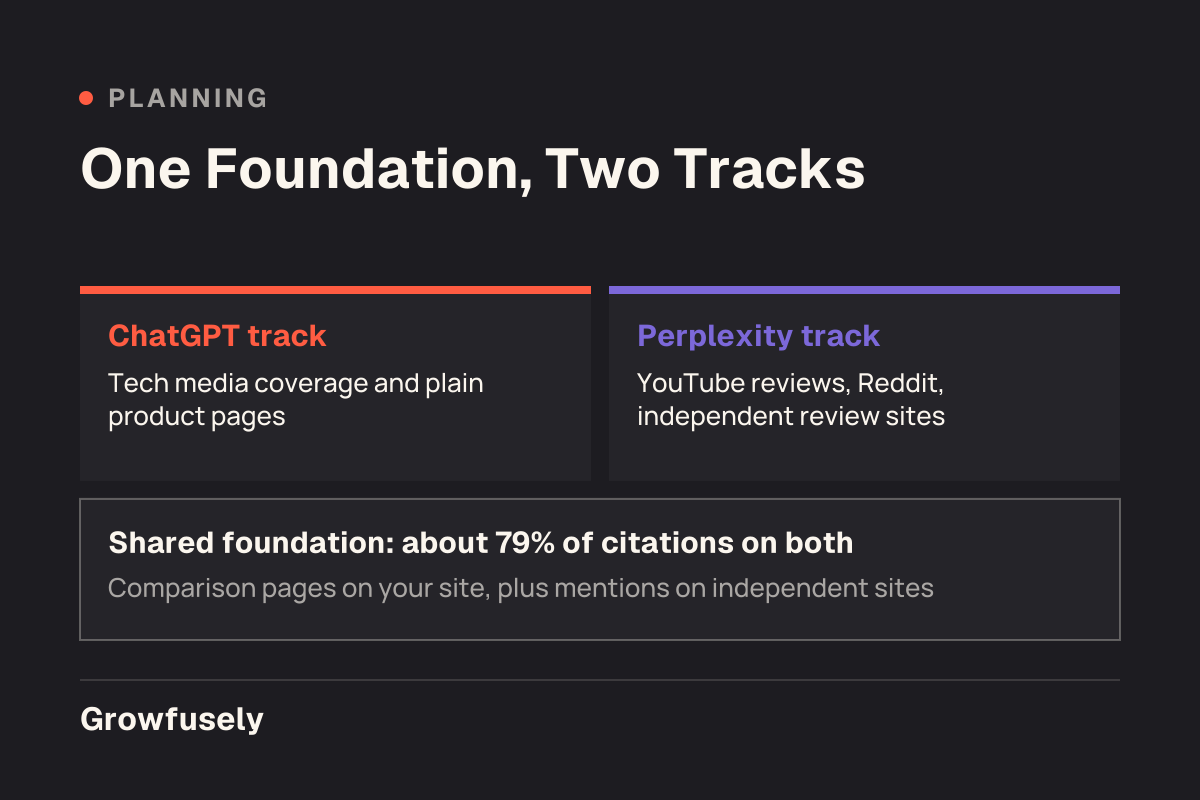
- Plan one shared foundation, then two smaller tracks: tech press and your own pages for ChatGPT, and video and community content for Perplexity.
How Different Are ChatGPT and Perplexity Citations?
Different enough to change where you spend effort.
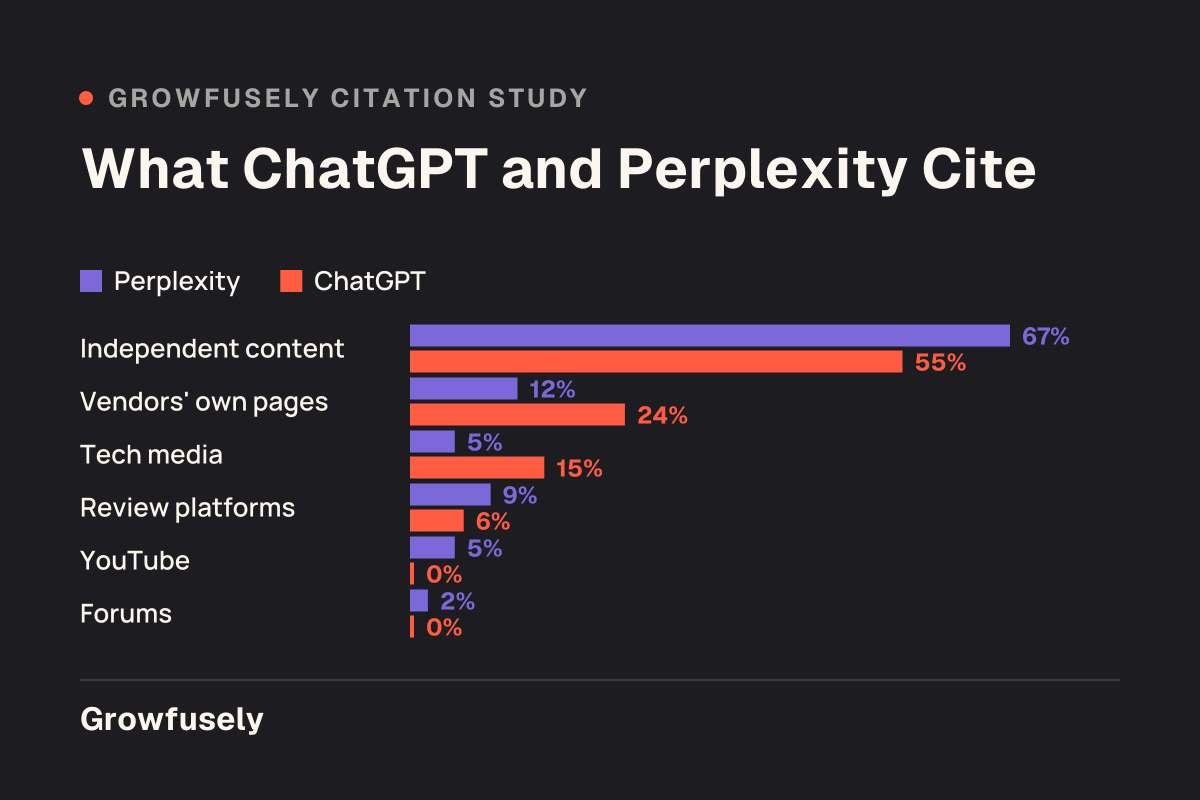
Here’s the share of each engine’s citations by source type, across the same 128 queries.
| Source type | Perplexity | ChatGPT |
|---|---|---|
| Independent content sites | 67% | 55% |
| Vendors’ own pages | 12% | 24% |
| Tech media | 5% | 15% |
| Review and comparison platforms | 9% | 6% |
| YouTube | 5% | 0% |
| Forums such as Reddit | 2% | 0% |
Perplexity produced 896 of the citations and ChatGPT 843, so the two samples are close in size.
What Do Both Engines Reward?
Independent content and vendors’ own pages, at almost exactly the same combined share.
On Perplexity they made up 79% of citations (67% plus 12%). On ChatGPT, also 79% (55% plus 24%).
The mix inside that 79% differs. Perplexity gets more of it from independent sites, while ChatGPT gets more from vendors’ own pages. Either way, the foundation is the same: honest, well structured comparison content on your own site, plus mentions on the independent sites that cover your category.
That’s why I’d build the shared foundation first. It gives you something that works across both engines.
What Does ChatGPT Lean On?
Your own pages and the tech press.
A quarter of ChatGPT’s citations pointed to the vendors’ own sites, usually comparison, alternatives or product pages.
Tech media made up 15% of ChatGPT’s citations. Across the whole study, the most cited domains in that group were TechRadar, TechRepublic, PCMag, Tom’s Guide and Forbes.
For ChatGPT, that means two priorities. Publish fair comparison pages that include you alongside real competitors. Then earn coverage and roundup placements in the tech publications your category’s buyers read. Our guide on how to get quoted by ChatGPT goes deeper into the first.
What Does Perplexity Lean On?
Independent content first, plus video and community.
Two thirds of Perplexity’s citations went to independent content sites.
It was also the only engine to cite YouTube and Reddit in the study. YouTube showed up 47 times, in all 16 categories. Reddit showed up 11 times across 7 categories. ChatGPT cited neither.
Review platforms carried a little more weight on Perplexity too: 9% of its citations against 6% on ChatGPT.
For Perplexity, add YouTube reviews and walkthroughs, participate genuinely in the subreddits where your buyers talk, and build mentions on independent review and comparison sites.
How Do I Plan for Both?
Build the shared layer first, then add the engine specific tracks in proportion to where your buyers research.
| Layer | What to do | Why |
|---|---|---|
| Shared foundation | Comparison, alternatives and “best [category]” pages on your own site, plus mentions on independent sites in your category | About 79% of citations on both engines |
| ChatGPT track | Digital PR and roundup placements in tech media, product pages written in plain language | Vendor pages 24% and tech media 15% of ChatGPT citations |
| Perplexity track | YouTube reviews and demos, genuine Reddit participation, independent review sites | YouTube and forums appear only on Perplexity; review sites 9% |
| Measurement | Run your buying queries on both engines every quarter | Engine behavior shifts month to month |
Most teams I talk to have some of the shared layer but little or none of the Perplexity track. That’s usually the easiest gap to close.
How Do I Know Which Engine My Buyers Use?
Ask them, and check your referral data.
Add “Where did you research vendors?” to contact forms or first sales calls, and list ChatGPT and Perplexity as options.
Then check analytics for referral traffic from chatgpt.com and perplexity.ai. The volumes are usually small, but the ratio between the two can tell you where to put more effort.
If you have no signal at all, split effort evenly to start. The shared foundation covers most of the ground either way.
How Should I Measure Progress on Each Engine?
Track your own buying queries on both engines, every quarter.
Write 10 to 20 prompts a buyer would type, such as “best [category] for [use case]” and “[competitor] alternatives”.
For each prompt, log whether you’re mentioned, which engine mentioned you, and which source it cited. After a few quarters, you’ll start to see which track is working.
If an engine describes you wrongly, here’s how to trace and fix it.
Rankings won’t show this. A page can rank well on Google and still never be cited by either engine.
What Are the Limits of This Data?
Treat the exact percentages as a July 2026 snapshot.
Engines change how they retrieve and cite sources often.
The “ChatGPT” figures came from OpenAI’s web search API, a programmatic stand in for ChatGPT behavior, and may differ from the consumer app. The study covered B2B software buying queries only.
It didn’t test Google AI Overviews or Gemini. As one outside reference point, SE Ranking found review platforms make up about 8.5% of AI Overview citations, which is close to what we saw on both engines.
What I’d Do in Your Situation
I’d run my ten most important buying queries through both engines this week and note who gets cited and from where. That shows which track is weaker for you right now.
Then I’d put most of the effort into the shared foundation: one or two honest comparison pages and mentions on the independent sites that already rank for your category. Those serve both engines.
What I wouldn’t do is start a Reddit or YouTube program before the comparison pages exist. Those channels only help with Perplexity in this study, while the foundation pays off on both.
Why Partner with Growfusely for AI Search Visibility Across Engines?
We plan AI visibility engine by engine, because our own research shows they reward different sources.
- A cross engine audit of your buying queries on ChatGPT and Perplexity, with every cited source logged.
- Comparison content built to be cited on both engines.
- Digital PR and authority building aimed at the tech media and independent sites each engine trusts.
- Quarterly tracking of mentions and citations by engine.
The plan comes from Growfusely’s analysis of 1,739 AI citations across 128 B2B software buying queries and 16 categories.
Schedule a call and we’ll show you how both engines treat your category today.
Read Next
- What AI engines cite for B2B software, the full 1,739 citation study
- AI is describing your product wrong, how to trace and fix errors
- Best digital PR agencies, if you need help earning tech media coverage

Pratik Dholakiya is the Founder of Growfusely, a SaaS SEO and AI Search Visibility agency.
