
Quick answer: If your Search Console displays a steady or increasing number of impressions, while clicks are decreasing, your site has not lost rankings. Something (typically an AI Overview or AI Assistant) is answering the query before the user arrives at your listing. This loss is not recoverable by winning back the ranking you already have. It is recoverable by becoming the source those answers cite.
There is a specific version of a traffic drop that confuses good marketers. You open Search Console expecting to find a ranking collapse. Instead, your impressions and average position look just fine. In fact, you find that some queries have even improved. However, the number of clicks has pulled apart from the number of impressions and continued declining.
You wonder why but nothing in the traditional diagnostic playbook explains it. There was no penalty, migration, or obvious technical failure. Even the pages that bring in the pipeline still rank on page one; only they’re not visited anymore.
This is the most common organic decline pattern we’re observing in B2B SaaS right now, and it needs a different fix than the one most teams reach for.
What ‘impressions up, clicks down’ actually means
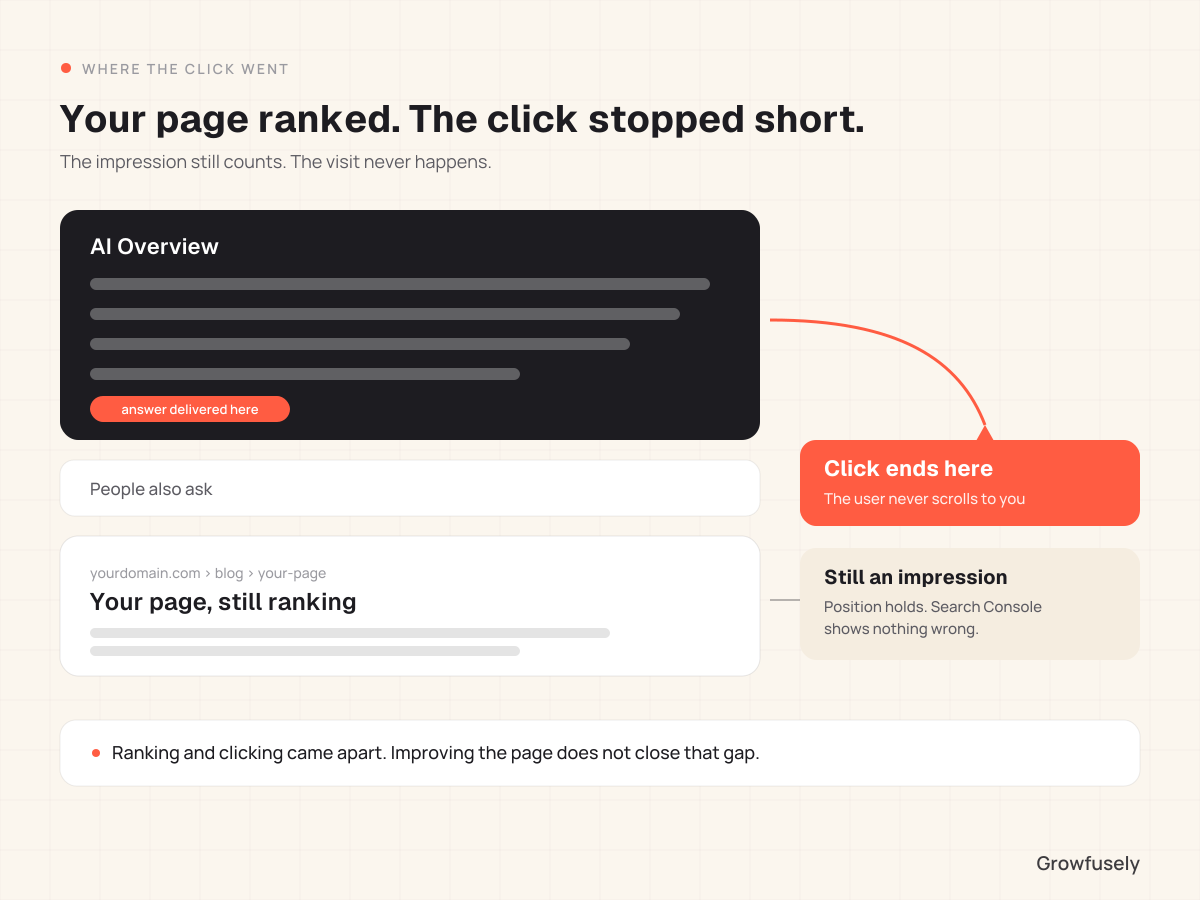
An impression means your listing appeared in the search result set. A click means your listing was chosen by the user. When impressions are steady but clicks are declining, it means your listing did its part but the click did not occur. This leaves one place where the traffic could go: the answer was displayed before the need for your listing occurred.
Three things cause that in 2026.
1. AI Overviews answering the query directly.
Google generates a summary at the top of the page. The user sees it, finds everything needed and does not scroll down. Your listing is still there and still counted as an impression.
2. AI assistants replacing the search entirely.
Someone asks ChatGPT or Perplexity instead of Google. That query never touches your Search Console at all, so it shows up as absence rather than decline, which makes it harder to spot.
3. SERP features pushing you below the fold.
This isn’t new, but the fold itself has moved a long way down. A result at position four can now sit below an AI Overview, a video carousel, and a People Also Ask block.
The first and third show up in Search Console. The second does not, which is why a full diagnosis needs to look outside Google entirely.
How to confirm it in Search Console
Fifteen minutes of work, and you will know whether this is your situation.
Compare periods, not results.
Compare the last six months to the previous six months. Instead of analyzing the CTR summary of all your keywords, consider the clicks and impressions separately because the average CTR for the whole period will hide the queries that have moved/absorbed.
Sort by impressions, then read CTR per query.
Here, find queries where impressions have stayed at the same level or even increased, but CTR has fallen to one-third or lower. These are your absorbed queries.
Check the query type of the affected pages.
Informational and definitional queries get absorbed first because they can be answered in short and clear form. Comparative and evaluation queries remain intact because the buyer who is making a choice wants to see sources.
Check whether the position has changed.
In case the average position remains the same, but CTR has decreased, it’s absorption. When the position has dropped and along with it, there was a drop in CTR, it’s a ranking issue.
Then check other engines outside Google.
Find ten queries that generate purchases from your website and enter them into ChatGPT and Perplexity. Observe whether your brand name pops up in the results and what sources were cited by the search engine. This is the step that is often missed by the vast majority of teams, and this is where lost traffic is most likely hiding.
Why the usual recovery playbook does not work here
The standard response to a traffic drop includes refreshing the content, developing it further, optimizing the website technically and acquiring links. But it’s based on one assumption, which doesn’t work in this case.
In cases where an AI Overview answered the question, having a better page does not change anything because the user could not go further and compare. You can go from position four to position two and notice the clicks decreasing because you’re not competing with the item below you, but rather with the one above all of them.
Let’s be clear on this: Some of the traffic you lost is not coming back in the form you lost it. Queries that can be fully answered by an overview will always be answered, and click-through rates will always decline.
What replaces it is a different kind of presence: being the source of the overview and being mentioned when an assistant recommends options for your category.
What we found when we measured where those answers come from
We analyzed 1,739 citations across 128 genuine B2B software purchase queries on ChatGPT and Perplexity, logging every source each engine cited.
Two findings matter for anyone in this situation.
1. Content from independent sources and vendors’ comparison pages drove about 79% of total citations. Review platforms, such as the “AI visibility” advice-targeted G2s and Capterras, comprised 7.3%.
2. Search engines disagreed with each other substantially. The same search returned different sources on ChatGPT than on Perplexity. This means that there’s no such thing as one answer layer to rank for. There are several layers, and their importance differs.
Practical takeaway: if your traffic went into AI answers, the best strategy is to be present in the sources from which the answers are generated. Remember, this is a content and authority issue, not a ranking one.
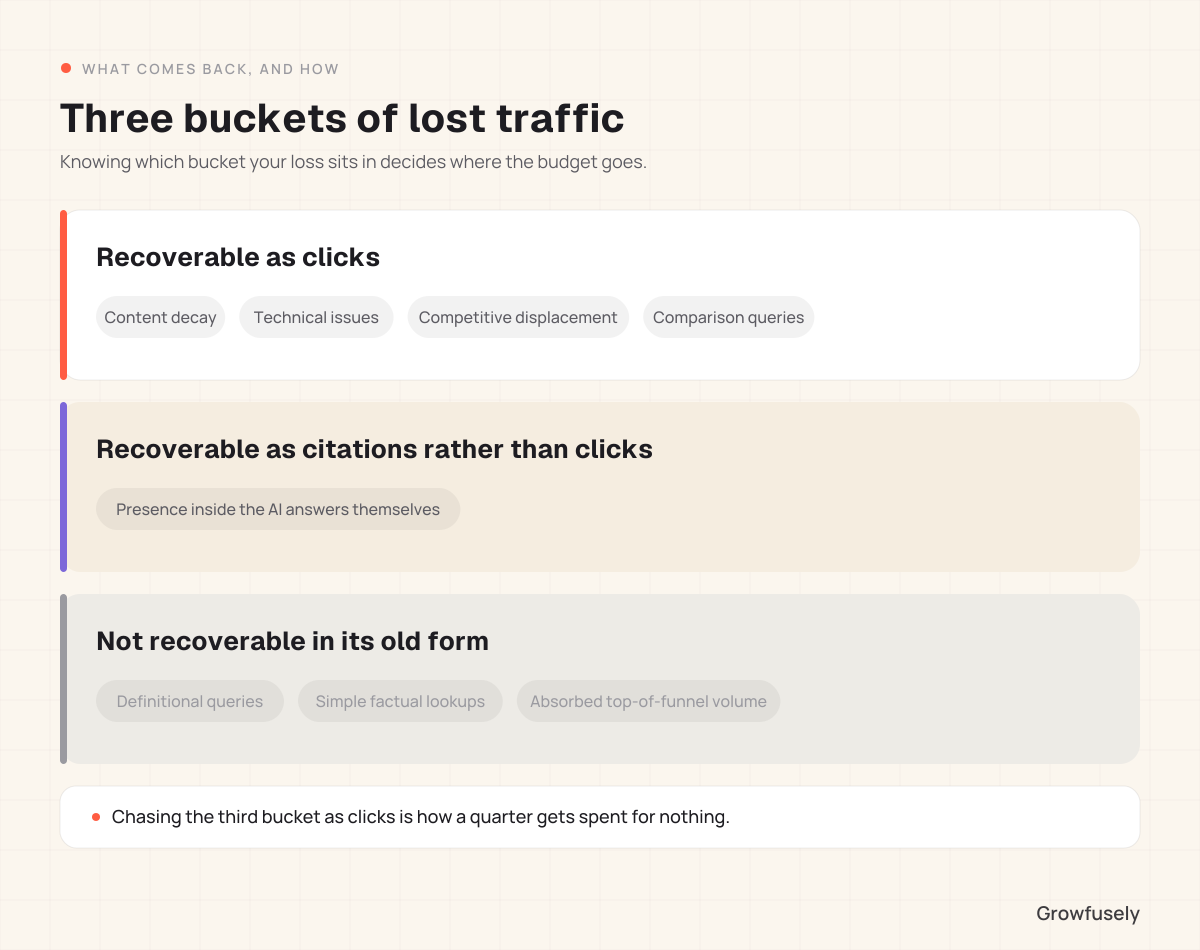
What is recoverable and what is not
This is the split that should drive your plan, but most recovery pitches skip it.
Usually recoverable:
- Losses from content decay, where the page is out of date and competitors updated theirs
- Losses from technical issues introduced by a migration, redesign, or template change
- Losses from competitive displacement, where someone published something better
- Losses on comparison and evaluation queries, where buyers still click through to sources
Usually not recoverable as clicks:
- Informational and definitional queries fully answered by a summary
- Simple factual lookups that used to bring traffic to a glossary or how-to page
- Top-of-funnel volume that existed because the answer was hard to find and now is not
Recoverable, but as citations rather than clicks:
- Your presence in the AI answers themselves, resulting in awareness and eventually direct or branded visits rather than organic sessions
Knowing which bucket your loss sits in will change the way you allocate your money. A team that refreshes forty informational posts to win back absorbed traffic can end up seeing nothing despite doing everything right simply because the work was aimed at the wrong bucket.
What to do about it
First, separate the buckets.
Categorize your lost traffic by cause before developing a strategy. Most losses will always be a combination, and the combination will determine the approach.
Protect and build upon what still converts.
Pages that compare products, alternatives pages, and evaluation content maintain their click-through rate better than informational content, and they will influence purchases as well. Your losses may have been top-of-funnel while your conversion pages might have remained intact. Make sure you check your pipeline before panicking about your traffic numbers.
Build the assets that get cited.
Independent citations and searches will look for original data, comparative data, and practitioner content. Broad descriptions of well-understood concepts are the most consumable content available, and this is precisely where losses lie.
Clarify entity identity.
Engines can only cite you when they recognize you consistently as an entity, including name, description, and categorization. This is unexciting work but it can be the very reason you don’t show up in answers even though you have great content.
Track the right metric.
Add citation share to your reporting: the proportion of times your brand is mentioned in the answers for your priority queries on the engine(s). If you track sessions alone, work that’s succeeding in the answer layer will look like it’s failing.
Where to start
If your chart looks like this and you want to know which part of the loss is recoverable, that is exactly what we diagnose. We will identify the source of the problem, its classification by cause, evaluate your citation status on search engines, and provide you with a prioritized action plan with realistic expectations from each corrective step.
Book a discovery call and we’ll scope it for your categories.
Frequently Asked Questions
Is ‘Impressions Up, Clicks Down’ always caused by AI Overviews?
Not really. SERP features could have pushed you under the fold, your title and description might not correspond to what users are asking anymore, or you could be ranking for more queries for which you are not the optimal answer. Basically, if your keyword’s position is stable and you see a dramatic loss in CTR, then it is AI absorption.
How much CTR loss is normal right now?
It differs a lot depending on the query type. Hence, the average number for all your websites is meaningless. Informational queries have compressed way more than comparison and evaluation queries.
Should we stop publishing informational content?
Absolutely not, though the motivation behind it shifts. It ceases to be traffic bait and turns into citation and authority bait, meaning the standards of depth and originality increase. Generalist content will generate neither traffic nor citations. Specialized content that has original insights or real-life examples will generate both.
Can we track how often AI assistants mention us?
Yes, you can. Define a set of prompts that a buyer persona would really type into the search box, run them on every AI assistant, and track how many times your brand mentions appear along with the sources they quote. It is manual at first, and it generates the most insightful visibility metrics most companies can get.
Does this mean SEO is finished?
No. Impression counts generated by rankings still feed AI answers, and comparison and purchase intent queries still generate traffic. What changed is that ranking is no longer sufficient on its own. You need to rank and be citable.

Pratik Dholakiya is the Founder of Growfusely, a SaaS SEO and AI Search Visibility agency.
