
OKR tools for sales teams help set measurable objectives, track key results, and monitor progress against sales targets. They give sales leaders a clear view of individual and team performance.
Sales teams are under constant pressure to achieve aggressive revenue targets.
However, many still track goals using spreadsheets or scattered tools.
This can lead to poor visibility into sales team performance. For instance, sales managers may struggle to clearly track progress or determine whether daily sales activities are contributing to overall business goals.
Moreover, fragmented performance data can make it challenging to identify gaps and areas for improvement.
This is where OKR (Objectives and Key Results) tools become valuable. These platforms eliminate the need for manual efforts. They provide a structured system for setting objectives, tracking measurable key results, and monitoring progress in real-time.
With centralized dashboards and automated performance insights, OKR tools can help your sales team measure results more clearly. They can focus on activities that directly impact revenue growth.
In this post, we will share six essential OKR tools to help your sales team measure performance seamlessly.
Top 6 OKR Tools for Sales Teams
Here is a list of six OKR tools that your sales team can use to track goals and measure performance effectively. Each platform offers different features to ease the hassles of sales teams. Review the pricing, key features, and best use cases of these tools to make an informed decision.
| Tool | Key Features | Best For | Pricing |
| OKRs Tool | OKR dashboards, AI goal writing, KPI tracking, weekly check-ins | Small and mid-sized sales teams | Free for 5 users; from $30/month |
| Weekdone | OKRs, KPI tracking, weekly reports, task linking, reminders | Teams that review progress weekly | Free plan; from $10/user/month |
| Perdoo | Strategy maps, OKR and KPI tracking, goal alignment, reports | Teams that want sales goals tied to company goals | Free plan; from €8–€10/user/month |
| Profit.co | AI-assisted OKRs, KPI tracking, dashboards, task management | Growing teams that want more automation | Custom pricing |
| WorkBoard | OKR dashboards, goal alignment, progress tracking, executive reports | Large sales teams and enterprises | Custom pricing |
| Tability | OKR templates, progress tracking, reminders, integrations, dashboards | Teams that want simpler OKR reporting | From $6/user/month |
1. OKRs Tool
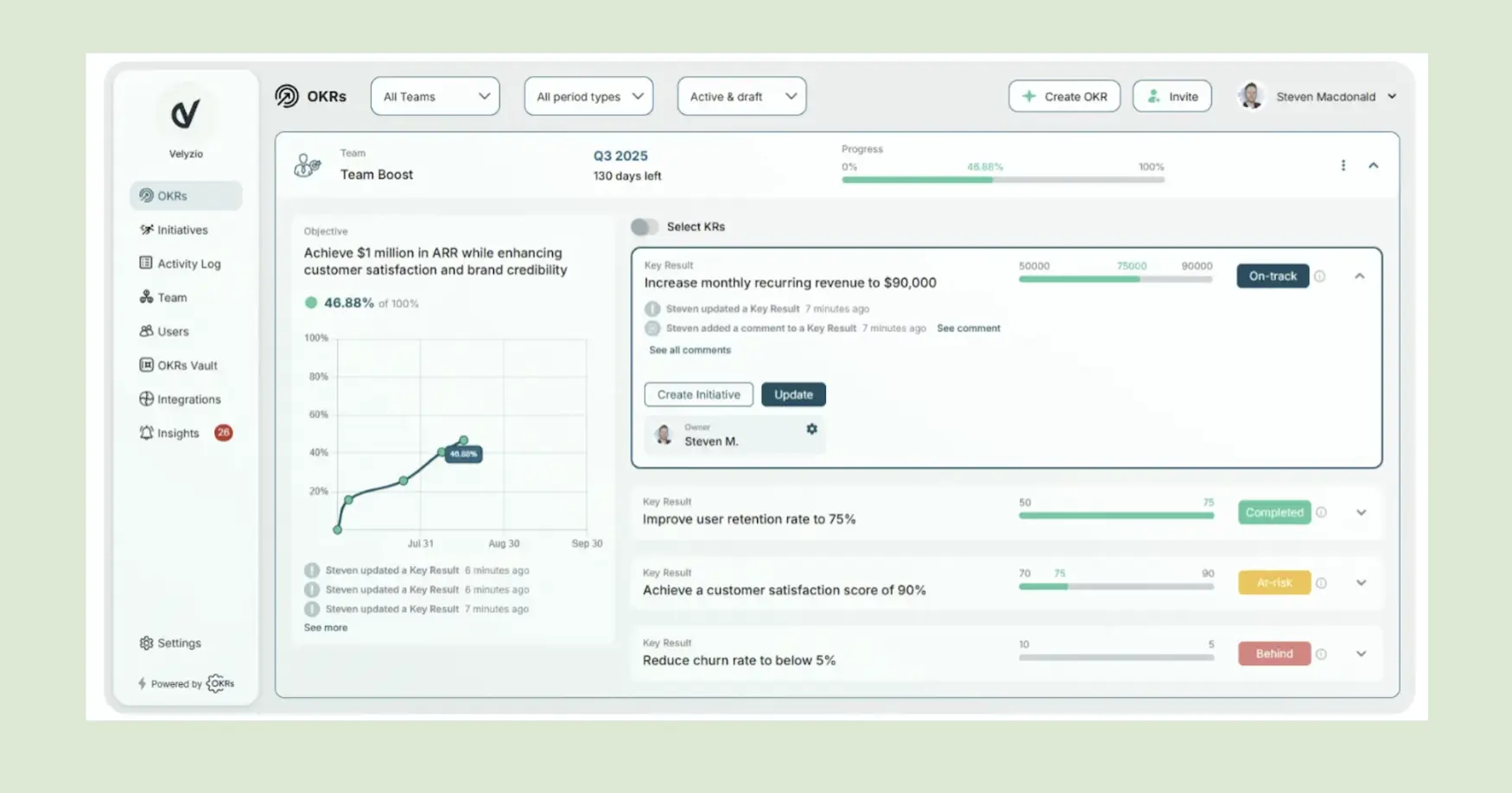
OKRs Tool is a goal-management platform designed to help teams set objectives and track key results. The platform simplifies the OKR process and provides real-time visibility into goal progress and performance metrics. This can help maintain alignment across departments.
Moreover, the OKRs Tool enables organizations to standardize how goals are set, tracked, and reviewed across teams.
Key Features:
- Real-time OKR progress dashboards
- AI-driven OKR drafting
- Weekly check-ins and status updates
- KPI and key result tracking
- Alignment maps connecting company and team goals
- Slack integration for updates and reminders
Best Use Case: This platform is best for small to mid-sized sales teams that require a straightforward OKR system. Your sales team can use it to set and track revenue targets and pipeline performance. This helps maintain clear accountability for key results.
Pricing: The OKRs Tool is free for up to five users. Paid plans start at $30/month (flat fee) for larger teams, with advanced tiers available.
2. Weekdone
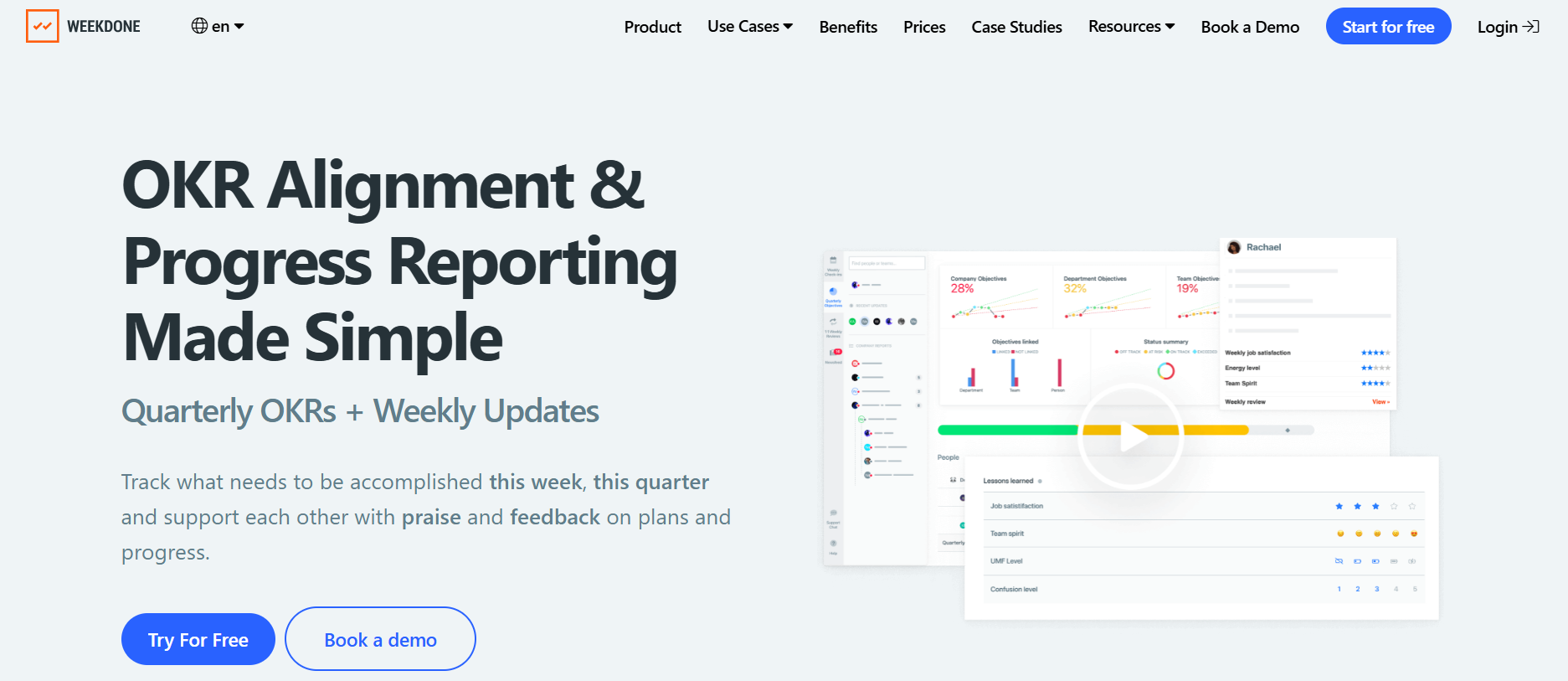
Weekdone is an OKR and performance-tracking platform that combines goal management with structured weekly reporting. It can help your organization maintain visibility into objectives while encouraging consistent progress updates across teams.
Key Features:
- Company, sales team, and individual OKR hierarchy
- KPI and metric tracking
- Weekly planning and status reports
- Project and task linking under OKRs
- Automated reminders and notifications
- Feedback and recognition tools
Best Use Case: This tool is suitable for sales teams that rely on weekly reporting and want to combine OKRs with structured progress updates. It can help your sales manager review what sales reps achieved during the week and prioritize what needs attention next.
Pricing: Weekdone provides a free plan for small teams. Paid plans start at $10 per user per month.
3. Perdoo
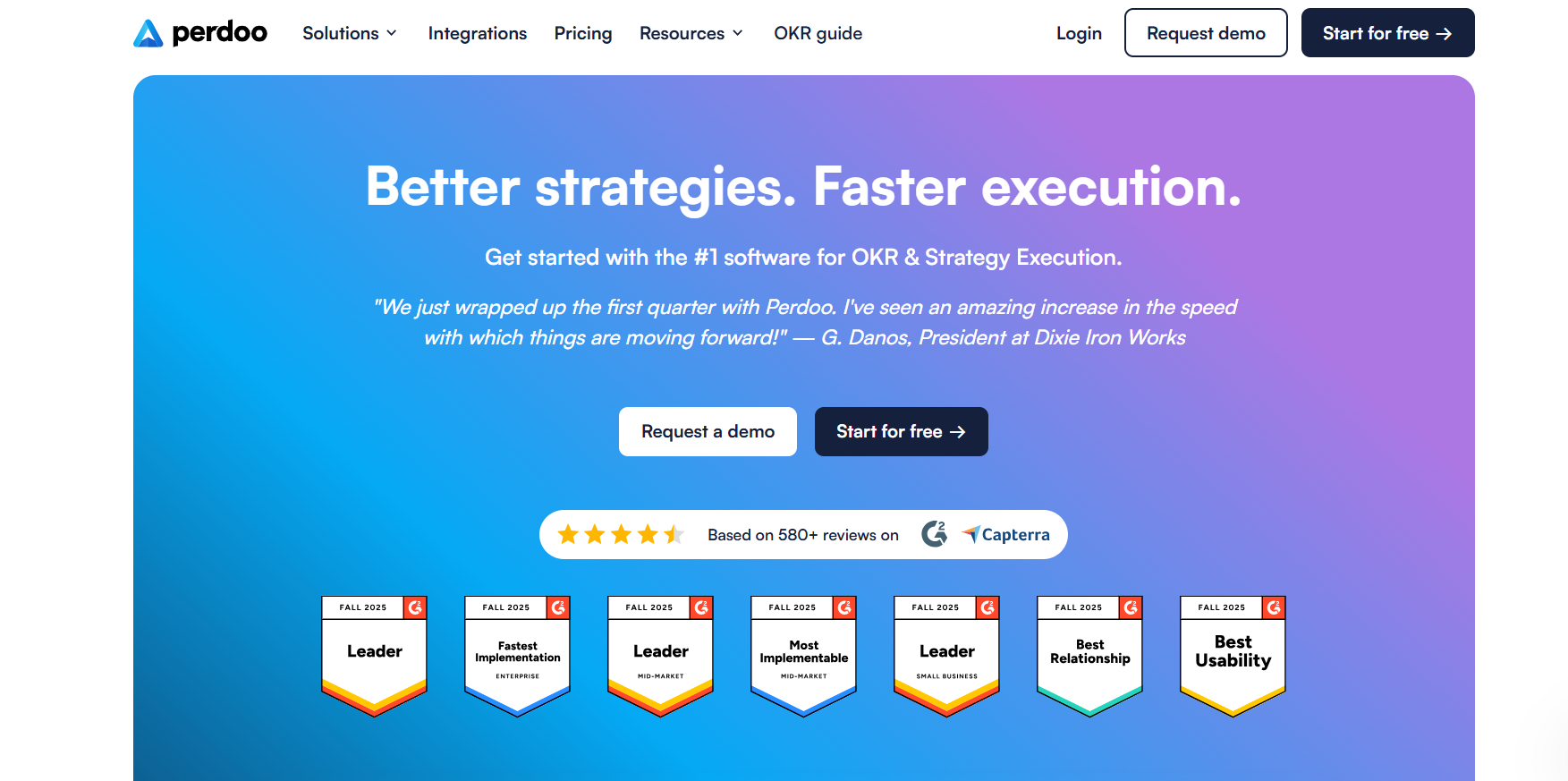
Being a strategy execution platform, Perdoo connects company strategy with measurable OKRs and KPIs. Besides, the tool provides visual strategy maps. These maps can help your sales team see how objectives, key results, and KPIs are connected across the organization.
Key Features:
- Strategy maps linking goals and OKRs
- KPI tracking dashboards
- Weekly check-ins and progress updates
- Goal alignment across teams
- Integrations with Slack and Microsoft Teams
- Reporting and analytics tools
Best Use Case: This platform is ideal for organizations that want to align sales performance with overall company strategy. It allows leadership to map high-level goals and measurable sales KPIs. This way, your sales team can understand how their targets contribute to overall growth.
Pricing: Perdoo offers a free plan for small teams. Its paid plans start around €8–€10 per user per month, depending on the selected features.
4. Profit.co
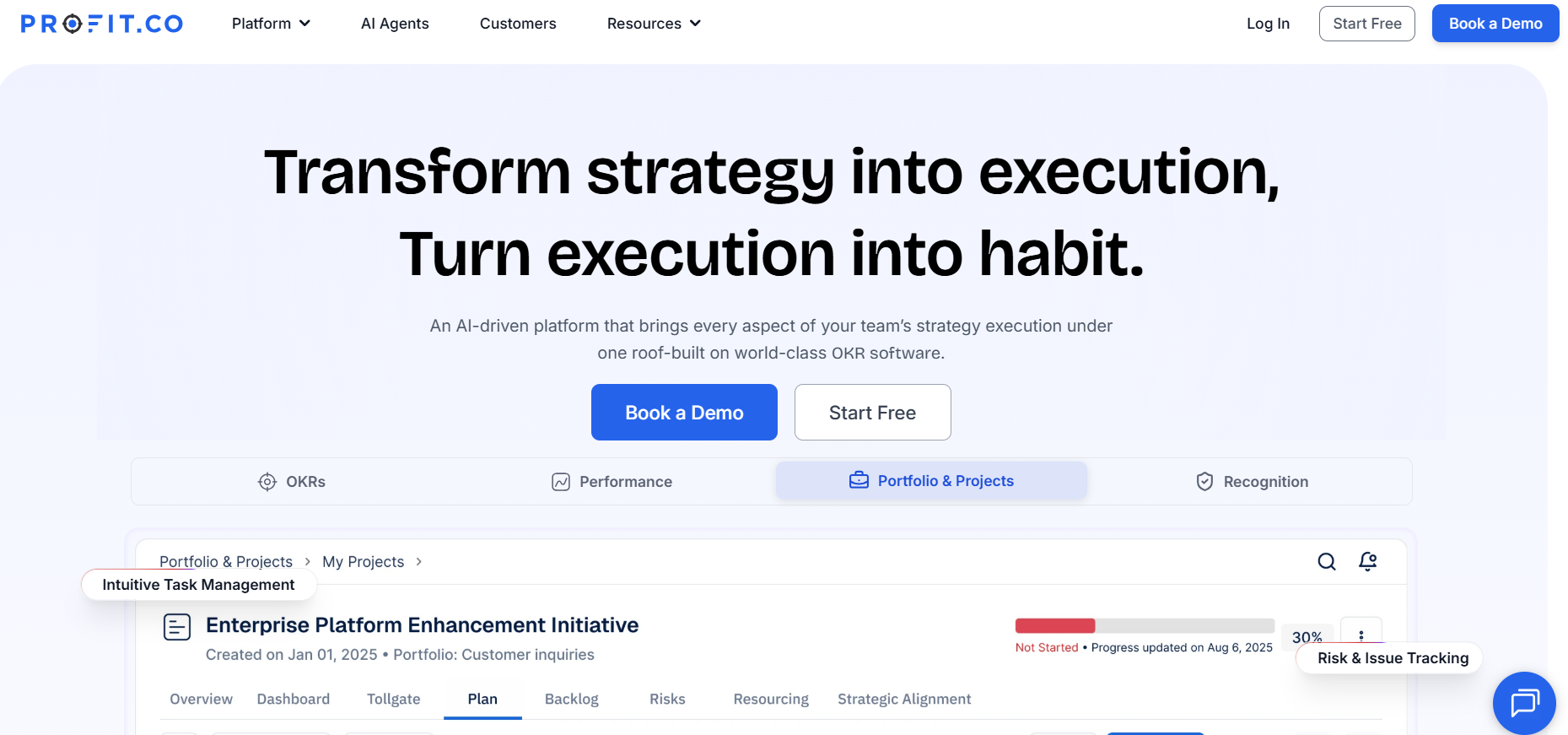
From planning and alignment to tracking and performance analysis, Profit.co supports the entire goal-execution lifecycle. It also combines OKR tracking with KPI management and employee engagement features to help your team turn strategic goals into actionable tasks.
Key Features:
- AI-supported OKR creation
- KPI tracking and analytics
- Performance dashboards and heatmaps
- Integration with business tools
- Task management linked to key results.
- Continuous performance feedback
Best Use Case: This platform is well-suited for growing companies that want automation and analytics within their OKR framework. It links sales activities, tasks, and initiatives directly to key results. This can help your sales team ensure that daily execution supports quarterly OKR targets.
Pricing: It offers custom pricing based on organization size, with trial options available.
5. WorkBoard
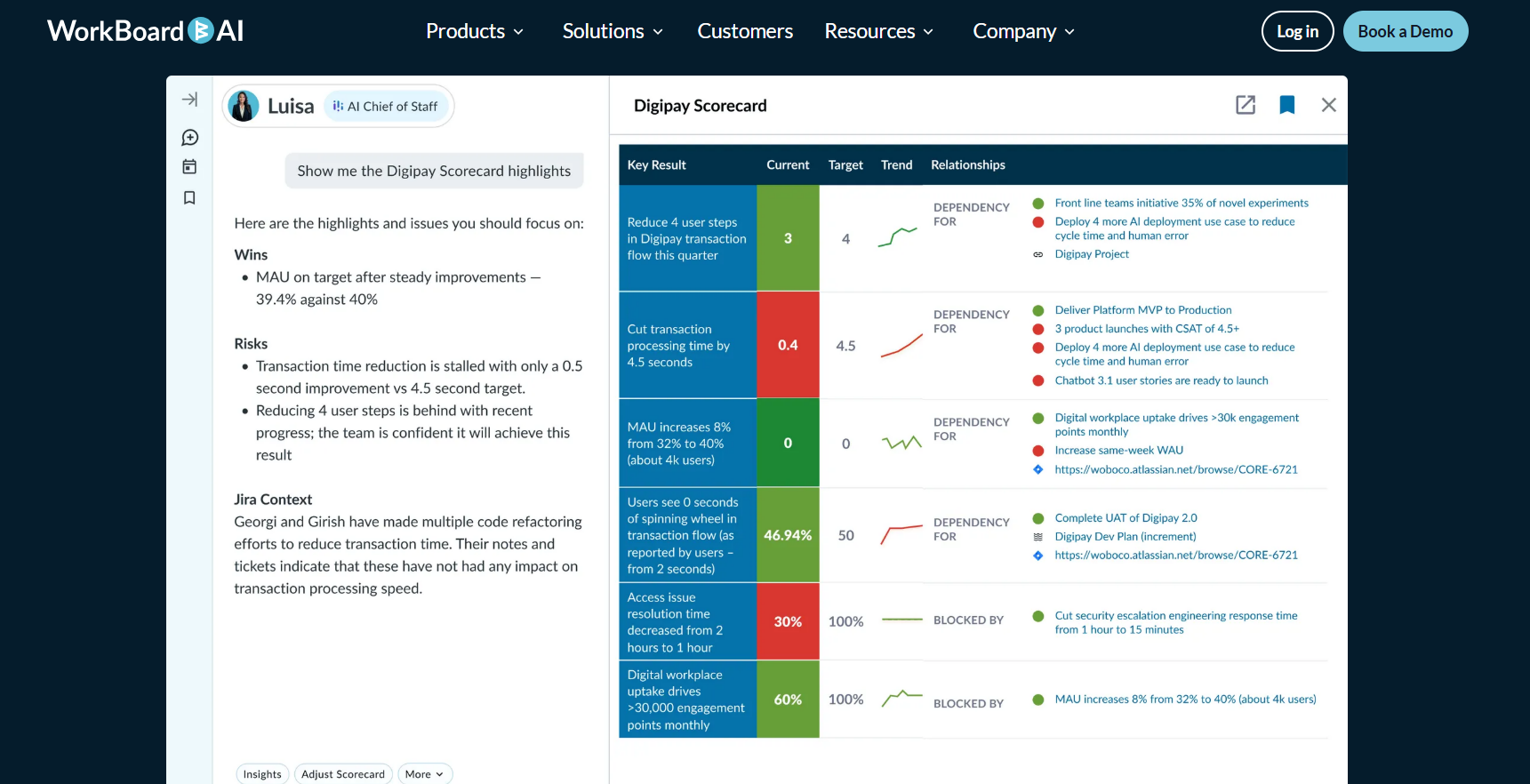
This is an enterprise OKR platform designed to help organizations execute strategy and track measurable results across departments. With WorkBoard, your leadership teams gain visibility into goal alignment and execution.
Key Features:
- Enterprise OKR alignment dashboards
- Strategy-to-execution tracking
- Cross-team goal alignment
- Collaboration tools for distributed teams
- Executive performance reports
- Real-time progress monitoring
Best Use Case: WorkBoard is best suited for large organizations with complex sales operations and multiple teams. It can help leadership track how regional or departmental sales goals align with broader business priorities.
Pricing: This platform offers custom enterprise pricing according to company size and feature requirements.
6. Tability
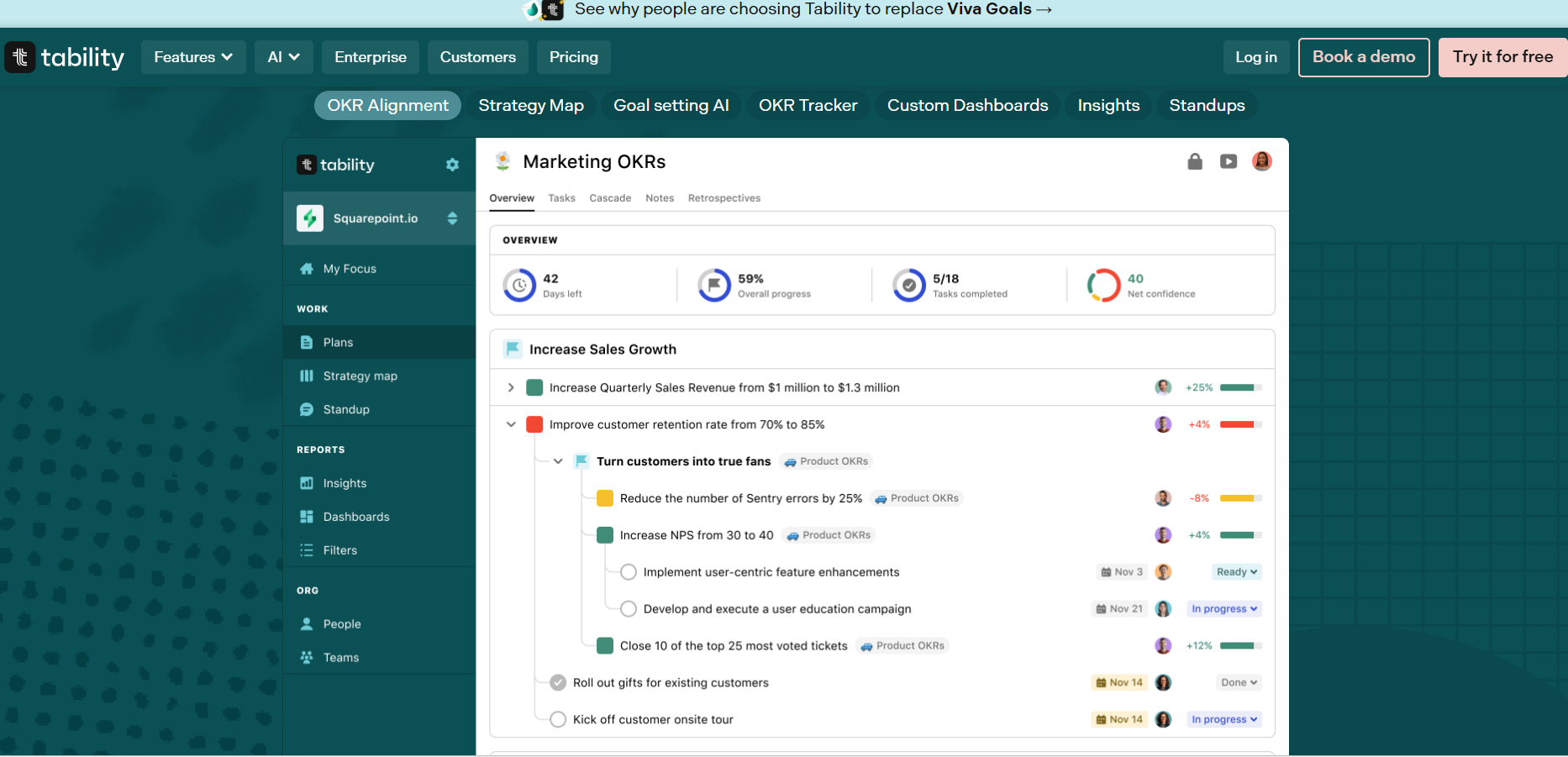
Tability is a state-of-the-art AI-powered OKR management solution that transforms OKRs into a weekly habit. It enables your organization to define goals and track progress while helping managers and teams spot risks early and stay aligned.
Key Features:
- Built-in OKR templates
- Integration with Jira, ClickUp, Asana, or Linear
- Automated progress reminders
- Notifications and reminders for goal tracking
- Goal alignment views across teams
- Performance dashboards and reporting
Best Use Case: Tability is ideal for organizations that need to gain visibility into work progress while reducing distractions. Your sales team can track OKRs and cut 80% of reporting activities with this platform.
Pricing: Its paid plan starts around $6 per user per month. Furthermore, Tability offers custom plans for enterprises based on selected features and user count.
How to Choose the Right OKR Platform for Your Sales Team?
The right tool should simplify goal management while providing clear visibility into performance metrics. However, with several OKR platforms available, selecting the right one for your sales team is challenging. This decision is also important for supporting a successful sales strategy.
Each tool offers different capabilities and reporting features. Therefore, it is vital to evaluate your sales team’s specific needs. Choosing the right platform can make your goal tracking more structured and help your sales team stay focused on measurable outcomes and continuous improvement.
Here are eight crucial tips to consider.
1. Prioritize Real-Time Progress Tracking
The OKR platform should provide dashboards that show progress toward key results in real-time. This can help your sales managers quickly identify performance gaps and boost business efficiency.
2. Evaluate Integration Capabilities
Sales teams rely on multiple tools, such as CRM platforms, communication apps, and more. Selecting an OKR tool that integrates with these systems can help streamline your workflows and reduce manual updates.
3. Consider Ease of Use and Adoption
An OKR platform should be simple enough for your entire sales team to use consistently. Tools with intuitive interfaces and automated reminders can improve adoption and ensure regular progress updates.
4. Assess Reporting and Analytics Features
Detailed reports and performance insights can help your sales leaders evaluate progress toward revenue targets. Platforms with strong analytics capabilities make it easier to measure results and improve sales strategies.
5. Ensure It Supports Scalable Goal Setting
Choose a platform that allows your sales team to set and manage goals at different levels as the team grows. This makes it easier to expand OKRs across teams without creating confusion.
6. Look for Built-in Check-In and Update Mechanisms
Regular check-ins help ensure that key results stay updated and relevant throughout the quarter. Platforms that support structured updates encourage sales teams to review progress frequently and stay accountable for their goals.
7. Choose a Platform that Supports Goal Alignment
An effective OKR platform should clearly connect company objectives with your team and individual targets. This visibility helps your sales team understand and improve their performance.
8. Ensure It Encourages Team Visibility
Sales teams perform better when progress and goals are transparent across the organization. Platforms that allow your sales team to view shared objectives and updates help maintain alignment and accountability.
Pro Tip: Sales teams rarely rely on a single platform to manage performance and daily operations. In most organizations, OKR tools work alongside CRM systems, communication apps, and proposal software to support various stages of the sales process. For teams dealing with complex pricing and customized proposals, useful resources like CPQ Integrations offer insights into aligning advanced quoting systems with the broader sales tech stack.
Therefore, choose an OKR platform that aligns with your broader sales tech stack. This can enhance overall workflow efficiency while keeping performance data connected across different tools.
Conclusion
OKR tools enable teams to move beyond manual tracking and gain real-time visibility into their sales performance metrics and revenue goals.
By providing structured goal frameworks and progress dashboards, these platforms allow your organization to measure performance more accurately and improve accountability across teams.
The six tools shared in this post offer different capabilities suited to various business needs. While some platforms focus on simplicity and quick adoption, others provide advanced analytics and enterprise-level alignment features.
Furthermore, implementing the eight tips shared above can help you choose the right OKR software for your sales team. Overall, when used effectively, OKR tools can enhance your sales performance tracking and its strategic alignment with your business.

Pratik Dholakiya is the Founder of Growfusely, a SaaS SEO and AI Search Visibility agency.
