
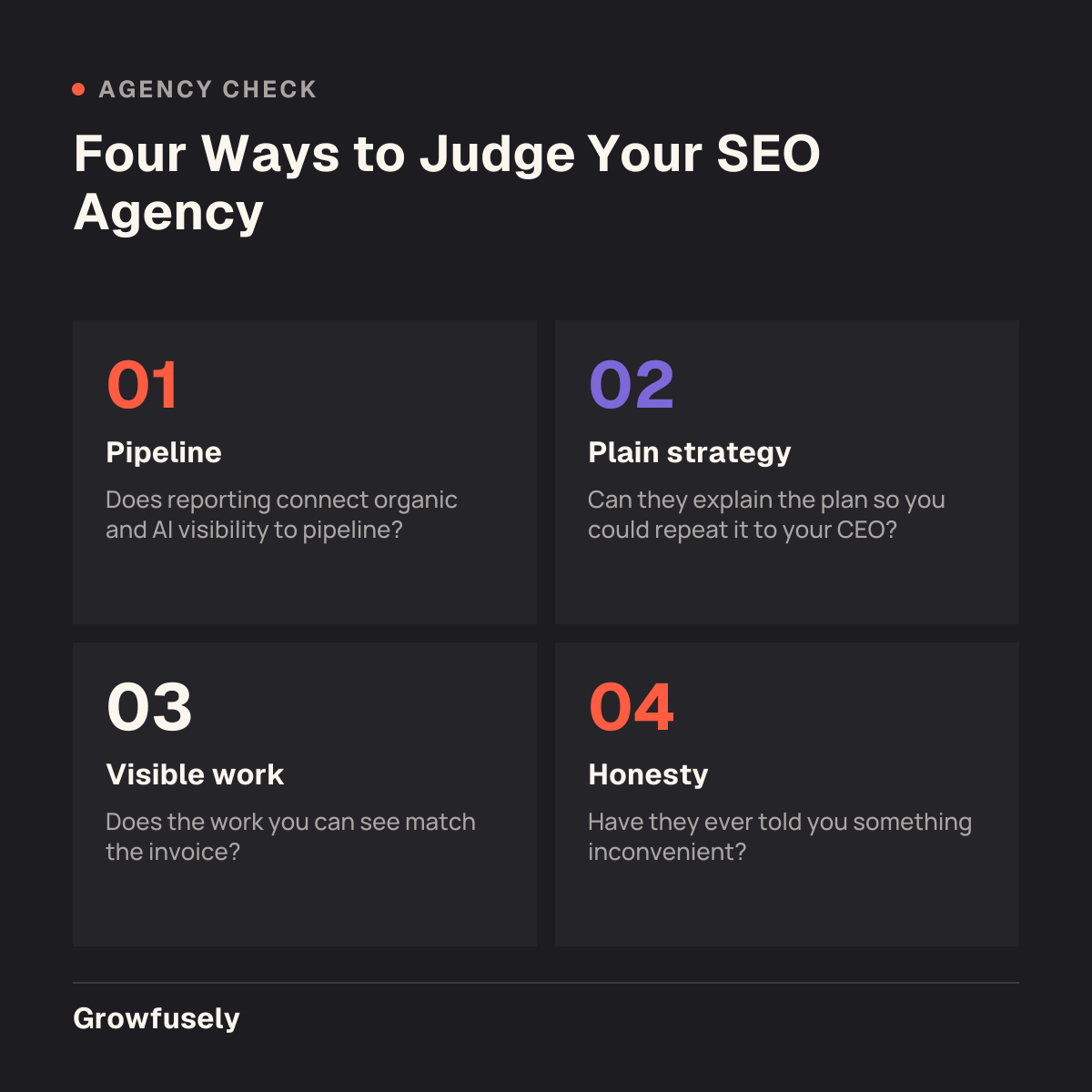
Traffic alone proves nothing either way. Judge four things: whether reporting connects to the pipeline, whether they can explain the strategy plainly, whether the visible work matches the invoice, and whether they ever tell you something inconvenient.
This is for the marketing lead or founder, who is six to twelve months into a retainer and quietly wondering if the agency is actually doing a good job.
You’re probably not looking for a reason to fire anyone. You want to know whether to renew, and nobody has given you a way to judge that without relying on the agency’s own reports. That’s the real difficulty: the people being evaluated also control the evidence.
Key Takeaways
- Traffic is a slow, noisy signal. Good work can sit under six flat months, and a seasonal lift can make weak work look good.
- The clearest sign of a good agency is reporting on pipeline influence alongside sessions and rankings.
- An agency that can’t explain its strategy in plain language either doesn’t have one or doesn’t want you to evaluate it.
- Ask what they’d do with double the budget and what they’d cut, if it was half. Both answers show whether a plan sits underneath the activity.
- Sometimes the work is good and the engagement still fails, usually because the wrong thing was scoped. A new agency won’t fix that.
Is Traffic Growth Enough to Judge Them On?
No, and it can mislead you in both directions.
Organic traffic responds to your agency’s work, but it also responds to seasonality, competitors, algorithm updates, product launches and whatever your paid team did last quarter.
Six flat months can sit on top of good foundational work that hasn’t compounded yet. Six months of growth can come from one page you published before they arrived.
Ask a sharper question: has the mix of traffic changed? More visits to comparison and pricing pages is a better signal than more visits overall. If your agency can’t tell you which pages are growing and why they matter commercially, it’s reporting a number rather than managing a program.
What Should My Agency Report Every Month?
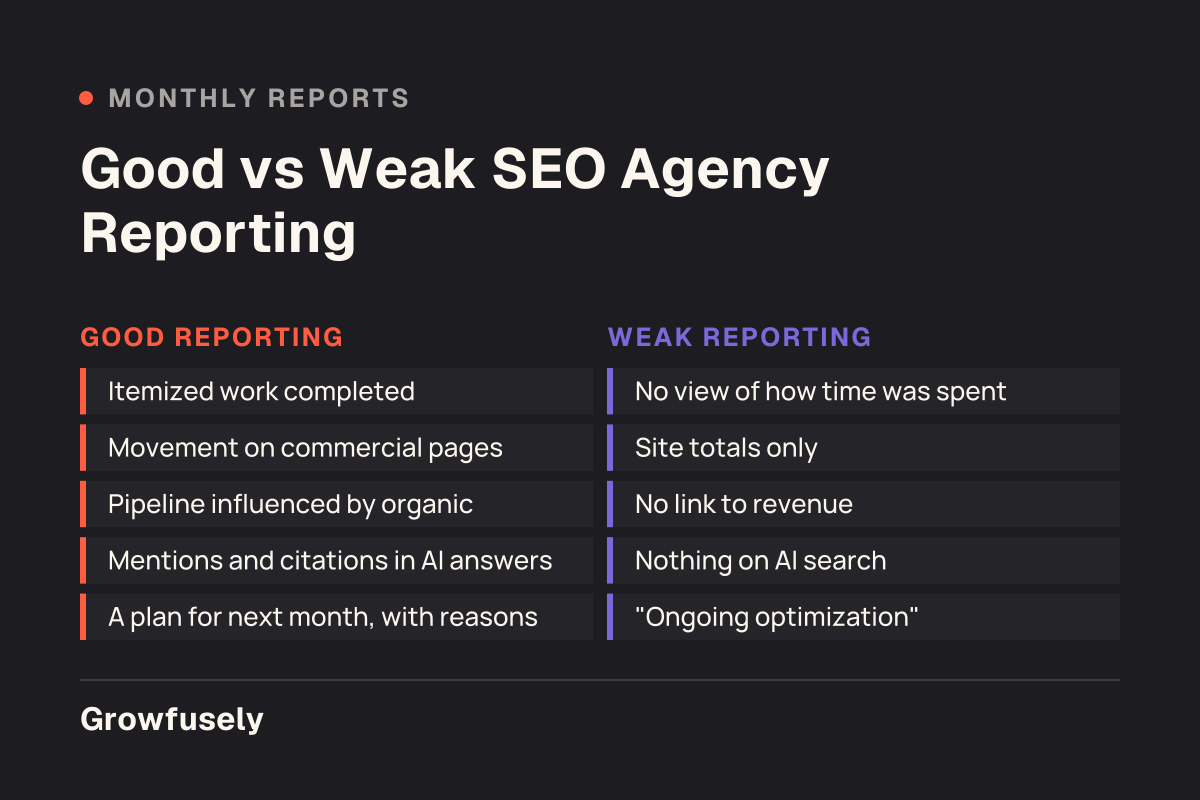
Good reporting answers three questions: what did you do, what changed, and what’s next.
Most reports only answer the second, and only with flattering metrics.
| What good reporting includes | What weak reporting leaves out | What to ask for |
|---|---|---|
| Work completed, itemized, with scope or hours | Any view of how time was spent | “Can I see the itemized work log?” |
| Movement on the pages that matter commercially | Page level detail, replaced by site totals | “Which pages moved, and do they convert?” |
| Pipeline influence: demo requests, form fills and assisted conversions from organic | Any link between organic and revenue | “How much pipeline did organic influence this month?” |
| Brand mentions and citations in AI answers | The whole AI search layer | “Do we appear when buyers ask AI about our category?” |
| What didn’t work, and what changed as a result | Failures of any kind | “What did you try that didn’t work?” |
| A specific plan for next month, with reasons | “Ongoing optimization” | “What are the three things you’re doing next month, and why those?” |
The last row tells you a lot. An agency with a strategy can say what it’s doing next and why, in that order. An agency without a clear strategy tends to fall back on activities.
On the AI row: in Growfusely’s analysis of 1,739 AI citations across ChatGPT and Perplexity, independent content and vendors’ own comparison pages drove about 79% of citations. If your buyers research in AI engines and your agency has no view on whether you appear there, part of your buying journey is invisible to both of you.
We’ve Been Paying for Eight Months. How Long Before Results Are Fair to Expect?
On an established site, expect early signals within 90 days and pipeline impact in six to twelve months.
Early signals means ranking movement on target pages, technical issues fixed, and the first new pages published and indexed. On a new domain, roughly double those timelines.
What you should see quickly is evidence of work: an audit in the first month, a written strategy, a prioritized roadmap and visible fixes.
If you’re three months in with reports and no diagnosis or plan, the timeline isn’t the problem.
What Should I Ask on the Monthly Call?
Rotate through five questions. You don’t need all five every month.
- “What did you learn this month?” A good agency is always testing something on your site. If nothing was learned, nothing was tested.
- “What would you do if we doubled the budget?” A good answer shows a backlog of valuable work they can’t reach yet. “More of the same” means the current scope is arbitrary.
- “What would you cut if we halved it?” An agency that knows what drives value answers fast. Hesitation suggests undifferentiated activity.
- “Show me a page you’re proud of.” Then read it. Would a specialist in your category learn something?
- “What are we not doing that we should be?” “Nothing, we’ve got it covered” can mean they’re either complacent or protecting their scope.
What Are the Signs an Agency Is Coasting?
A failing agency produces obvious problems. A coasting one produces steady, reasonable looking activity that never compounds.
Watch for these:
- Monthly reports that look nearly identical, with new numbers in the same categories
- Content published on schedule that nobody on your team would read
- No technical work since the first audit, as though the site stopped changing
- Recommendations that never ask anything difficult of you
- The senior person who sold the engagement hasn’t joined a call in months
- You can’t name one thing they’ve changed their mind about
The last one matters most. A good agency should change its thinking as new data comes in. If they’re running the same plan a year later, they’re executing without really managing the account.
Is It Normal That I Don’t Really Understand What My Agency Is Doing?
No. It’s the most common thing clients tolerate and they shouldn’t.
You don’t need to understand the implementation. You do need to understand the reasoning: why this page, why now, what outcome is expected, and how you’ll know it worked.
Try this test: could you explain the current strategy to your CEO in two minutes? If not, ask the agency to explain it again. If it still doesn’t make sense after, that’s your answer.
Should I See the Work, or Just the Results?
Both, and the balance shifts over time.
Early on, you should see plenty of work: audits, briefs, technical specs and content plans. That’s how you judge their thinking before results come.
Later, outcomes matter more. You should still be able to see the work whenever you ask. If an agency is reluctant to show you what it’s producing, that’s worth questioning.
When Is It Not the Agency’s Fault?
Plenty of engagements underperform while the agency does good work.
Check these causes before you blame them.
- The wrong thing was scoped. You hired an agency for content when the bottleneck was technical, or for technical work when the bottleneck was authority. A good agency should catch this, but many take the brief as initially provided to them.
- Nobody internal can give them what they need. Good content depends on subject matter input. If your product or service experts have never spoken to the agency, the content, most of the time, will come out as generic no matter who writes it.
- Expectations never matched. If you expected a pipeline in month four and they were building for month twelve, both sides can act reasonably and still end up unhappy.
- The market moved. AI answers now take clicks from content that still ranks. An agency that adapted deserves credit. One that didn’t should at least explain what changed.
It’s essential to work out which of these apply to your case before you switch. Replacing a capable agency without fixing the real problem gets you the same result a year later, with a new invoice.
How Do I Know When It’s Time to Fire Our SEO Agency?
When two or more of these are true:
- They can’t explain their strategy in plain language after you’ve asked twice
- Reporting has never connected organic activity to pipeline, and they’ve resisted making that connection
- Nothing has been fixed, changed or tested in the last quarter
- Their answer to underperformance is “SEO takes time,” with no revised plan
- You’ve supplied everything they asked for and the work still reads as generic
- They have no view on AI search visibility
One of these is a conversation. Two or more is a decision. If it’s a decision, our comparison of SEO consulting agencies is a good place to start.
What I’d Do in Your Situation
I’d ask to see three months of your agency’s reports and one piece of content they published for you.
The reports show whether a strategy sits underneath the activity. The content shows whether anyone with real subject knowledge was involved. Those two things will tell you more than another call with the agency.
What I wouldn’t do is tell you to switch. About half the time the diagnosis is that the wrong work was scoped, and the fix is a scope conversation with your current agency.
Changing agencies costs you about three months of onboarding and everything the current team has learned about your business. Pay that cost only if the agency is the actual problem.
Why Partner with Growfusely for an Honest Second Opinion?
We’d rather tell you your current agency is doing fine than win an account by creating doubt. In many cases, the issue is scope, and bringing in a new vendor won’t fix it.
- An outside read with no pitch attached. We’ll review three months of reports and one piece of content and tell you what we see.
- Reporting that connects to pipeline and AI citations, so you never have to guess again.
- Strategy you can repeat to your CEO, the test most engagements fail.
- Senior people on the account, with no handoff after the sale.
For Whatfix, our work produced page one rankings for 3,000+ relevant keywords and mentions on 250+ high authority websites.
Schedule a call if you want a second opinion before you renew.
Read Next
- SEO consulting services compared, if you’re weighing a consultant
- How we run SEO consulting engagements
- What AI engines cite for B2B software, the 1,739 citation study
- You rank well and get no leads, if traffic isn’t turning into pipeline

Pratik Dholakiya is the Founder of Growfusely, a SaaS SEO and AI Search Visibility agency.
