In the old days, industrial buyers went about their procurement needs offline: by talking to vendors, asking around for referrals, and weighing their options entirely offline. Now, the same industrial buyers don’t discover suppliers the way they used to. They search and research everything online.
Engineers look up product specs. Procurement teams compare vendors. Decision makers review options before reaching out to sales. Put simply, search engines and AI tools now shape early supplier evaluation.
That shift makes SEO for industrial companies a core growth channel. If your company doesn’t appear when buyers research solutions, competitors take the lead.
SEO brings more than traffic. It builds technical credibility. When your pages rank for relevant searches, buyers see you as a trusted source before the first conversation.
This matters because industrial sales cycles are long. Buyers gather information across multiple visits and channels. Strong search visibility across Google and LLMs helps you stay present during that process.
In this guide, you’ll learn what modern industrial SEO looks like. We’ll cover strategy, technical essentials, content planning, local visibility, and how AI SEO and GEO are changing industrial discovery. You’ll also see how SEO for industrial companies and agents supports growth from awareness to RFQ.
Why Industrial Companies Need SEO
It’s simple: SEO for industrial companies helps you compete where decisions are influenced. Strong rankings signal credibility. Buyers often form a bias for the companies that they find first as being established and trustworthy.
This is especially important in industrial markets where products can look similar on the surface. Visibility helps you explain your expertise, applications, and value clearly.
SEO also works as a long-term growth engine. Paid campaigns stop when budgets pause. But organic visibility typically compounds over time. Each optimized page becomes another entry point for qualified traffic.
Whether you’re a manufacturer, distributor, or industrial agent, strong Industrial SEO keeps your company visible throughout long evaluation cycles. It supports consistent lead flow and helps your brand stay relevant when buyers are ready to request an RFQ.
Foundational SEO Strategy for Industrial Companies
Strong results start with a clear plan. A good SEO strategy for industrial companies reflects how buyers search, what problems they are trying to solve, and how your products fit into their workflow.
Start with a full SEO audit. Review your site structure, page performance, indexing, and technical health. Industrial websites often grow over many years, which leads to outdated pages, duplicate content, and navigation issues that hurt search performance.
Next, focus on intent. Industrial buyers do not all search the same way. Some want technical definitions. Others compare suppliers or look for exact part numbers. Many search by application rather than product name. Your content should match each stage of the journey.
Build a keyword strategy around products, industries served, and use cases. Include high-intent phrases that signal buying readiness. Then map those keywords to the right content:
Awareness: Educational articles and technical explainers
Consideration: Solution pages and fair comparison content
Conversion: Product pages, RFQ pages, and contact forms
This structure helps SEO for industrial company websites support both discovery and sales goals. It also gives your team a clear roadmap for scaling Industrial SEO over time.
On-Page SEO for Industrial Websites
On-page SEO is just another way of saying: clarity wins. Industrial buyers are not looking for clever copy. They want answers, specs, and confidence that you understand their requirements.
Start with titles and meta descriptions that say exactly what the page covers. If someone searches for a specific component or solution, they should know they are in the right place before they even click.
Use headers to break information into logical sections. Engineers scan fast. Procurement teams do too. Clear structure helps them find dimensions, applications, certifications, or pricing details without scratching their head (something they’ll appreciate big time).
Keep URLs clean and descriptive. Avoid messy strings or vague labels. A simple URL improves trust and supports SEO for industrial company websites.
Product and solution pages matter most. Include technical details, industries served, use cases, and clear calls to action. Many visitors land here first, so these pages need to stand on their own.
Structured data also helps. Product and FAQ schema give search engines context and improve how your pages appear in results.
Good on-page work strengthens Industrial SEO because it removes friction. Buyers get the information they need quickly, and search engines understand your value just as clearly.
Technical SEO Essentials
Industrial websites often grow over years. New products get added, old pages stay live, and site structures become complicated and sometimes bloated. That complexity can slow down SEO if the technical foundation isn’t strong.
Start with site architecture. Product categories, applications, and industries should follow a clear hierarchy. Buyers and search engines should move through your site without hitting dead ends.
Crawlability matters, especially for ultra-large catalogs. Faceted navigation, filters, and similar SKUs can create duplicate pages. Use canonical tags and index controls to guide search engines toward the right version.
Page speed is non-negotiable, no matter how large or visual-heavy your website has to be. Engineers and buyers often browse on mobile while on-site or in the field. Slow pages create friction and hurt rankings.
Keep XML sitemaps updated and make sure important pages are indexed. Review Search Console regularly to catch errors early. Security and trust signals matter too. HTTPS is standard, but certifications, compliance pages, and clear contact details also help establish credibility.
Nobody, especially industrial buyers, searches for marketing copy. They search for answers. Your content strategy should be focused on providing just that: clear answers, brewed with brevity, across the funnel.
Your content should focus on solving real problems. Explain how products work, where they fit, and what outcomes they support. Practical, solution-oriented content builds trust faster than generic brand messaging.
Start with educational material that addresses applications and technical questions. Engineers love to look up process improvements, material compatibility, or performance differences before they look at suppliers.
Build topic clusters around core areas you serve. One central page can cover a product category, supported by related articles, FAQs, and technical guides. This structure helps search engines understand your expertise and improves Industrial SEO performance.
FAQ and troubleshooting content also matter. Buyers often ask detailed questions about installation, maintenance, or certifications. Answering these directly helps you capture long-tail searches.
Don’t forget technical assets. Spec sheets, guides, and downloadable PDFs should be optimized for search and linked clearly from relevant pages.
The goal is simple: guide buyers from early research to RFQ without forcing them to leave your site to find basic information. That is where content becomes a real growth driver for SEO for industrial companies and agents.
Local & Regional SEO for Industrial Companies
Many industrial businesses serve specific regions, even when they sell nationally or globally. Buyers often look for suppliers nearby for faster delivery, service support, or onsite collaboration. That’s where Local SEO for Industrial Companies becomes important.
Start with your Google Business Profile (GBP). Keep contact details, service areas, and categories accurate. Buyers use these listings to validate credibility before reaching out.
Create location-specific landing pages where it makes sense. Focus on real service areas, not duplicate pages with swapped city names. Include local projects, industries served, or case studies to make each page useful.
As with everything, consistency matters. Make sure your name, address, and phone number (NAP) match across directories, industry listings, and association profiles.
Reviews and testimonials also help. Positive feedback from regional clients builds trust and supports visibility in local search results, while responding with care to negative reviews shows your company, well, cares.
Local SEO for industrial agents works the same way. If an agent serves a defined territory, local pages and optimized listings help capture high-intent searches from nearby buyers.
Strong regional visibility keeps your company visible when buyers want suppliers they can actually work with on the ground.
Off-Page SEO & Authority Building
Industrial buyers pay attention to reputation. Search engines and LLMs like ChatGPT do too. Off-page SEO helps signal that your company is trusted beyond your own website.
Start with backlinks from relevant sources. Trade publications, industry associations, and technical directories carry more weight than generic links from unrelated blogs. One mention from a respected industry site can outperform dozens of low-quality links.
Partnerships help here. Suppliers, distributors, and technology partners often publish case studies or integration stories that naturally link back to your site. These links add both relevance and credibility.
Digital PR also plays a role. Share data, engineering insights, or innovation stories that industry publications or business magazines (like Entrepreneur and Forbes) want to cover. Technical expertise earns attention when it solves real problems.
Customer reviews, citations, and third-party mentions add another layer of authority. They show that your brand exists beyond your own marketing channels.
Industrial SEO performs better when your site is supported by a strong external reputation. Authority builds slowly, but it compounds over time and helps your pages rank more consistently for competitive searches.
AI SEO & Generative Engine Optimization (GEO)
As you know, search behavior is changing again. Buyers are no longer relying only on Google results. They are also asking AI tools like ChatGPT and GEmini for recommendations, comparisons, and quick summaries.
Traditional SEO focuses on ranking pages. GEO focuses on helping your content appear in AI-generated answers. For industrial companies, this shift matters because buyers often ask detailed, technical questions that AI tools try to answer directly.
To improve visibility, structure your content clearly. Use descriptive headings, direct answers, and concise explanations. Pages that explain technical concepts plainly are easier for AI systems to interpret and surface.
Now, semantic relevance matters more than keyword repetition. Cover topics fully, connect related ideas, and use language that matches how buyers naturally ask questions.
To rank better on AI platforms, use AI platforms. AI tools can also help your strategy with deeper research. They reveal common questions, missing topics, and intent gaps across your content.
SEO for industrial agencies and manufacturers now means optimizing for both search engines and answer engines. The companies that adapt early gain visibility in places competitors have not yet focused on.
Industrial SEO Agencies
Clearly, SEO for industrial companies is simple but far from easy. If you’re looking to outsource SEO to an agency that can manage everything end-to-end, here are five great options to pick from.
1. Growfusely
Growfusely is a growth‑focused SEO and content marketing agency that helps B2B and industrial brands build sustainable organic pipelines. Our approach combines technical SEO, strategic content planning, and authority-focused link building to improve visibility across complex buyer journeys.
For industrial companies, Growfusely focuses on creating search experiences that support engineers, procurement teams, and decision makers from early research through RFQ. Our team also integrates modern practices like AI SEO and GEO to help brands appear in AI-driven discovery environments alongside traditional search results.
Rather than chasing short-term rankings, we build long-term organic growth systems designed to increase qualified traffic, strengthen credibility, and turn search visibility into measurable business outcomes.
If you’re looking for a practical SEO partner that understands complex B2B sales cycles, Growfusely offers strategy-led execution built for long-term growth. Schedule a meeting to have a one-on-one strategy chat with our founder.
2. First Page Sage
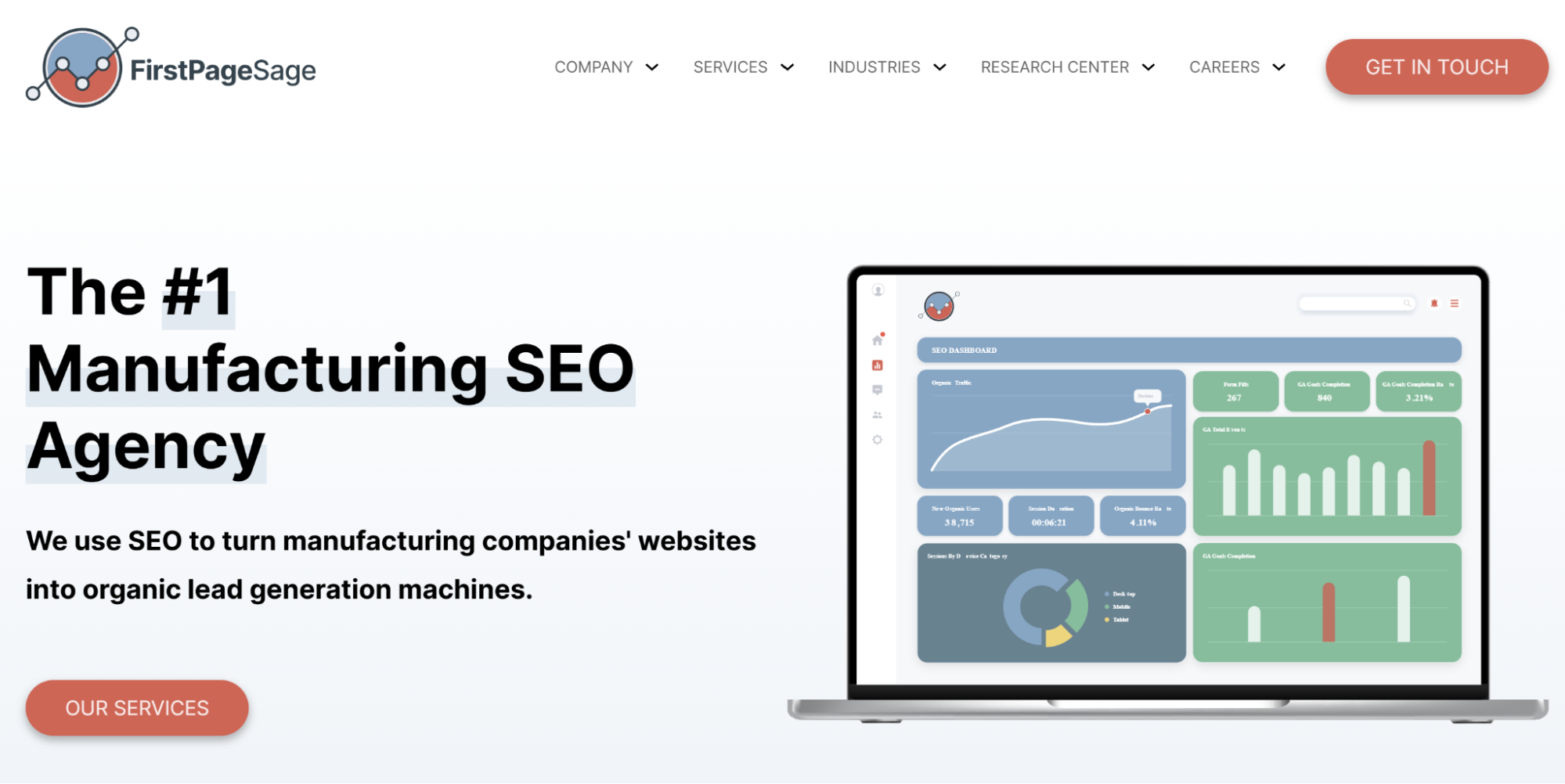
First Page Sage is a US-based agency focused on organic lead generation for manufacturing and industrial companies. Their approach combines technical SEO, content strategy, and long-term authority building tailored to complex B2B sales cycles.
They emphasize SEO programs designed around capability pages, case studies, and technical resources that attract engineers and procurement teams. The agency also highlights work around Generative Engine Optimization (GEO), helping industrial brands improve visibility in both search engines and AI-driven discovery platforms.
3. Lform Design
Lform is a US agency that focuses on SEO for digital manufacturers and industrial brands. Their strategy centers on helping technical companies attract qualified buyers through structured content, product-focused architecture, and search optimization aligned with long B2B buying journeys.
They emphasize visibility for engineers and procurement teams searching for specifications and technical solutions. Lform’s work often blends SEO with website architecture improvements to support industrial catalogs and complex product navigation.
4. Orsanna
Orsanna is an Arkansas-based industrial marketing agency offering SEO services aimed at manufacturers and industrial companies. Their work focuses on improving rankings, inbound lead flow, and organic visibility through SEO and content marketing tailored to industrial buyers.
The agency positions itself around practical, results-driven campaigns and emphasizes onshore expertise and experience with manufacturing-focused businesses. Their SEO approach aligns with long-term inbound growth rather than short-term traffic gains.
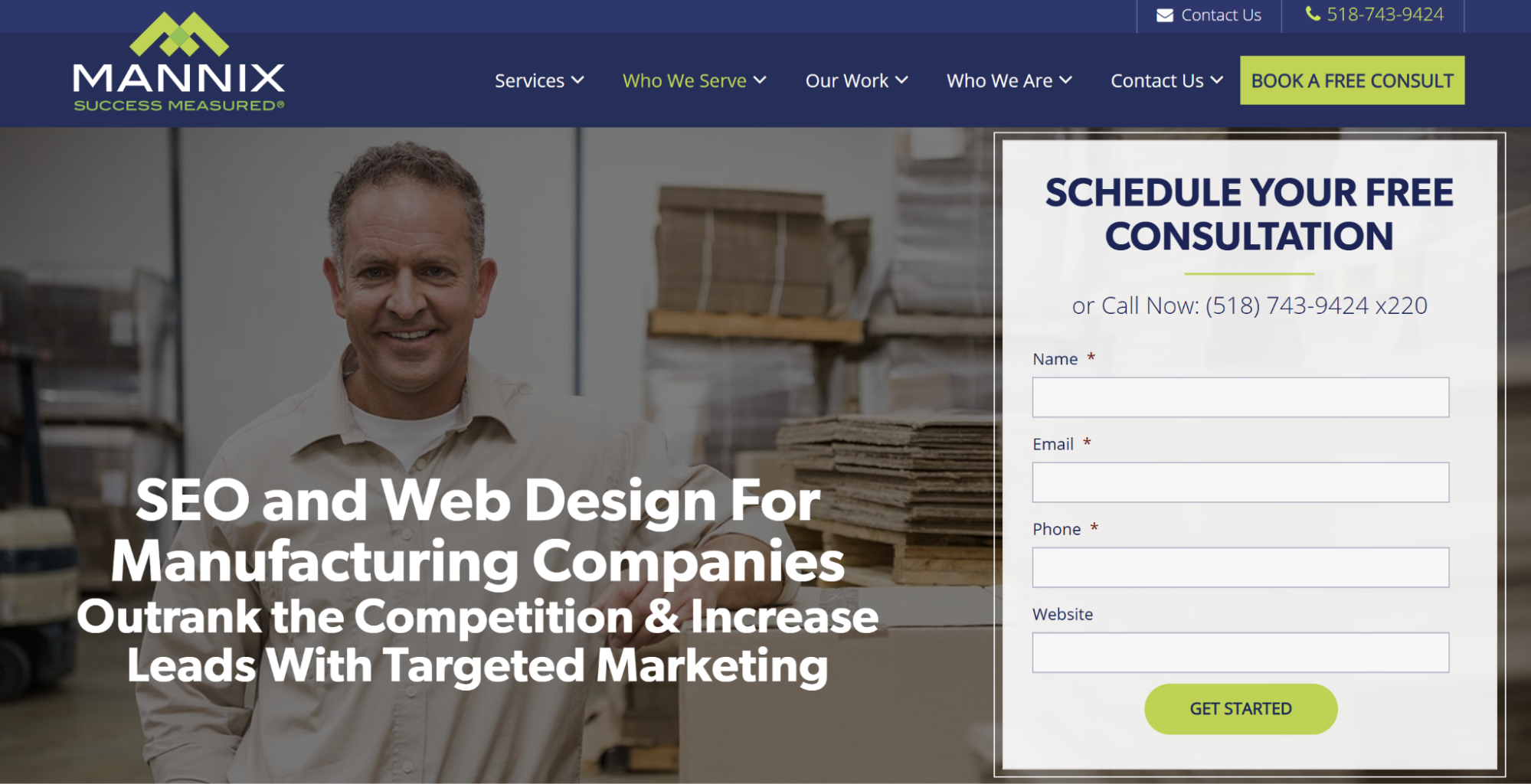
5. Mannix Marketing
Mannix Marketing is a digital agency that provides SEO and web strategy for manufacturing and industrial businesses. Their approach combines technical SEO, content optimization, and website improvements to help industrial companies rank for high-intent search terms and increase qualified leads.
They focus on aligning SEO with the customer journey, helping industrial brands improve discoverability while strengthening digital credibility across competitive markets.
Measuring SEO and GEO Success
If you are investing in SEO each month, you need a clear view of what is working and what needs attention. Rankings alone do not tell the full story.
Start with core metrics:
Organic traffic
Keyword rankings
Page-level performance
Bounce rate and time on page
These show whether your visibility is growing and if visitors find your content useful once they arrive.
Then look deeper. Track lead quality, not just lead volume. Which pages drive RFQs or consultation requests? Which content attracts buyers who match your ideal customer profile?
Monitor conversion rates by landing page. Some pages attract traffic but never move visitors forward. Others quietly drive high-value inquiries.
Use Google Analytics, Search Console, and your CRM together to understand attribution. Industrial buyers often visit multiple pages over time before contacting sales. Tracking the full path helps you see how content supports pipeline growth.
For AI SEO and GEO, watch whether your content appears in AI summaries or answer engines. Visibility here is becoming another sign of authority.
Strong measurement keeps your SEO Strategy for Industrial Companies focused on outcomes, not vanity metrics.
Compliance, Governance & Technical Accuracy
Industrial buyers expect accuracy. Search engines do too. That makes governance a key part of Industrial SEO.
Product claims, performance figures, and technical specifications need to match reality. Outdated or unclear information can hurt trust and create legal risk. It also leads to poor user experience when buyers cannot rely on what they read.
Create a clear review process between marketing, engineering, and legal teams. Marketing writes for clarity, engineering validates accuracy, and compliance ensures claims stay within guidelines. This collaboration keeps content reliable without slowing down publishing.
Version control matters. Specifications change. Certifications get updated. Make sure older pages and downloadable documents reflect current information or clearly show revision dates.
Use disclaimers where needed, especially around performance ranges, application conditions, or safety standards. Keep them clear and readable.
SEO for industrial company websites works best when technical accuracy supports search visibility. Trust is hard to earn and easy to lose, especially in technical industries where buyers rely on precise details before making decisions.
Wrapping Up
Industrial buyers now begin their research online. They compare suppliers, review technical details, and validate credibility before they ever contact sales. That shift makes SEO for industrial companies a long-term growth priority.
Strong results come from a balanced approach. You need solid technical foundations, clear on-page optimization, useful content, and credible authority signals. Local visibility helps regional buyers find you, while AI SEO and GEO prepare your brand for the next wave of search behavior.
Don’t think of SEO solely as a means to more traffic. It is qualified visibility that leads to RFQs, conversations, and long-term customer relationships. Yes, industrial SEO takes time, but it compounds. Each optimized page adds another opportunity to be discovered when buyers are actively looking for solutions.
If you want a partner to help you build a practical SEO strategy for your industrial company and turn search into a consistent pipeline, Growfusely can help. Schedule a meeting to discuss your goals and explore what growth through SEO could look like for your industrial business.


 About Growfusely
 White LabelMake us your (hidden) helping hand in delivering high-quality work to your SaaS clients.
 TeamCheck out the faces (and their backstories) behind our brand.
 Partner With UsJoin forces with us and earn a recurring monthly commission.
 Careers We're HiringJoin our growing team of passionate content marketing geeks.
 SEO & AI Search VisibilityBoost your search engine rankings with a blend of compelling content and technical tweaks.
 Content Strategy & ProductionFuel your brand awareness and user acquisition with strategic content creation and distribution.
 Authority & CitationsEarn relevant, high-quality backlinks from top websites in and around your niche.
 SaaS InfographicsLearn battle-tested best practices on all things SaaS marketing — visually.
 SaaS InterviewsRead our tête-à-têtes with SaaS marketing experts on achieving content-driven organic growth.