
B2B buyer journeys are getting longer. Attention spans? Shorter than ever.
The content marketing strategies that drove leads last year might already be outdated.
Why?
Because algorithms and B2B audiences have evolved. In 2026, winning won’t come from publishing more content. It’ll come from publishing smarter. You need to create the right content for the right audience on the right platform.
So, what does that mean for your brand?
In this guide, we’ll break down the top six B2B content marketing trends for 2026, backed by valuable insights, best practices, and examples. Follow these trends and adapt your B2B content marketing strategy to gain a competitive edge.
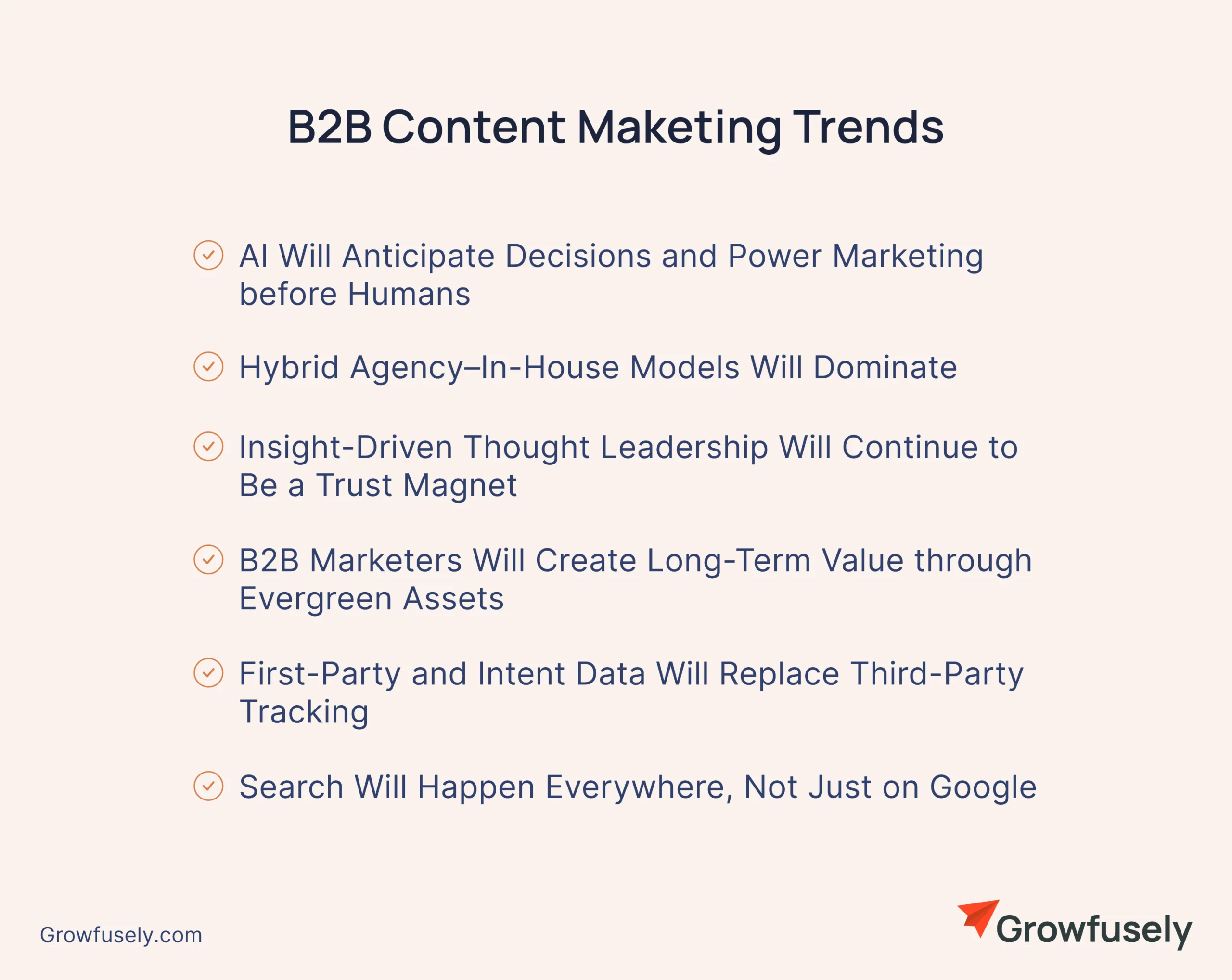
6 B2B Content Marketing Trends for 2026
Let’s get started with the B2B content marketing trends.
Trend #1: AI Will Anticipate Decisions and Power Marketing before Humans
Topic ideation and basic research with AI? Marketers are long past that stage.
AI is now evolving from a tool into a strategic advisor, driving decisions that previously required weeks of human analysis.
For instance, predictive analytics now goes beyond content suggestions. It forecasts which topics, formats, and channels will resonate, thereby helping marketers prioritize campaigns, allocate budgets, and personalize messaging across multiple touchpoints simultaneously.
The result? Hyper-personalization at a scale and speed humans couldn’t achieve alone. As a result, B2B brands are leveraging AI not only to create or enhance content but to predict audience needs and optimize campaigns before leads even engage.
According to the latest Content Marketing Institute (CMI) research, 95% of B2B marketers say their organizations are using AI across multiple areas. For instance, creative asset generation (53%), SEO optimization (41%), social media automation (38%), predictive targeting (12%), and personalizing customer experiences (14%).
Here’s its impact on their work:
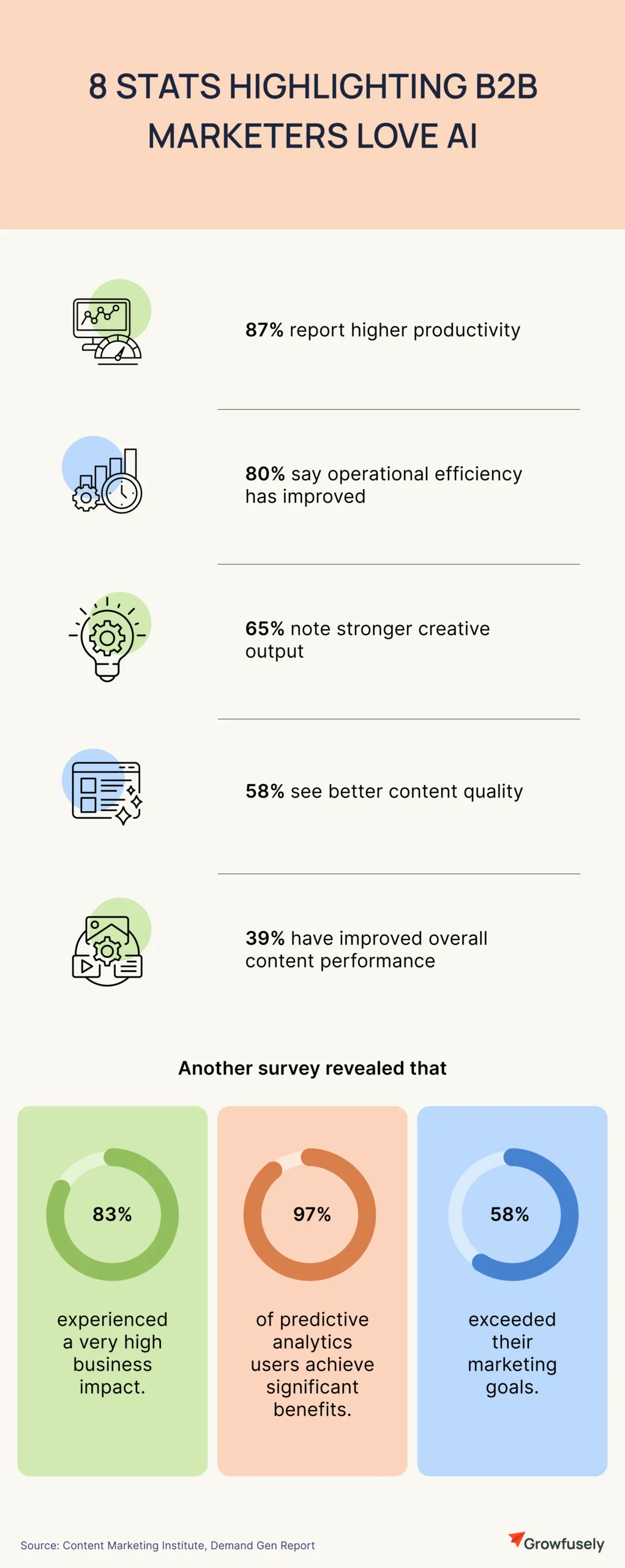
These statistics clearly reflect that AI isn’t replacing marketers. It’s amplifying their creative and strategic edge.
Here are a few AI-powered B2B content marketing best practices.
- Use Predictive Insights to Guide Your Campaigns: Anticipate audience behavior to guide content, campaigns, and channel selection.
- Identify High-Converting Patterns: Identify content themes and formats that deliver results.
- Deliver Hyper-Personalized Cross-Channel Messaging: Synchronize emails, web content, ads, and sales outreach for maximum engagement.
- Create Personalized Landing Pages with AI Tools: Adjust headlines, call-to-action (CTA), and content to match each visitor’s profile and behavior. This boosts engagement and improves SaaS technical SEO performance.
- Create an AI-Human Feedback Loop: AI can identify winning content and provide guidance for improvement.
Bloomreach, a leading B2B SaaS company, uses AI and machine learning to analyze customer behavior, enabling businesses to deliver personalized content experiences.
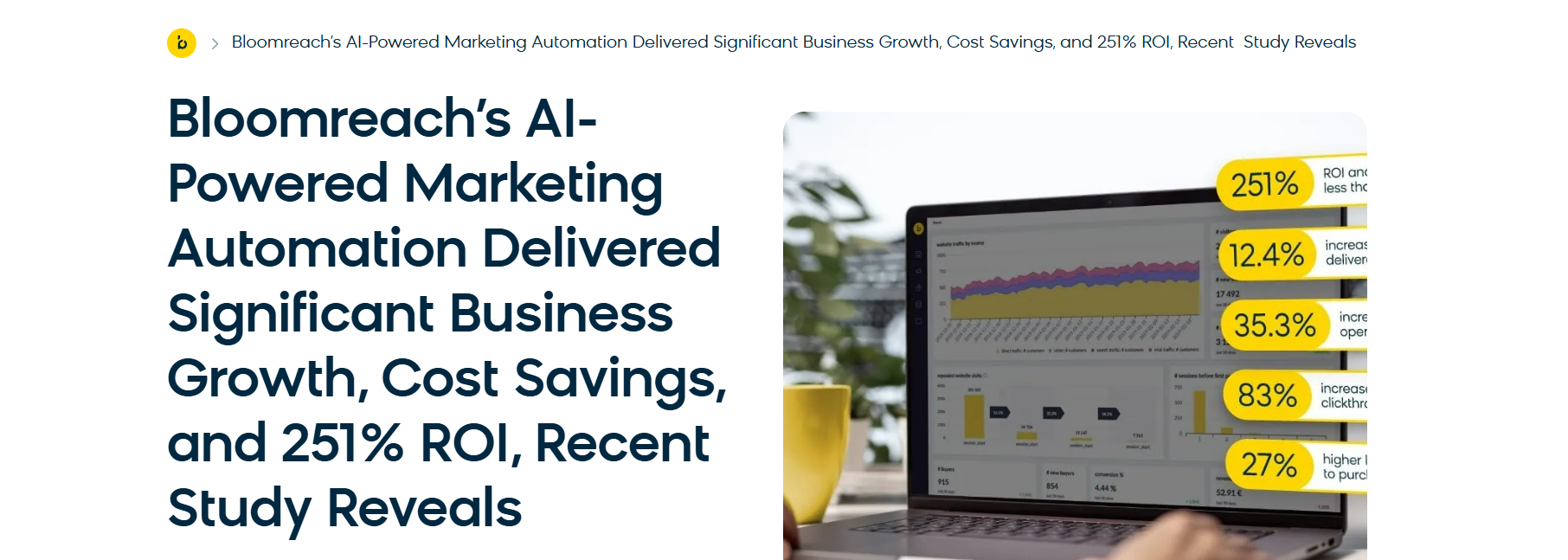
No wonder, top brands like Albertsons and Bosch rely on Bloomreach’s predictive analytics for their content strategies.
Trend #2: Hybrid Agency–In-House Models Will Dominate
In 2026, B2B content marketing won’t be restricted to choosing between agency and in-house teams. It will be the best of both worlds.
According to the latest Sagefrog B2B Marketing Mix Report 2026, 46% of organizations will adopt a hybrid model, up from 36% in 2025.
That’s nearly half of all B2B brands following in-house practices with external expertise.
The key reasons driving this shift include:
- Expertise: Agencies fill knowledge gaps in B2B SaaS SEO, content, and performance marketing.
- Scalability: Hybrid setups adapt quickly to market shifts without the need for new hirings.
Simply put, in-house teams know the brand inside out. Agencies bring specialized skills, creative perspective, and execution speed. Together, they can help build a flexible growth engine.
In short, the hybrid model is a force multiplier.
Here’s how you can build a winning hybrid model.
- Create a Solid Plan: B2B content marketing strategy, content, SEO, reporting – decide who owns what right from the beginning.
- Set Shared KPIs: Track performance through crucial metrics, such as organic growth, leads, conversions, etc.
- Co-Create Optimized Content: Combine your internal product expertise with the agency’s storytelling and SEO.
- Conduct Regular Reviews: Weekly check-ins and shared dashboards can help both teams be aligned and accountable.
- Choose the Right Agency: Work with a B2B content marketing service provider with a proven success record.
Partnering with a B2B content and SEO agency like Growfusely can be a serious growth move. The collaboration can take your strategy from plan to performance. You’ll witness measurable results like high traffic, qualified leads, conversions, etc, that move you closer toward your business goals.
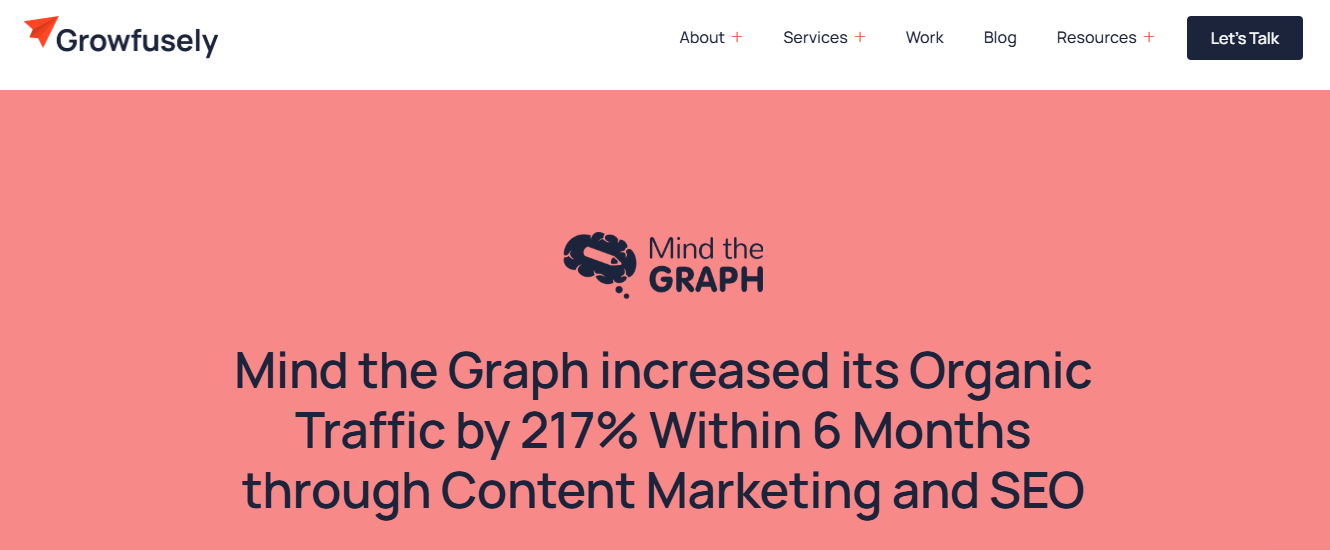
Mind the Graph, a SaaS design tool for scientists, teamed up with us to fix its SEO, clean toxic backlinks, and publish research-backed content for niche audiences.
In just six months, this B2B content marketing strategy helped them achieve:
- +217% organic traffic
- +100% referring domains
- +40% organic keywords
This way, smart hybrid collaboration can help drive results.
Trend #3: Insight-Driven Thought Leadership Will Continue to Be a Trust Magnet
Surface-level content can’t help your B2B brand establish itself as a thought leader. B2B audiences want in-depth insights from experts who know their stuff.
Thought leadership built on real-time data and industry expertise can help brands earn trust and drive conversions.
According to Momentum ITSMA’s 2025 survey:
- 99% of buyers say thought leadership is crucial in their decision-making.
- 49% say thought leadership helps reduce the risk of making a poor decision.
- 70% say it helps multiple stakeholders within the buying group align on key issues.
- 66% wouldn’t work with a new provider whose thought leadership was poor.
- 73% would not recommend a provider if their thought leadership is poor.
So, if you’re not investing in thought leadership in 2026, you’re making a huge mistake.
Let’s look at the key thought leadership content marketing strategies for B2B brands to boost engagement.
- Lead with Real-Time Data: Back your insights with recent research and market trends.
- Offer Actionable Advice: Provide clear steps your B2B audience can follow.
- Publish Across Channels: Share valuable industry insights via blogs, LinkedIn posts, and industry events. This can help maximize reach.
- Engage in Industry Conversations: Respond to B2B content marketing trends, challenges, and provide unique perspectives.
Gartner leverages this B2B content marketing trend well.
Their research-backed reports on market trends and industry forecasts position them as a go-to authority in the B2B space. Their latest and relevant insights influence key business decisions across industries.

Remember that insight-driven content builds authority, and authority builds trust.
Trend #4: B2B Marketers Will Create Long-Term Value through Evergreen Assets
Unlike campaign-driven or trend-based pieces, evergreen content stays relevant and pulls in leads long after publishing.
SEOJuice reveals that a one-time $2,500 evergreen asset, like a calculator or in-depth guide, can deliver a 3–5-year ROI window. In fact, it cuts cost-per-lead by up to 50% versus paid campaigns.
Creating high-value, evergreen content is, therefore, a key to long-term growth. Hence, focus on building evergreen assets over one-off campaign content.
Here are a few crucial content marketing B2B tactics for creating evergreen pieces:
- Write on Timeless Topics: Think of valuable “how-to” guides, industry best practices, and FAQs, as these types of content stay helpful over time.
- Prioritize SEO: Optimize with relevant B2B SEO keywords and update the content frequently according to Google’s E-E-A-T guidelines. This can help you maintain rankings in search engines.
- Build Internal Links: Add internal links to drive traffic to other high-value pages and improve B2B link-building efforts.
- Keep It Authentic and Updated: Back every piece with solid research, avoid fluff, and review it periodically to ensure accuracy and relevance.
Salesforce’s guide on “CRM Best Practices” continues to rank and drive leads because it covers crucial, unchanging strategies.
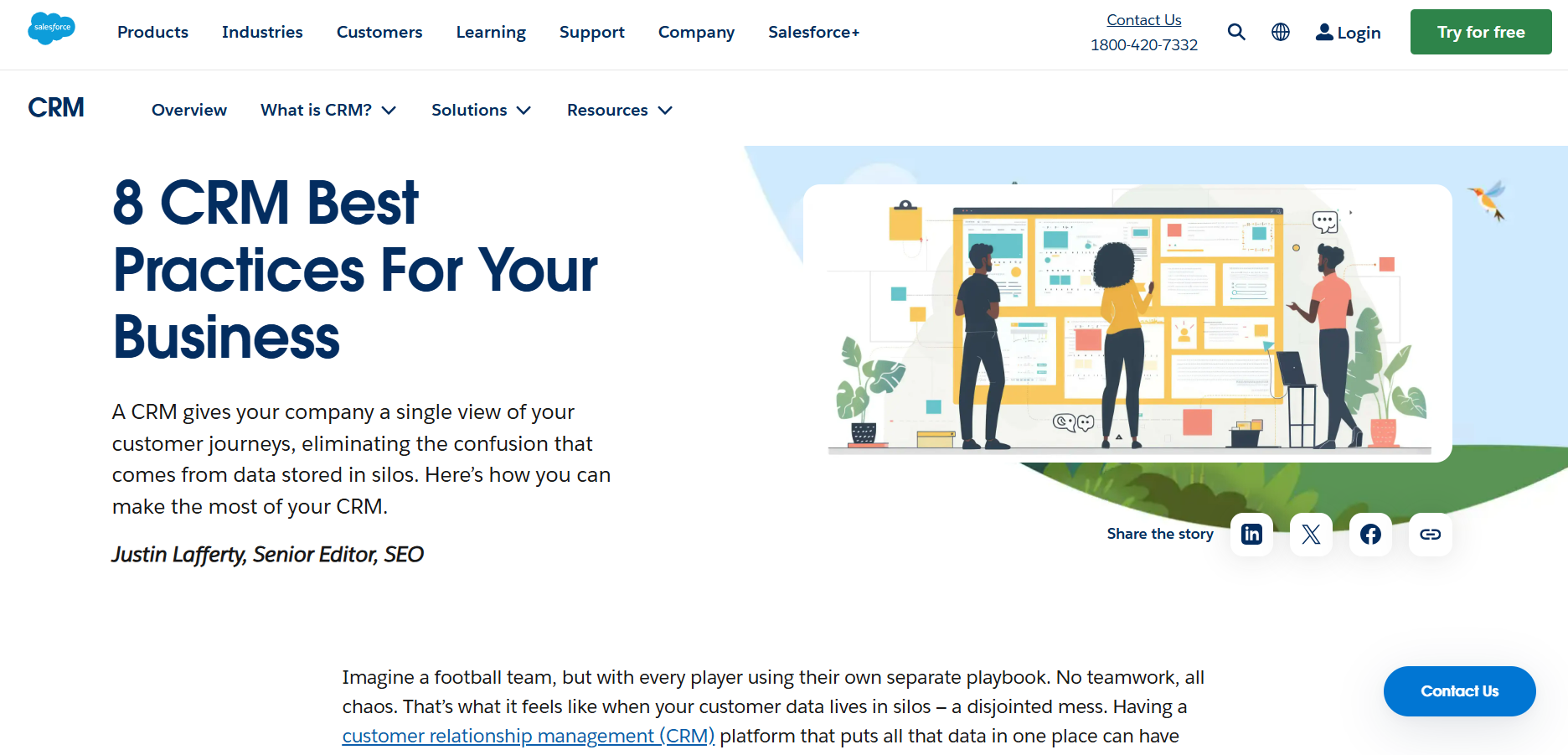
Their team understands the B2B content marketing trend and regularly updates the guide to keep the content fresh and achieve long-term authority.
Trend #5: First-Party and Intent Data Will Replace Third-Party Tracking
Third-party cookies are fading fast, and with them, traditional tracking methods.
AdRoll states that by 2026, 91% of marketers are expected to use intent data to drive account prioritization and personalized content strategies.
As privacy rules become strict, first- and zero-party data are emerging as the new standard for B2B personalization.
The best marketers are already adapting.
They are creating experiences that deliver instant value without asking users to fill out long forms asking for unnecessary details. Think interactive tools, preference centers, and dynamic website content that adjust to each visitor automatically.
Here are a few tactics to make it work:
- Collect Data Directly: Encourage the audience to share preferences through surveys, sign-ups, and gated tools.
- Use Intent Signals Wisely: Track what the users read, download, or engage with to predict purchase intent.
- Personalize at Scale: Use automation to tailor recommendations, emails, and on-site experiences based on user behavior.
- Adopt Privacy-First Policy: Be transparent about how data is collected and used to build trust.
Clearbit helps B2B marketers enrich first-party visitors and intent data to personalize web experiences and campaigns in real-time. Again, all based on proprietary and consented signals rather than cookies.
The future is zero-click personalization, anticipating what buyers want before they ask, using only data they’ve willingly shared.
Brands that master first-party and intent data activation now will improve targeting. This B2B content strategy will help increase conversions and future-proof their marketing for the post-cookie era.
Trend #6: Search Will Happen Everywhere, Not Just on Google
In 2026, search will no longer be a single-channel activity.
According to Google, we’re entering a multimodal search era where users explore through text, voice, visuals, and even AI conversations.
This means that your audience can find you anywhere: LinkedIn, YouTube, Reddit, TikTok, or even inside chatbots.
For B2B brands, this means buyers are discovering products through short videos, community threads, and visual explainers before they ever visit the website.
Hence, brands must optimize for:
- Visual Search: Image-based SEO for platforms like Google Images and Pinterest.
- Voice Search: Queries like “Hey Siri, best CRM software for SaaS.”
- Social Discovery: Influencer recommendations, LinkedIn searches, and in-platform content.
In short, visibility will now depend on discoverability across multiple platforms, not just SERPs.
Here are a few practices.
- Design Content for Platform-Native Discovery: Your blog posts, videos, and assets should be crawlable, searchable, and tagged correctly across platforms.
- Structure Content for AI Assistants: Write in natural language and use schema markup so your answers appear in voice and chat-based search results.
- Repurpose High-Performing Assets: Adapt top blogs into short-form videos, carousels, or snippets for omnichannel visibility.
- Build Topical Authority Hub: Create interconnected content clusters that signal expertise to both search engines and AI models.
- Use Analytics beyond Google Search Console: Track how the target audiences find you across channels, including website search, social, communities, and AI tools.
HubSpot nails this B2B content marketing strategy.
Its blog search interface showcases AI-powered content recommendations that improve on-site discoverability. No Google search is required.
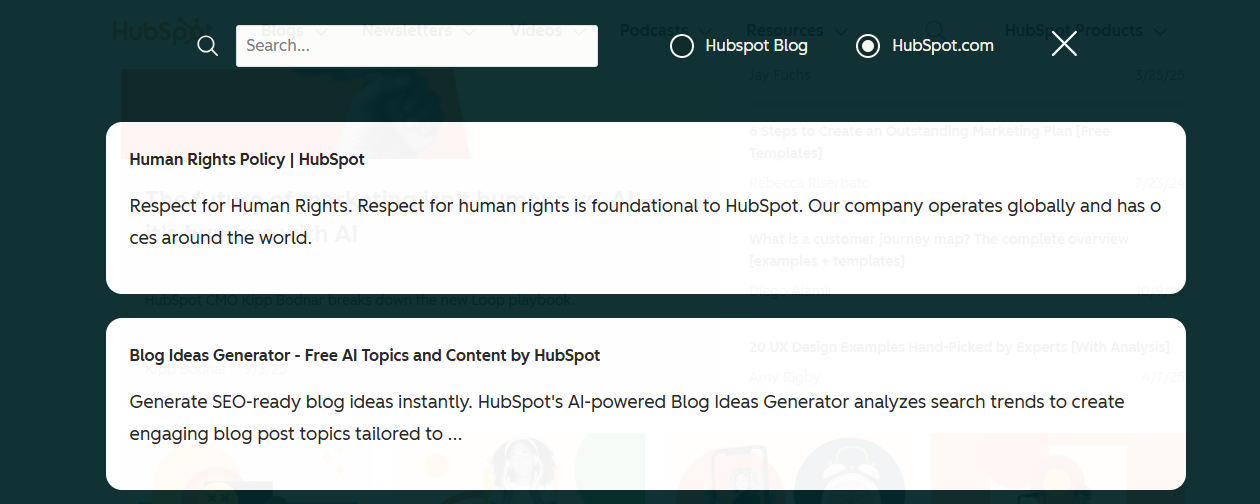
Besides, the company repurposes high-performing blog content across social, email, and other channels to expand reach.
In short, the brands that master multi-platform discoverability will own visibility in 2026.
Conclusion
Winning at B2B content marketing in 2026 is easy when you follow these shared latest trends and strategies. As the trends reflect, the key is to adapt to audience behavior, leverage data and AI smartly to guide decisions, and create content that resonates across platforms.
When you focus on delivering value, maintaining consistency, and driving engagement, results naturally follow.
Want to level up your B2B content marketing game?
Our SaaS SEO agency, Growfusely, helps B2B brands create and distribute high-impact content and B2B content marketing strategies that drive results. Let’s talk.
FAQs
Why Are Traditional B2B Content Marketing Strategies Becoming Less Effective in 2026?
Traditional B2B content marketing strategies focus on generic messaging. In 2026, audience expectations, AI insights, and cross-platform discoverability demand smarter, personalized, and data-driven approaches for meaningful engagement.
Why Content Marketing Is Important for B2B in 2026?
B2B buyers in 2026 will rely more on data-backed insights and thought leadership for decision-making. That’s where content marketing can help build trust, educate prospects, and nurture long-term relationships, thereby driving higher-quality leads.
How Does AI Change the Role of B2B Content Marketers in 2026?
AI can help strengthen strategic decision-making, predict audience needs, and automate repetitive tasks. This way, B2B content marketers can focus on creativity, personalization, and campaign optimization for faster, data-driven results.
What Types of Content Benefit the Most from AI-Powered Personalization?
AI-powered personalization works best for emails, landing pages, product recommendations, and campaign messaging. These formats let AI predict user needs and deliver hyper-personalized experiences across touchpoints before audiences even engage.
How Can Small B2B Teams Adopt Hybrid Models Without Increasing Costs?
Partnering with the right content marketing agencies while maintaining in-house expertise can help small B2B teams work seamlessly. Moreover, shared KPIs, clear roles, and collaboration tools can ensure efficiency without scaling headcount or inflating budgets.
What Qualifies as High-Performing Thought Leadership in 2026?
High-performing thought leadership in 2026 should address industry challenges, demonstrate expertise, and provide insightful, data-backed, and actionable content. It should engage multiple stakeholders across channels, thereby building trust and authority.
Why Is Evergreen Content More Important Now than Ever?
Evergreen content maintains relevance, attracts leads over the years, and maximizes ROI. It reduces dependency on paid campaigns, builds authority, and sustains engagement for long-term B2B growth.
How Can B2B Brands Collect First-party Data Without Hurting User Experience?
B2B brands can collect first-party data through surveys, sign-ups, and intent signals, then use automation to personalize experiences. Being transparent with a privacy-first approach ensures trust without impacting user experience.
What Does “Multimodal Search” Mean for B2B Marketers?
Multimodal search refers to discovering content via text, voice, visuals, or AI assistants. For B2B marketers, it means creating searchable content that matches varied buyer journeys and improves discovery across channels.
Is SEO Still Relevant when Search Is Shifting Beyond Google?
Absolutely. SEO now extends to voice, visual, platform-native, and AI-assisted search. Optimizing content structure, keywords, and schema ensures discoverability wherever audiences explore.
How Can B2B Brands Decide Which of These Trends to Prioritize?
B2B brands should analyze audience behavior, business goals, and resource capacity. They should start with trends that deliver measurable impact, align with strategy, and can be scaled effectively.

Pratik Dholakiya is the Founder of Growfusely, a SaaS SEO and AI Search Visibility agency.
