Most people don’t wake up and say, “Today’s the day I hire a financial advisor.”
They search. They read. They browse through articles and videos that help them feel a little more in control of their financial decisions. When they come across something useful, something that doesn’t sell but explains, that’s when the real journey begins.
A modern financial advisor like you is no longer competing on returns or fees. You’re competing on trust, relevance, and visibility. And right now, the most effective way to scale all three is through content.
Content allows you to show up at the exact moment a potential client is looking for guidance. It positions you as a steady, reliable expert, before they ever shake your hand or fill out a form.
For advisors who commit, it becomes the most scalable way to build trust and stay top of mind with potential leads. In this guide, you’ll learn how to build a content marketing engine that’s aligned with your values and brings in the right kind of clients.
Understanding Your Audience
The fastest way to waste time on content marketing is to create content no one asked for. That’s why this part of the process matters more than most advisors realize. Before you ever open a blank document or hit “record,” you need to know exactly who you’re trying to reach and what they need help with.
Start by identifying your ideal client types. You might serve retirees looking for secure income strategies, tech professionals navigating stock options, or business owners trying to balance personal and corporate wealth. Each of these groups speaks a different financial language. They have different anxieties, aspirations, and expectations.
For example, a 45-year-old executive at a startup might be trying to figure out the tax implications of exercising ISOs, while a 65-year-old nearing retirement is worried about outliving their savings. If you try to speak to both with the same message, you risk connecting with neither.
That’s where segmentation comes in. Break your audience down by life stage, profession, family status, or even financial literacy. This allows you to develop content that meets people where they are, not where you wish they were.
Once you’ve done that, map content directly to their needs. What’s keeping them up at night? What do they Google but never bring up in meetings? What financial jargon makes them feel lost or overwhelmed? The more you tap into their real concerns, the more your content will resonate.
Above all, speak like an empathetic person. Financial advisors often default to corporate language. But what clients need is clarity, not more complexity. Every piece of content you create should help them feel more informed, more in control, and more confident about what to do next.
Foundations of a Content Strategy
Random acts of content rarely, if ever, drive any meaningful results. If you want your content to generate real business results—qualified leads, more consultations, long-term trust—you need a strategy. One that’s written down, tied to your goals, and grounded in how your prospects actually behave.
Start by clarifying why you’re investing in content. Do you want to build awareness among high-earning professionals? Generate email signups from people approaching retirement? Drive discovery calls for a new wealth management service? Each of these outcomes calls for a different type of content, tone, and distribution plan.
Think of your strategy as a living document that answers four key questions:
Who are we creating content for? This includes your audience personas, life stages, concerns, and common objections. You’ve already outlined this. Now make it the anchor.
What are we trying to achieve? Goals might include increasing organic traffic by 30%, improving email open rates, or generating five qualified leads per month. Make these specific and measurable.
What types of content will support those goals? Educational blog posts might drive organic discovery. Case studies or video explainers can move warm leads closer to a decision. Webinars or downloadable tools can generate email signups.
How will we measure success? Track both marketing metrics (traffic, rankings, email signups) and business outcomes (consultation requests, closed clients). These become your KPIs.
And because you’re operating in a regulated industry, your financial advisor marketing strategy must also account for compliance. Loop in your legal or compliance officer early. Build time into your publishing workflow for approvals. Establish internal rules around topics like testimonials, investment performance, and client data usage.
One last note: don’t get stuck in planning mode. Your financial advisor content marketing strategy doesn’t have to be perfect. It just has to be focused, flexible, and built for the audience you want to serve. You can refine it as you go.
Content Types That Work for Financial Advisors
Now that you have a strategy, let’s get into the formats you can choose from. The best formats are the ones that meet your audience where they are, offer real value, and move them one step closer to trusting you.
Here are the content types that consistently perform well in financial advisor marketing strategies:
1. Educational Blog Posts
Long-form blog content is the backbone of most content marketing for financial advisors. These posts give you space to explain key topics like Roth vs. Traditional IRAs, estate planning fundamentals, or tax-saving strategies for small business owners.
But don’t just write what you think is useful. Write what they are actually searching for. That’s how financial advisor blog content becomes both a trust builder and an SEO asset.
Always and always aim for depth, not fluff. Include charts, real-world examples, and clear takeaways. Over time, these posts become a library of value that showcases your expertise.
2. Email Newsletters
Email is your direct line to people who already trust you enough to opt in. Use this channel to stay top of mind, deliver timely advice, and create consistent engagement.
Your newsletter doesn’t need to be fancy. A few hundred words, a helpful insight, a link to a recent post. That’s enough. What matters most is showing up regularly and offering value.
3. Videos and Webinars
Many people would rather watch than read. Video lets you humanize your brand, explain complex topics with visuals, and create a stronger sense of connection. In fact, 93% of marketers consider video a crucial part of their overall strategy.
Start with short-form videos (for Instagram Reels, YouTube Shorts, and LinkedIn)—one to three minutes—that answer a single question or explain a narrow concept. Later, you can expand into live webinars or recorded presentations on broader topics like “Financial Planning for Doctors in Their 30s.” Incorporating visuals from AI presentation makers helps ensure these longer sessions maintain high engagement without requiring hours of manual design effort.
This is where storytelling for financial advisors is a must. Use your voice, your analogies, your personal style to build trust beyond text.
4. Social Media Content
LinkedIn is remarkably powerful for financial professionals. Share behind-the-scenes perspectives, short insights, summaries of your blog posts, or curated takes on financial news. LinkedIn posts are a great way to amplify your core content and position yourself as a consistent, helpful voice in your network.
Don’t overthink it. A simple post like “Three questions I ask every new client before we talk investments” can spark real engagement.
5. Tools, Calculators, and Downloadables
Interactive or downloadable content turns passive readers into engaged leads. Think retirement income calculators, budgeting templates, or checklists like “9 Things to Do Before Filing Taxes.”
This type of content for financial advisors works well behind a lead capture form. If someone’s willing to trade their email for it, they’re more than just curious: they’re interested.
These five formats are the foundational building blocks in any serious financial advisor content marketing program. The goal is to meet prospects with the right message, in the right format, at the right moment.
SEO and GEO for Financial Advisory Content
When someone searches “how much do I need to retire at 55” or “best financial advisor near me” on Google or ChatGPT, your content should be waiting for them. For that to happen, you need financial search engine optimization (SEO) and generative engine optimization (GEO).
Done right, SEO/GEO turn your website into a discovery engine that works around the clock. It connects you with people who are actively looking for financial guidance. It builds authority. And it makes your content visible not just to human readers, but also to AI, which is increasingly becoming the bridge in how information is delivered.
Basic SEO: Keyword Research, On-Page Best Practices, and Internal Linking
Start with keyword research. The goal is to uncover what your ideal clients are typing into Google, especially long-tail queries that reflect high intent. Phrases like “how to save for retirement at 40” or “financial planning in early 20s” are specific, actionable, and easier to rank for than generic terms.
Once you’ve identified these topics, focus on:
On-page SEO: Optimize each piece with relevant headings, meta descriptions, and clean URL structures.
Content structure: Use short paragraphs, bullet points, and subheadings to make your articles scannable and digestible.
Internal linking: Link related blog posts and service pages to help search engines understand the hierarchy of your site and improve crawlability.
These basics are the foundation of any strong financial advisor marketing strategy, especially for solo advisors or small firms without massive budgets.
Local SEO Strategies for Advisors Targeting Regional Clients
As a financial advisor, you likely operate regionally, not nationally. That’s why local SEO can drive highly qualified traffic. To optimize for local visibility:
Claim and complete your Google Business Profile with accurate contact info, service areas, and business categories.
Use location-specific landing pages to rank for terms like “wealth advisor in Tampa” or “retirement planner near Boulder.”
Encourage client reviews on Google and other relevant directories to build trust signals for local search.
Local SEO helps you show up in the “map pack”: the cluster of listings at the top of Google’s results, where clients are most likely to click.
Evergreen vs. Timely Content
A strong SEO strategy includes a blend of evergreen and timely content. It’s all about balancing topical authority with long-term value.
Evergreen content includes topics like budgeting principles, tax strategies, or retirement account comparisons. These stay relevant year-round and generate steady organic traffic over time.
Timely content includes responses to tax law changes, market fluctuations, or shifts in interest rates. These pieces establish topical authority and show clients you’re up-to-date and responsive.
Together, they position you as a well-rounded, knowledgeable advisor and improve your search visibility across different types of queries.
AI SEO and Generative Engine Optimization (GEO)
Do you still always use Google to look things up? Likely not. Instead, now you use tools like ChatGPT, Gemini, and Claude to do your research.
So, search is evolving. More users are getting answers directly from AI tools, often without ever clicking through to a website. This shift toward AI SEO means your content needs to be structured not just for Google, but for large language models and answer engines as well.
To adapt:
Write content that answers questions clearly and fully. AI systems favor well-structured, semantically rich content that reads like a direct response to a user’s query.
Format your posts for machine readability. Use question-answer format, subheadings, summary boxes, and bullet lists to help AI tools parse the content.
Include supporting context and related questions. Cover the “what,” “why,” and “how” behind a topic so AI can extract complete answers.
Refresh outdated content. AI search models tend to favor recently updated content, so keep your pillar pages current.
As generative engines continue to shape how clients find information, content marketing for financial advisors must go beyond traditional SEO. Being visible in AI summaries and answer boxes is now just as important as ranking on the first page of Google.
Content Distribution & Promotion
Publishing helpful content is only half the battle. The other half is getting that content in front of the right people. Without a strong distribution plan, even your best articles, videos, or tools will sit unseen.
Content marketing for financial advisors works best when supported by a simple, repeatable promotion system that uses the channels your audience already engages with.
Email Sequences to Nurture Leads Across the Funnel
Email remains one of the most effective channels in financial content marketing. It allows you to build trust through consistent touchpoints, educate prospects over time, and guide them toward taking action.
Set up automated email sequences for different types of leads:
New subscribers: A welcome series introducing your philosophy, services, and most helpful blog content.
Event attendees: Follow-up emails after webinars or workshops with additional resources or an offer to book a consultation.
Lead magnets: Targeted sequences based on gated content downloads (e.g., “Retirement Planning Checklist”).
Sharing Content Through LinkedIn, YouTube, and Podcasts
Use platforms that match your ideal clients’ behavior and preferences:
LinkedIn: Ideal for reaching professionals and business owners. Share blog summaries, behind-the-scenes insights, or 1-minute tips that tease longer-form content. LinkedIn also works well for B2B financial services marketing if you advise organizations or company leadership.
YouTube: Great for building long-term visibility. Short, well-tagged explainer videos can double as embedded content on your website and organic lead generators through search.
Podcasts: Whether guesting on existing shows or hosting your own, audio gives you a chance to build trust through voice and nuance. You can also repurpose podcast content into articles or social posts later.
Repurposing Content Across Formats
One blog post shouldn’t be the end of the road. Extract the most juice from it via other content formats to extend reach and reinforce key messages across channels.
For example:
Turn a blog on “estate planning basics” into a LinkedIn carousel post, a short email series, and a downloadable checklist.
Convert a video into a transcript-based article or quote snippets for social.
Break a long guide into a multi-part series to boost engagement.
This approach to content management in financial services ensures you get maximum value from every piece without always starting from scratch.
Building Partnerships with Influencers, Niche Media, or Local Organizations
Collaborations can amplify your reach beyond your immediate network. Look for trusted partners in adjacent spaces such as:
Local CPAs, estate attorneys, or mortgage brokers
Community organizations or chambers of commerce
Niche publishers or influencers focused on business, wealth, or retirement
Co-creating content, whether it’s a joint webinar, interview, or guest blog, adds credibility and puts your brand in front of a new but relevant audience.
Speaking of which, in financial services content marketing, trust is the currency that converts.
While you may face restrictions around client testimonials due to compliance, you can still add trust signals such as:
Certified Financial Planner™ or other designations
Years of experience and credentials on your About page
Media appearances, awards, or case studies
An updated advisor bio with a photo and a human tone
These cues work in tandem with your content to show that you’re not just knowledgeable but credible, too.
Content Marketing Agencies for Financial Advisors
If you want strategy, financial SEO, writing, and everything in between handled for you, then agencies that specialize in content marketing for financial services can offer the proven expertise you need. Here are five of the finest content marketing agencies for financial advisors.
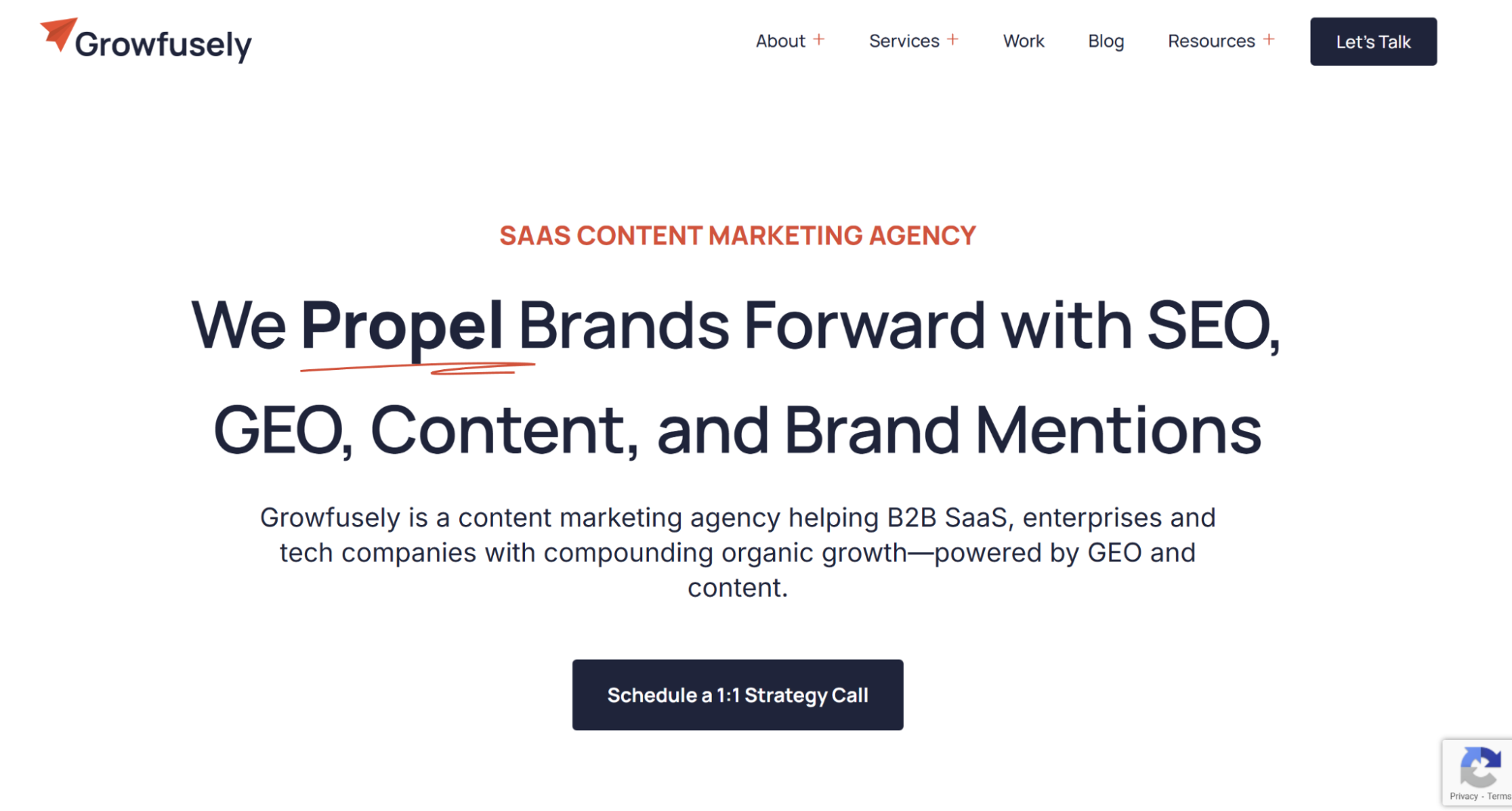
1. Growfusely
Growfusely is a specialist financial services content marketing agency that partners with advisory firms and fintech brands to build strategic content engines that attract and convert ideal clients. We focus on content marketing for financial advisors and related professionals, blending deep sector expertise with data‑driven SEO, storytelling, and distribution tactics tailored to the financial decision journey.
Our approach begins with audience and intent research, followed by content planning that aligns with both compliance and competitive visibility needs. We create high‑value blog articles, whitepapers, case studies, and other educational assets, all designed to build authority, boost organic visibility, and generate qualified leads in regulated markets.
We also support executive thought leadership on LinkedIn and long‑term content frameworks that compound value over time, which makes us a strong choice for firms looking to scale content with measurable results.
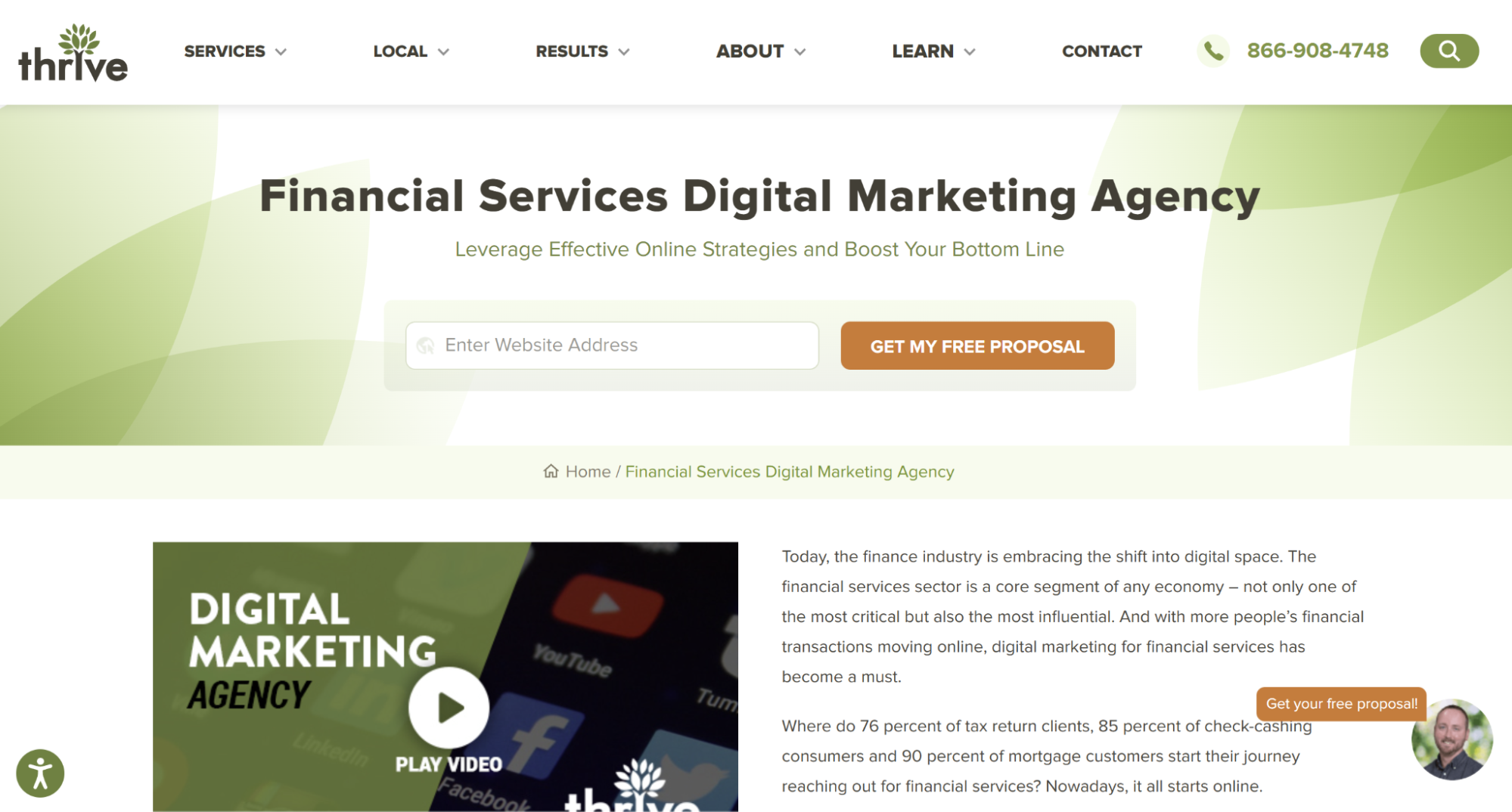
Thrive Internet Marketing Agency is a full‑service digital marketing partner that supports content marketing for financial services and institutions. Their offerings include SEO, content development, web design, social media engagement, and PPC, all tailored to help financial brands grow their online presence.
Thrive works with a range of finance‑focused clients, helping them improve search visibility, enhance lead generation, and build comprehensive digital strategies. Their approach helps financial advisors and institutions attract the right audience and nurture them along the decision path with clarity and compliance.
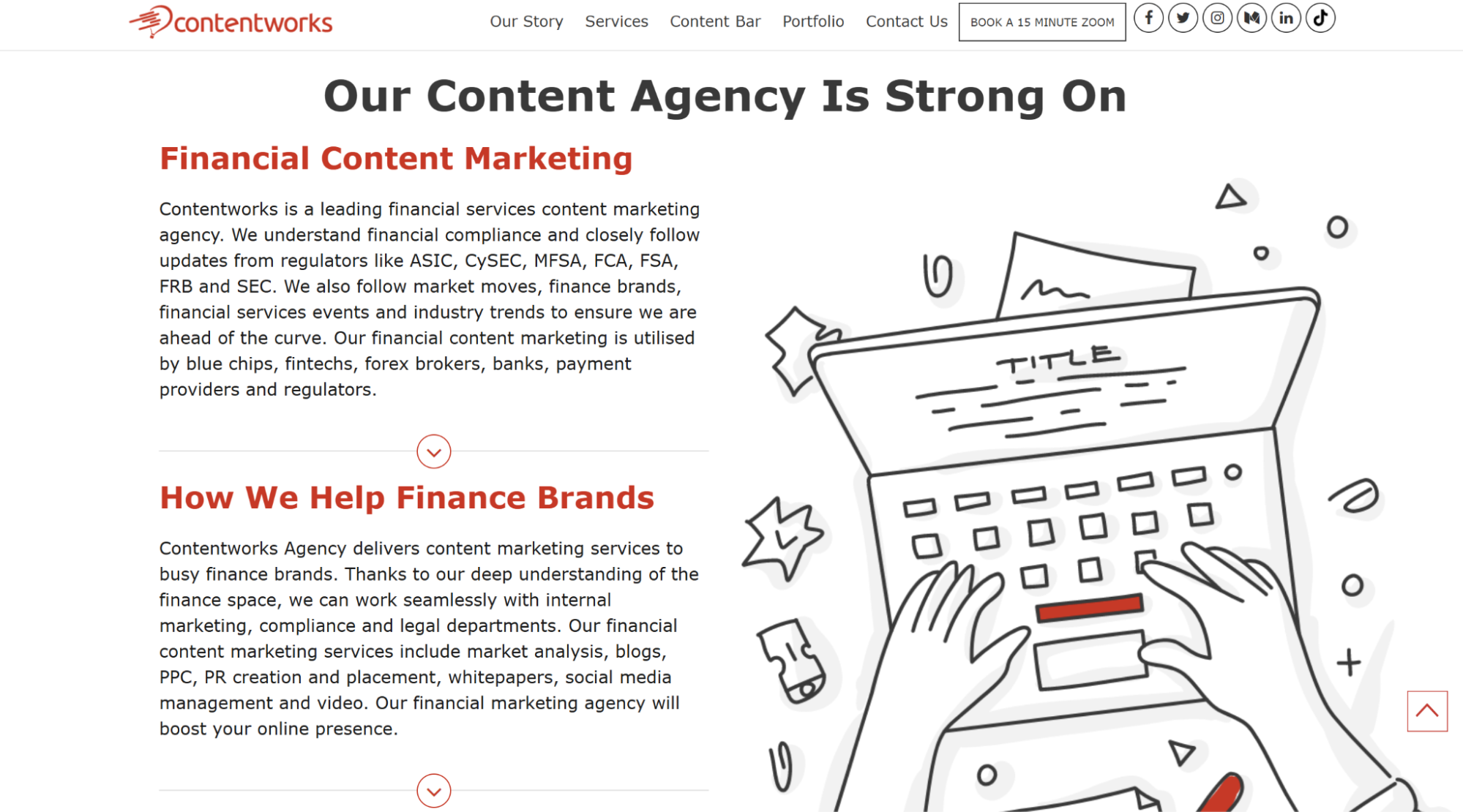
3. Contentworks Agency
Contentworks Agency specializes in compliant finance content marketing, serving banks, fintech companies, and financial institutions that need expert storytelling within regulatory boundaries. They create tailored content such as thought leadership pieces, technical analyses, blog posts, and social media assets that are both engaging and compliant.
With a focus on financial industry challenges, Contentworks builds content that simplifies complex topics, supports brand positioning, and drives qualified engagement across channels. Their experience with regulated markets and finance content development makes them a reliable partner for firms needing both strategic insight and execution in financial content marketing.
4. Financial Marketing Limited
Financial Marketing Limited is a creative financial content marketing agency that helps banks, insurance firms, wealth advisors, and fintechs with strategic brand development and tailored content creation. Their services span finance industry content strategy, digital marketing, SEO‑oriented writing, and social media campaigns.
By blending content with broader marketing support like graphic design and digital branding, they help financial firms communicate clearly and consistently across touchpoints. This agency is a good fit for advisors or institutions looking for integrated content that supports both visibility and brand credibility in a crowded marketplace.
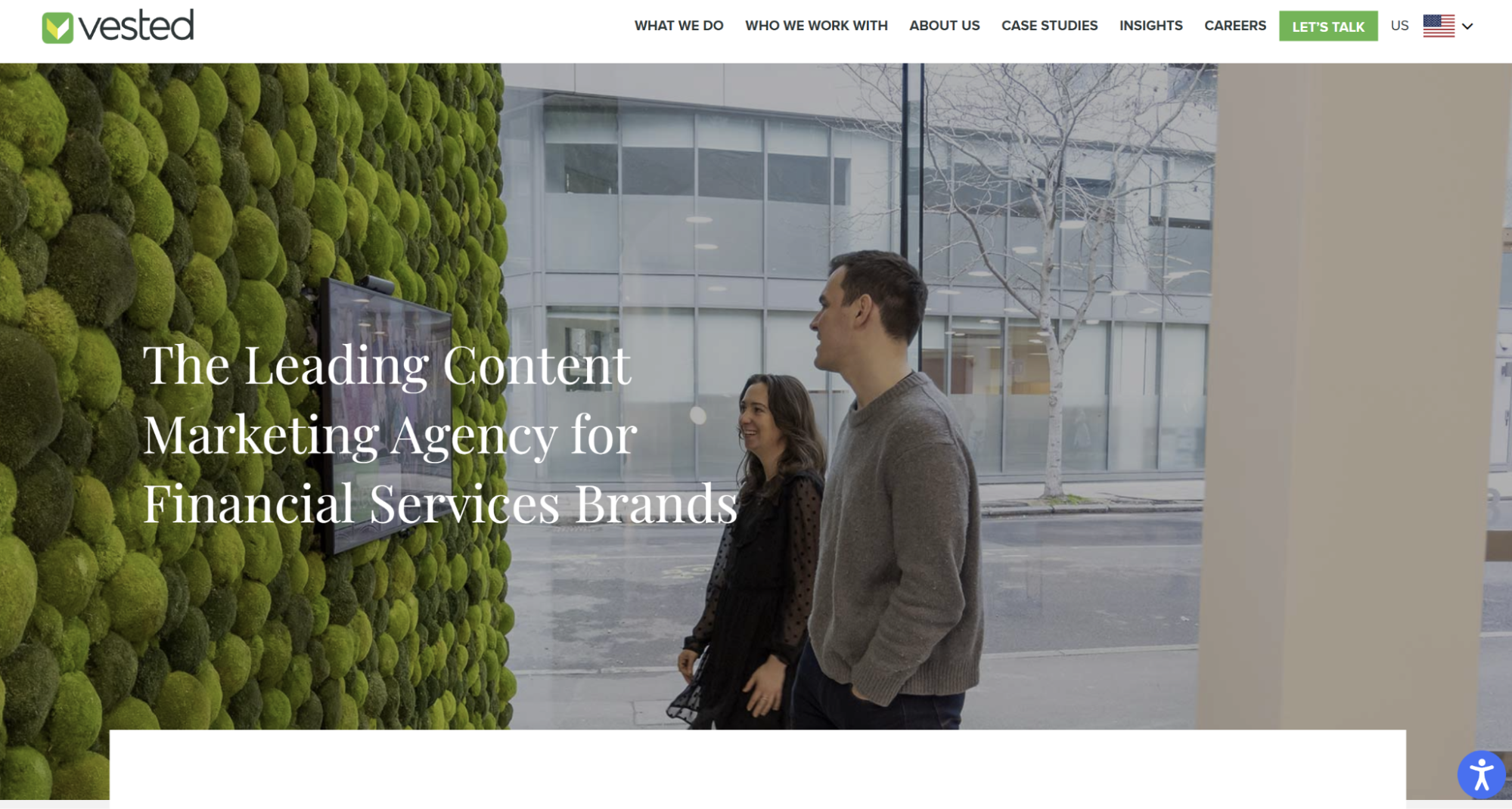
5. Vested
Vested is a content marketing agency for financial services brands focused on narrative, clarity, and thought leadership. They bring a newsroom mindset to financial content, crafting stories that simplify complex topics and resonate with sophisticated audiences.
Vested’s content team works with finance firms to develop strategy, blog content, white papers, and educational resources that strengthen authority and attract relevant traffic. Their focus on quality writing and strategic messaging makes them a strong choice for financial advisors and institutions seeking content that both informs and inspires decision‑makers.
Compliance & Risk Management
One of the biggest reasons financial advisors hesitate to publish content is fear of non-compliance. And it’s not unfounded. Regulations in the financial services industry are strict, nuanced, and vary by region.
But here’s the good news: content marketing for financial advisors can absolutely be done within a compliant framework.
Different regions have different standards, but most share the same core expectations: no misleading claims, no guarantees, and full transparency.
If you’re in the U.S., FINRA and SEC guidelines require that your financial content be:
Fair and balanced
Free from misleading performance data or selective results
Transparent about risks and limitations
In Canada, IIROC imposes similar standards. No matter where you’re based, your financial advisor content must avoid exaggeration and always include appropriate disclaimers.
For this, compliance can’t be an afterthought. Build a workflow that includes:
A designated reviewer, whether internal or outsourced, who understands advertising regulations
A checklist to flag sensitive phrases, trigger words, or oversights
A version control system, especially for regulated blog posts, tools, or calculators
This kind of proactive process not only protects you legally, but also makes it easier to scale your financial advisor content marketing efforts.
Of course, disclaimers are your safety net. But they shouldn’t disrupt the reader’s experience. So, place short disclosures at the bottom of blog posts or videos. Use hoverable footnotes or expandable sections to avoid clutter. Or, embed disclaimers contextually when discussing tax, legal, or investment matters.
Well-integrated disclosures help you stay compliant without sounding cold or corporate, which is a key balance in content marketing for financial institutions and independent advisors alike.
Measuring Success
Without a clear way to track what’s working, it’s easy to get discouraged or spread your efforts too thin. That’s why metrics matter.
Start with top-level analytics to understand how your content is performing at a glance:
Traffic: Are more people visiting your site over time? Are they coming from organic search, email, social, or referral sources?
Bounce rate: Are visitors leaving quickly or sticking around to explore? High bounce rates may signal irrelevant or low-quality content.
Session duration: Are readers engaging with your financial advisor content or skimming and bouncing? Longer sessions usually point to higher value.
Lead quality: Are the people filling out forms actually qualified? For example, if you focus on wealth management, are you attracting the right income bracket or asset profile?
Conversions: Are people taking the next step? This includes email signups, form fills, scheduled calls, and downloads of gated content.
That being said, while raw traffic can be exciting, it’s not the real goal. Your focus should be on how content contributes to actual business outcomes. To track ROI, consider:
Cost per lead (CPL) for each content campaign
Customer acquisition cost (CAC) from organic channels vs. paid
Lifetime value (LTV) of clients acquired through content
Attribution paths to see which content played a role in nurturing the conversion
This level of insight is vital in financial content marketing where the buying cycle is long and trust-building often spans weeks or months.
Also, don’t compare your traffic to a national bank or fintech startup. Instead, track your own month-over-month or quarter-over-quarter performance. Set realistic goals such as:
“Grow organic traffic by 20% over six months”
“Increase consultation bookings from blog pages by 15%”
“Reduce bounce rate on service pages below 40%”
Use Google Analytics and Search Console to identify content that’s underperforming, then improve or repurpose it. This iterative mindset is key to long-term success in content marketing for financial services.
Scaling Content Operations
As your advisory services grow and you land more and better clients, you can invest more in content marketing to generate even more leads and authority.
You have three main options:
Do it in-house: Hire a dedicated marketing coordinator or content strategist. This gives you more control, but requires onboarding, oversight, payroll, and training (especially around compliance).
Work with freelancers: A cost-effective way to scale writing or design work. Look for people with experience in finance content marketing or B2B financial services marketing. You’ll still need to manage workflow and approvals.
Partner with a financial content marketing agency: Ideal if you want strategy, SEO, writing, and compliance awareness all under one roof. Agencies like Growfusely that specialize in content marketing for financial services can offer proven systems and expertise, letting you stay focused on clients.
There’s no one-size-fits-all answer here. Choose based on your budget, bandwidth, and growth goals.
And if you’ve been publishing for a while, you may start to notice overlapping topics. This is the perfect opportunity to create pillar pages i.e. in-depth, central hubs for key financial topics like “retirement planning,” “tax strategies,” or “investment basics.”
Surround these pillars with content clusters, which are essentially related blog posts that go deeper into subtopics, such as “Tax-loss harvesting explained” or “Planning for retirement as a business owner”.
Finally, link them together with clear navigation. This approach improves SEO, increases time on site, and helps clients self-educate based on their interests.
Oh, and publishing more often is only helpful if the quality stays high. But if every blog post has to go through two rounds of editing and legal review, that overhead can slow you down.
The solution is to:
Standardize your formats: Create approved templates for FAQs, explainers, or service pages.
Batch your work: Write or record content in weekly or monthly blocks to reduce context switching.
Set realistic goals: One high-impact post per week beats four rushed ones that no one reads.
Ultimately, scaling content marketing for financial institutions doesn’t mean becoming a media company overnight. It means growing your system in a way that aligns with your voice, values, and compliance needs.
Wrapping Up
Referrals used to be the primary engine and they still matter. But content can act as a second referral engine: one that runs around the clock. Your articles, newsletters, and videos keep introducing you long after you’ve logged off for the day.
That said, content marketing isn’t magic. You won’t publish a blog on Monday and wake up Tuesday with ten new leads. This is a long-term strategy, and its results compound slowly.
So, if you stick with it and approach this with the same diligence you apply to managing a client’s portfolio, your content will become one of your most valuable marketing assets.
Need help building it?
At Growfusely, we specialize in content marketing for financial advisors, wealth managers, fintech startups, and established institutions. Whether you’re just getting started or looking to scale a mature program, we help you create financial content that builds authority, attracts leads, and stays fully compliant.
From strategy and SEO to writing, design, and distribution, we act as your behind-the-scenes content team, so you can focus on serving clients. Schedule a free consultation to see how we can help grow your firm through content that works.


 About Growfusely
 White LabelMake us your (hidden) helping hand in delivering high-quality work to your SaaS clients.
 TeamCheck out the faces (and their backstories) behind our brand.
 Partner With UsJoin forces with us and earn a recurring monthly commission.
 Careers We're HiringJoin our growing team of passionate content marketing geeks.
 SEO & AI Search VisibilityBoost your search engine rankings with a blend of compelling content and technical tweaks.
 Content Strategy & ProductionFuel your brand awareness and user acquisition with strategic content creation and distribution.
 Authority & CitationsEarn relevant, high-quality backlinks from top websites in and around your niche.
 SaaS InfographicsLearn battle-tested best practices on all things SaaS marketing — visually.
 SaaS InterviewsRead our tête-à-têtes with SaaS marketing experts on achieving content-driven organic growth.