Insurance is what you’d call a grudge purchase: complex, intangible, and easy to delay.
Unlike fast-moving consumer products or software tools, insurance decisions take time. People research, compare, question, hesitate. Whether it’s an individual looking for health coverage or a CFO assessing risk exposure, they all want full clarity before commitment.
Traditional insurance marketing leaned heavily on in-person agents, cold calls, and printed brochures. But today’s buyers expect educational content, clear explanations, and a brand that earns their trust long before a sales conversation even starts.
This is where content marketing for insurance steps in. It helps simplify complex topics. It builds credibility. It makes sure your company shows up when people search for answers about coverage, claims, or premiums. And over time, it turns passive readers into policyholders.
If you’re here to learn how content becomes the bridge between confusion and confidence, and how it can be your most powerful growth tool, keep reading this guide to the end.
The Role of Content Marketing in Insurance
Like all transactions, insurance is built on trust. If your audience doesn’t trust your brand, they won’t buy your policy even if the price is compelling. That’s why insurance content marketing plays a bigger role than just lead generation. It builds confidence, one piece at a time.
Good content helps people make informed decisions. It breaks down complicated policies, explains fine print, and clears up common doubts. And that matters because most customers don’t fully understand what they’re buying until it’s too late.
Content also keeps you visible. People don’t buy insurance every day, but when they do, you want to be top of mind. A steady stream of helpful, relevant content in the form of blog posts, explainers, and FAQs ensures your brand is remembered when it counts.
More importantly, content supports every stage of the funnel.
At the top, it attracts new visitors through blog posts and social media.
In the middle, it nurtures leads with newsletters, webinars, and comparison guides.
At the bottom, it drives conversions with product pages, quotes, and testimonials.
Done right, content marketing for insurance companies drives both acquisition and retention. It brings in new customers and keeps existing ones engaged with updates, reminders, and renewals.
Understanding Your Audience
You can’t create meaningful content without first knowing who you’re writing for. That’s why every strong insurance content marketing strategy starts with audience clarity.
There’s no single insurance buyer. You’re speaking to individuals, families, business owners, HR teams. Each with different needs, questions, and levels of urgency.
Some are shopping for term life policies. Others are comparing liability coverage for their business. A few might just want to understand what “deductible” means.
That’s where segmentation comes in: Individual consumers want personal security. They fear being unprotected. They value clarity, affordability, and customer service.
Whereas business buyers look for risk mitigation. They worry about compliance, liability, and financial exposure. They want expertise and assurance.
To serve both, use a blend of:
Qualitative inputs in the form of customer interviews, agent feedback, support tickets
Quantitative data from your analytics tools (like Google Analytics), search trends, CRM insights
These help you spot common questions, content gaps, and messaging that resonates.
The best content marketing for insurance agencies is rooted in empathy. It doesn’t talk at people. It speaks to what they care about. That means showing you understand their fears, needs, and goals, and guiding them without jargon or pressure.
Once you understand your audience, the rest gets way easier. You’ll know what to say, where to say it, and how to say it in a way that earns trust.
Setting Clear Goals for Insurance Content
Before you create a single article or infographic, define what success looks like. For content marketing for insurance companies to work, every asset needs a job.
Start by separating your goals by funnel stage:
Top of funnel (awareness): Attract new visitors. Boost visibility. Answer common questions.
Middle of funnel (consideration): Nurture leads. Compare plans. Highlight benefits.
Bottom of funnel (conversion): Drive quote requests. Support sales. Close the loop.
From there, link your content goals to real business KPIs:
Traffic and time on site
Form fills and quote requests
Lead quality and sales-qualified leads
Policy conversions and renewals
And remember: not all wins are short-term. Some of your best content will take months to rank, gain traction, and build authority. That’s especially true in insurance, where buyers do a lot of research before taking action.
The best content marketing for insurance websites balances both timelines. It drives steady engagement today while building a strong SEO foundation for tomorrow. So, you need to be clear, patient, and consistent.
Core Content Types for Insurance Companies
We briefly touched upon funnel stages. Now let’s dive a bit deeper.
Top of Funnel: Awareness
This is where you educate. You’re not selling yet. You’re showing up, earning attention, and helping people make sense of insurance.
Publish blog posts that answer questions like:
“What does renters insurance cover?”
“When should you buy life insurance?”
“How do claims work?”
Push social media content for trust and community. Share quick tips, bust myths, spotlight customer stories, or highlight timely risks like wildfire season or cyber threats.
Middle of Funnel: Consideration
Now you’re nurturing interest. Your content helps users compare options, explore policies, and evaluate your brand’s credibility.
Policy explainers and comparison guides that simplify options.
Email newsletters to stay in touch, share updates, and guide users forward.
Video content and webinars that explain coverage in plain language.
Interactive tools and calculators that help users estimate premiums, assess risk, or choose between plans.
These formats help turn passive interest into real consideration.
Bottom of Funnel: Conversion
At this stage, your audience is ready to act. Make it easy.
Product pages that focus on benefits, not features.
FAQs that clear last-minute doubts.
Testimonials and reviews to build final trust.
Live chat or chatbot content to guide the quote or sign-up process.
When content marketing for insurance agents or brokers aligns with buyer intent at each stage, the entire funnel flows better.
The best-performing insurance marketing content is the one that meets the buyer exactly where they are and gives them exactly what they need to move forward.
The Importance of SEO in Insurance Content
What’s the point of a great blog if nobody ever reaches it?
People turn to search engines and LLMs like ChatGPT when they have questions about coverage, pricing, or claims. If your company doesn’t show up, someone else will.
For that to happen, you need search engine optimization (SEO).
Start with a solid keyword strategy. Find out exactly what your audience is searching for. You know, phrases like “term vs whole life insurance” to “how to file a home insurance claim”. These are solid blog ideas and opportunities to show up at the right moment.
Use SEO to guide what you create and how you structure it:
Focus on search intent. Understand whether the user is looking to learn, compare, or buy.
Optimize for clarity. Use headers, bullet points, and simple formatting. Make it skimmable.
Target long-tail keywords. These often have less competition and higher conversion intent.
Build internal links. Guide readers from awareness to conversion with a clear path.
Local SEO matters too. If you’re an insurance broker or agency, create content for your city or state. People often search with location in mind: “small business insurance in Miami” or “best car insurance for new drivers in Atlanta.”
When done right, SEO fuels content marketing for insurance websites by bringing in consistent organic traffic, reducing reliance on ads, and attracting high-intent prospects who are ready to convert.
It’s slow at first. But over time, AI SEO (up next) and traditional SEO together build lasting visibility in a space where trust begins with search.
Incorporating AI SEO & Generative Engine Optimization (GEO)
You, your friend, and even your aunt now have one thing in common: you don’t just use Google to do your research anymore. You use tools like ChatGPT, Gemini, and Perplexity, too.
Even if you do use Google, you get much of your answers from its AI Overviews snippet at the top. That’s where your content needs to show up, beside the usual top 10 blue links.
Modern search engines and AI tools scan your content for meaning, not just keywords. They look for structure, clarity, and topic depth. If your content isn’t built to be scanned by machines, you’ll miss visibility in tools like ChatGPT, Perplexity, and Google’s AI Overviews.
Here’s how to optimize for this shift:
Structure your content for machine readability. Use clean H1-H3 hierarchies, short paragraphs, Q&A format, and semantic markup.
Answer specific questions early. Use direct answers, preferably in the first 100 words of key sections.
Create topical clusters. Group related topics together and interlink them. This boosts both SEO and GEO performance.
Use AI tools to identify questions your audience is asking but your content doesn’t yet answer.
With AI SEO, the goal is to teach search engines what your content is about. With GEO, you’re optimizing for how those engines use that content to generate answers.
In both cases, you need well-structured, relevant, expert-level content that’s easy to interpret.
If you want your content marketing for insurance agencies to stay competitive, adapting to this new wave of search is no longer optional but the next step (you need to take now).
Storytelling & Messaging for Insurance
Insurance content doesn’t have to be dry. In fact, it shouldn’t be.
People yawn when looking at long policy terms. But they connect with stories. With scenarios they can see themselves in. With messaging that feels human, not corporate.
That’s why storytelling belongs at the heart of content marketing for insurance.
Don’t just list features. Explain what they mean in real life.
“Liability coverage” becomes a story about a business avoiding a costly lawsuit.
“Loss of use” turns into a family staying in a hotel while their home is repaired.
“Whole life insurance” becomes a parent securing a future for their child.
Use clear, simple language. Cut the jargon. Speak to one person, not a crowd. Show empathy, not authority.
Most importantly, make your brand relatable. Share customer stories, team spotlights, real claims outcomes. Be transparent about what’s covered and what’s not. This builds trust faster than any polished ad ever could.
Distribution & Promotion Strategies
Creating great content isn’t enough. Getting it in front of the right people is just as important.
That’s where distribution matters. Start by repurposing what you already have. A blog post can become:
A short LinkedIn carousel
An email newsletter segment
A one-minute Reel script
A checklist or downloadable guide
A talking point for your agents
Spread your content across every channel where your audience shows up. Plus, partnerships are especially useful in insurance. Co-create content with:
These groups already talk to your target customers. A guest article or webinar with them can open doors faster than ads.
If you’re investing in content marketing for insurance companies, don’t let your best work sit in silence. Put budget behind promotion. Keep testing channels and tracking results.
Content Marketing Agencies for Insurance Companies
Here are four handpicked insurance marketing agencies you can consider if you need external help.
1. Growfusely
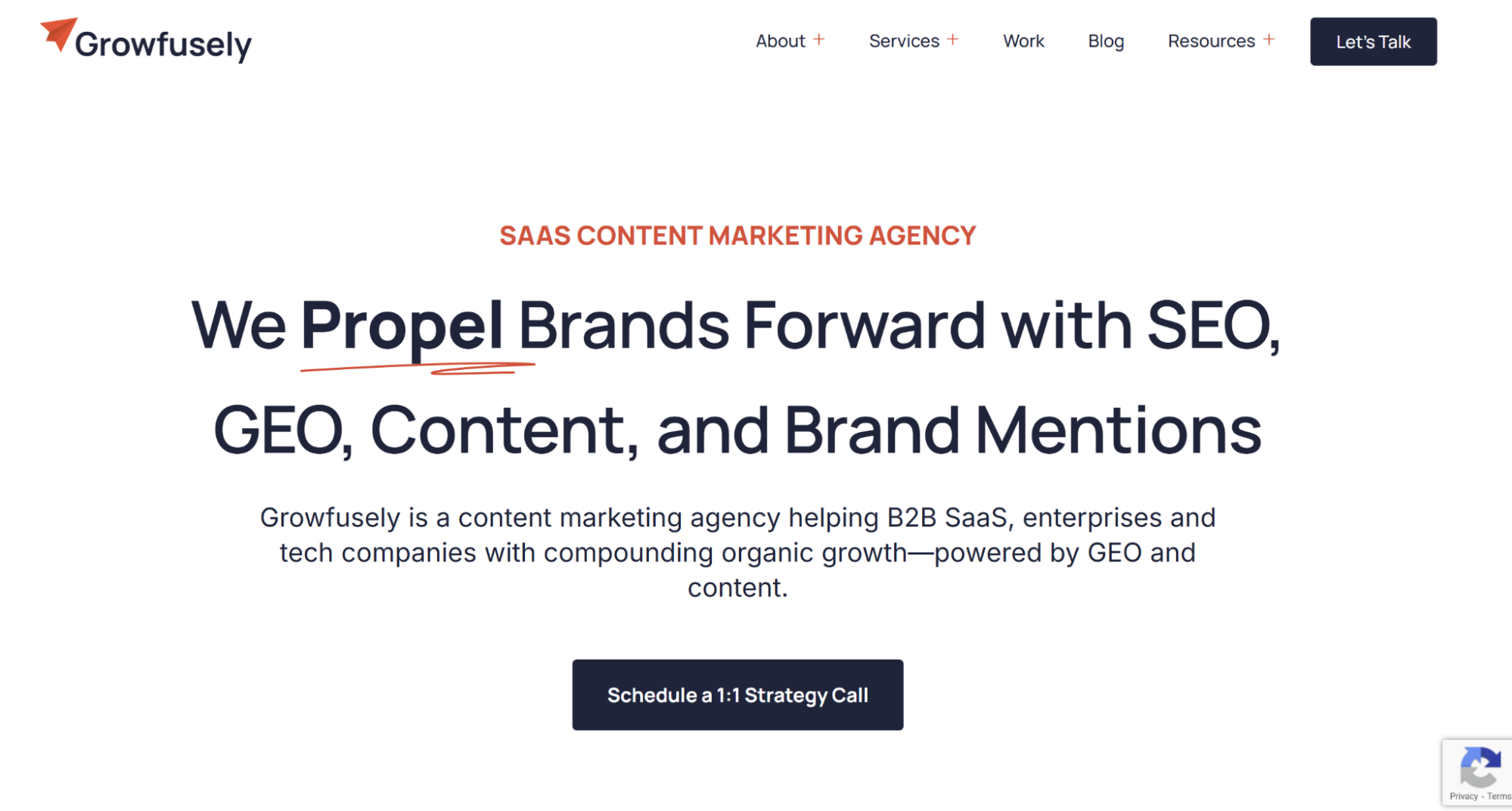
Growfusely is a content marketing agency with deep SEO chops focused on helping B2B brands and insurance companies build organic visibility, authority, and customer acquisition through smart content and SEO strategies.
Founded in 2018, our team combines content strategy, creation, distribution, technical SEO, link building, and digital PR to support sustained organic growth and thought leadership. Growfusely’s approach prioritizes data‑driven planning and storytelling that resonates with target audiences and aligns with long‑term business goals.
We also help clients optimize for AI SEO and search‑driven visibility by structuring content for modern search experiences. Schedule a meeting to have a one-on-one strategy chat with our founder.
2. Convirtue
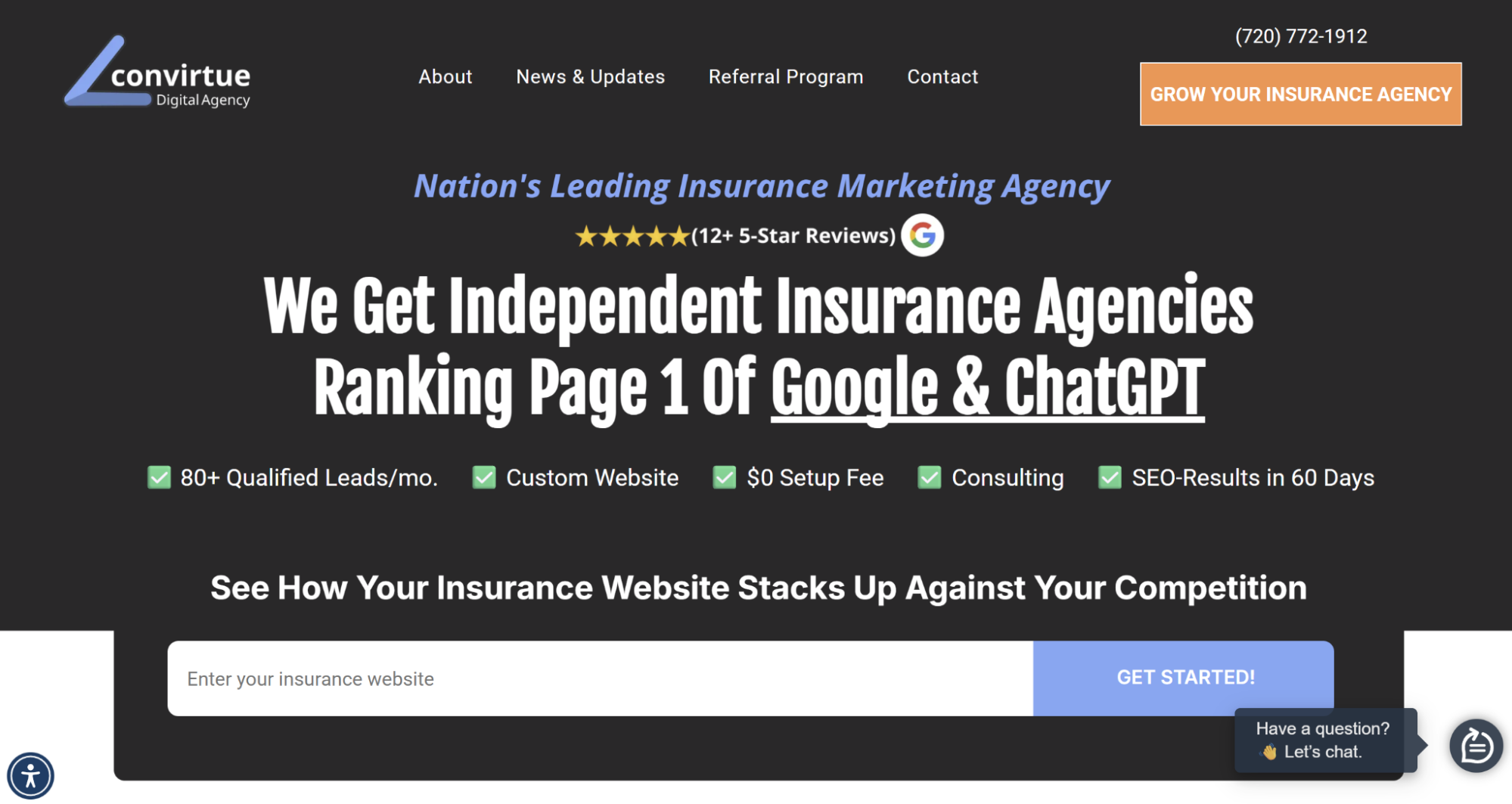
Convirtue specializes in marketing for independent insurance agencies and brokers. Their services include content marketing, SEO, email campaigns, and social media strategy—all aimed at boosting online visibility and leads. With experience in digital outreach and brand positioning, Convirtue helps insurers educate prospects while improving conversion rates through compelling, compliant content.
3. Insurance Marketing Partners
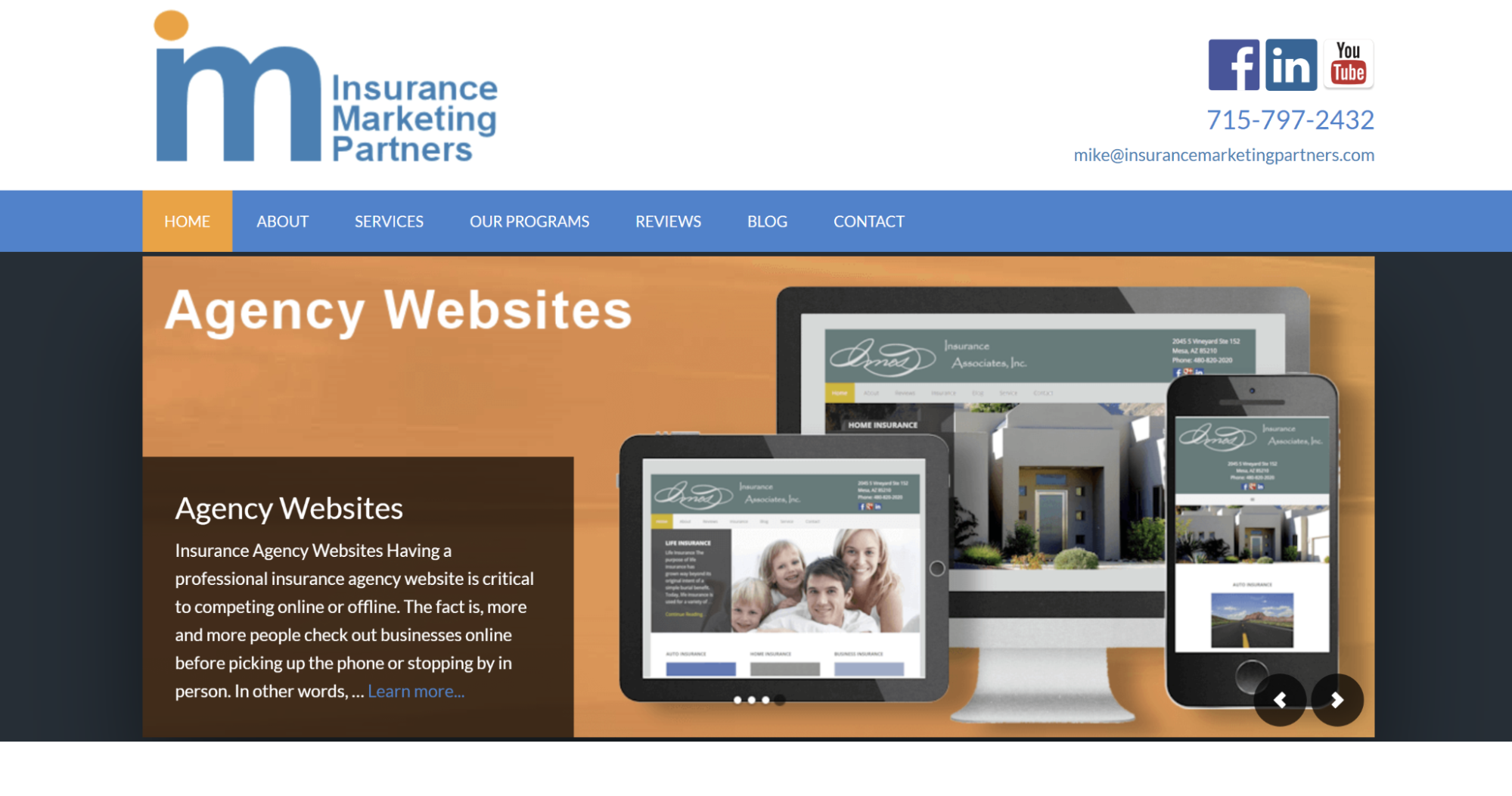
Insurance Marketing Partners focuses on tailored digital strategies for independent insurance agencies. They build optimized websites and content that clarifies coverage, strengthens brand authority, and drives engagement. Their approach includes social marketing, email campaigns, local search optimization, and analytics to support growth and retention.
4. SmartSites
SmartSites is an award‑winning web design and full‑service digital marketing agency with strong experience in SEO and content marketing for insurance sectors. They help insurance companies and agencies grow traffic, improve search visibility, and convert visitors with content that aligns with buyer intent, from blogs to landing pages and campaign assets.
Handling Compliance and Risk in Content
In insurance, content isn’t just marketing. It’s a legal document in the eyes of regulators. That’s why compliance is baked into every part of content marketing for insurance companies.
You can’t afford to be vague or misleading. Every claim must be backed up. Every promise must match what the policy delivers.
To stay on the right side of the law:
Review all content against applicable insurance advertising regulations (federal and state)
Avoid guarantees, exaggerated benefits, or unverifiable claims
Use clear disclaimers where needed
Keep records of approvals and publishing dates
Set up an internal review process with legal or compliance teams. Make it easy for marketers and compliance officers to work together without slowing things down.
For content marketing for insurance agents or brokers, staying compliant builds long-term trust. It shows customers and regulators that your brand takes responsibility seriously.
Measuring Success
With content marketing for insurance companies, success means more than just traffic. Start by mapping metrics to the funnel:
Top of Funnel (Awareness)
Pageviews
Time on site
Bounce rate
Keyword rankings
Social engagement
Middle of Funnel (Consideration)
Email sign-ups
Tool usage (calculators, assessments)
Webinar registrations
Content downloads
Bottom of Funnel (Conversion)
Quote requests
Form submissions
Call bookings
Policy purchases
Don’t focus on volume. Focus on quality.
Which blog posts bring in high-intent leads? Which email sequences drive action? Which content types help close deals faster?
Use tools like Google Analytics, HubSpot, or your CRM to trace the path from first visit to final conversion. Watch how content contributes to pipeline and revenue over time.
Content marketing for insurance websites is a long game. But with the right tracking, you’ll know exactly what’s working and what’s not.
Wrapping Up
Insurance isn’t easy to sell. It’s technical, emotional, and often misunderstood. That’s exactly why content marketing for insurance companies works so well.
It builds trust where there’s doubt. It simplifies where there’s confusion. It educates where there’s hesitation.
From SEO and AI-driven visibility to compliant messaging and clear storytelling, every piece plays a role. If you want long-term growth, you need a long-term strategy. That’s what content delivers. It keeps working even when you’re not.
At Growfusely, we help insurance brands do exactly that: build authority, visibility, and pipelines through content that matters. Schedule a free consultation to see how we can help grow your insurance company through a strategic blend of good content and AI SEO.


 About Growfusely
 White LabelMake us your (hidden) helping hand in delivering high-quality work to your SaaS clients.
 TeamCheck out the faces (and their backstories) behind our brand.
 Partner With UsJoin forces with us and earn a recurring monthly commission.
 Careers We're HiringJoin our growing team of passionate content marketing geeks.
 SEO & AI Search VisibilityBoost your search engine rankings with a blend of compelling content and technical tweaks.
 Content Strategy & ProductionFuel your brand awareness and user acquisition with strategic content creation and distribution.
 Authority & CitationsEarn relevant, high-quality backlinks from top websites in and around your niche.
 SaaS InfographicsLearn battle-tested best practices on all things SaaS marketing — visually.
 SaaS InterviewsRead our tête-à-têtes with SaaS marketing experts on achieving content-driven organic growth.