Manufacturing buyers used to rely almost entirely on trade shows or referrals to find suppliers. But today, they look everything up online.
Engineers research materials. Procurement teams compare vendors. Plant managers review capabilities before reaching out for a quote. Much of that evaluation now happens before your sales team even has a whiff.
That shift makes content marketing for manufacturers a core part of sustainable growth. If your company doesn’t show up with useful information during early research, your competitors will.
Good content is how you explain what you do, where your products fit, and how they solve real production challenges. It builds trust before the first RFQ.
And unfortunately, manufacturing sales cycles are long. Buyers return to the same resources across weeks or months before making decisions. Strong content keeps your company visible during that process.
In this guide, you’ll learn what modern content marketing for manufacturing companies looks like. We’ll cover planning, content types, SEO, and how AI SEO and GEO are shaping supplier discovery.
The Role of Content Marketing in Manufacturing
Industrial buyers want clarity before they commit. Content marketing for manufacturers helps you provide that clarity early in the buying process.
Well-manufactured content (pun intended) answers a lot of potential questions before anyone fills out an RFQ form. It also helps you stay visible during long evaluation cycles. Buyers may visit your site multiple times while comparing vendors or reviewing internal requirements.
Content gives you space to explain your capabilities in your own narrative and context. You can show how your products work in specific applications, industries, or environments. Over time, this builds credibility. Buyers see you as a knowledgeable supplier rather than just another vendor.
That is why marketing for manufacturing companies depends on useful, application-driven content. It supports both new customer acquisition and ongoing relationships with existing clients.
Understanding Your Audience
As a manufacturer of anything, you rarely sell to one type of buyer. Your content needs to speak to engineers, sourcing teams, and plant managers, often at the same time.
Each group looks for different information. Engineers want technical details. Procurement teams focus on cost, reliability, and lead time. Operations leaders care about performance and maintenance.
Mapping these needs helps shape your content marketing strategy for manufacturers. What questions do buyers ask before shortlisting suppliers? What problems are they trying to solve on the shop floor?
Use inputs from sales calls, customer feedback, and support queries to spot patterns. Combine that with search data to understand what buyers are actively researching.
This insight forms the foundation of content marketing for manufacturing companies. When your content answers real application-level questions, it becomes easier for buyers to trust your expertise early in the process.
Setting Clear Goals for Manufacturing Content
Different content serves different purposes. Some pieces build awareness. Others support evaluation. A few help buyers move toward an RFQ.
That is why your content marketing strategy for manufacturers should tie each asset to a clear outcome.
Top-of-funnel content can attract engineers researching materials or processes. Mid-funnel content helps buyers compare suppliers or understand fit. Bottom-funnel content supports final decisions through case studies or detailed product pages.
Align these stages with business goals. Do you want more qualified inquiries? More RFQs? Better pipeline coverage in specific industries?
Content marketing strategies for manufacturers work best when they support both short-term engagement and long-term authority. Also, as we’ll see later, you need to track what matters. Look at qualified traffic, inquiries, and RFQs rather than raw pageviews. These metrics show whether your content supports real buying decisions.
Core Content Types for Manufacturers
Different buyers need different information at different stages. A balanced mix of content helps you stay useful from early research through RFQ.
At the top of the funnel, focus on education. Explain materials, processes, or common applications. This helps engineers understand where your solution fits before they shortlist suppliers.
In the middle, offer practical guidance. Product explainers, application guides, and process videos help buyers evaluate compatibility. Email newsletters can nurture leads who are not ready to reach out yet. Downloadable spec sheets or technical guides also support this stage.
At the bottom of the funnel, focus on decision support. Detailed product pages, case studies, and FAQs answer final questions around performance or implementation.
Content marketing for manufacturers works best when each piece supports a step in the buying journey. This approach also strengthens marketing for manufacturers by guiding visitors toward inquiry without forcing early contact.
The Importance of SEO in Manufacturing Content
Even the best content won’t help if buyers can’t find it. That is where SEO comes in.
Content marketing for manufacturing companies works best when it aligns with how technical buyers actually search. Engineers often look for solutions by application. Procurement teams may search by part type, industry standard, or material specification.
Start by building a keyword strategy around four core themes:
Products: Specific components or systems you offer
Applications: How those products are used in real environments
Industries served: Sectors like food processing, automotive, or HVAC
This helps you move beyond generic terms and target searches that reflect real buying intent. For example, instead of “metal brackets,” focus on queries tied to function or environment.
Use this research to guide your content marketing strategy for manufacturers. Create application pages, compatibility guides, and troubleshooting articles based on what buyers are actively researching.
Local SEO and regional relevance also plays a role. Many buyers prefer suppliers within reach for service support or shorter lead times. Optimize your Google Business Profile and create location-specific pages tied to real service areas to attract relevant backlinks.
Mention local industries served, certifications, or project examples where possible. This improves visibility for regional searches and supports content marketing services for manufacturers that operate in defined territories.
SEO ensures your content reaches buyers during active research. It connects educational material to real sourcing decisions and strengthens marketing for manufacturing companies over time.
Incorporating AI SEO & GEO
You know it: search is evolving. Buyers are no longer relying only on traditional search results. Many now ask AI tools like ChatGPT and Gemini for supplier suggestions, comparisons, or quick summaries.
Content marketing for manufacturers should now account for how AI systems interpret and present information. Pages with clear structure, direct answers, and logical headings are easier for these tools to summarize.
Semantic relevance matters too. Cover topics in full rather than repeating keywords. Explain applications, materials, and use cases in plain language.
AI tools can also support your planning. They help uncover technical questions, common buyer concerns, and gaps in your current content.
Content marketing strategies for manufacturers that consider both search engines and answer engines are more likely to stay visible as discovery habits continue to shift.
Storytelling & Messaging for Manufacturers
Specs matter. But they are not the whole story.
Content marketing for manufacturers should also explain how your products perform in real-world conditions. Buyers want to know how solutions work in specific environments, industries, or processes.
Use case studies and application examples to show outcomes. This helps engineers and plant managers see how your offering fits their requirements.
Avoid unnecessary jargon where possible. Clear language makes technical information easier to evaluate.
Messaging should focus on what changes for the buyer. Does it improve efficiency? Reduce downtime? Extend product life?
Content marketing services for manufacturers often succeed when they combine technical accuracy with practical context. Buyers understand not just what you offer, but why it matters in their operations.
Distribution & Promotion Strategies
Creating useful content is only half the job. It also needs to reach the right buyers.
Content marketing for manufacturers works best when each asset is distributed across multiple channels with intent.
Start with repurposing. A single technical blog post can become:
A LinkedIn carousel explaining the application
A short demo or walkthrough video
A downloadable checklist or spec guide
A short email for your subscriber list
This helps you stay visible across platforms where engineers and procurement teams already spend time.
Next, use email strategically. Segment your lists by industry or product line. Send relevant guides or case studies to buyers based on their past inquiries. For example, share material compatibility guides with contacts from the food processing sector.
Distributors and integration partners can extend reach further. Co-host webinars on shared solutions or publish joint case studies. These collaborations introduce your content to new audiences already evaluating suppliers.
Trade associations also offer opportunities. Many publish technical insights from members. Submitting process guides or best practices supports marketing for manufacturers without relying only on your website.
Paid promotion can help amplify high-value assets. Promote application guides or industry reports on LinkedIn to target roles such as design engineers or sourcing managers.
Track performance across channels. Use UTM parameters to see which campaigns drive traffic or inquiries.
Content marketing services for manufacturers often succeed when distribution is planned from the start, not treated as an afterthought.
Handling Compliance and Accuracy
Manufacturing buyers expect precise information. Your content needs to reflect that.
Content marketing for manufacturers often includes technical claims, performance data, or certification references. These must match your actual capabilities. Inaccurate details can damage trust and create legal risk.
Work closely with engineering teams during content creation. They can validate specifications, tolerances, and application guidance before publishing.
Review content that mentions standards, safety requirements, or compliance frameworks. Make sure these references stay current as certifications or materials change.
Technical documentation also needs updates over time. Version control helps ensure buyers are not relying on outdated information.
Content marketing services for manufacturers work best when accuracy supports clarity. Buyers rely on these resources during supplier evaluation, so consistency matters.
Content Marketing Agencies for Manufacturers
Here are five of the finest content marketing agencies you can consider if you need content marketing services for manufacturers that drive measurable organic visibility growth for your business.
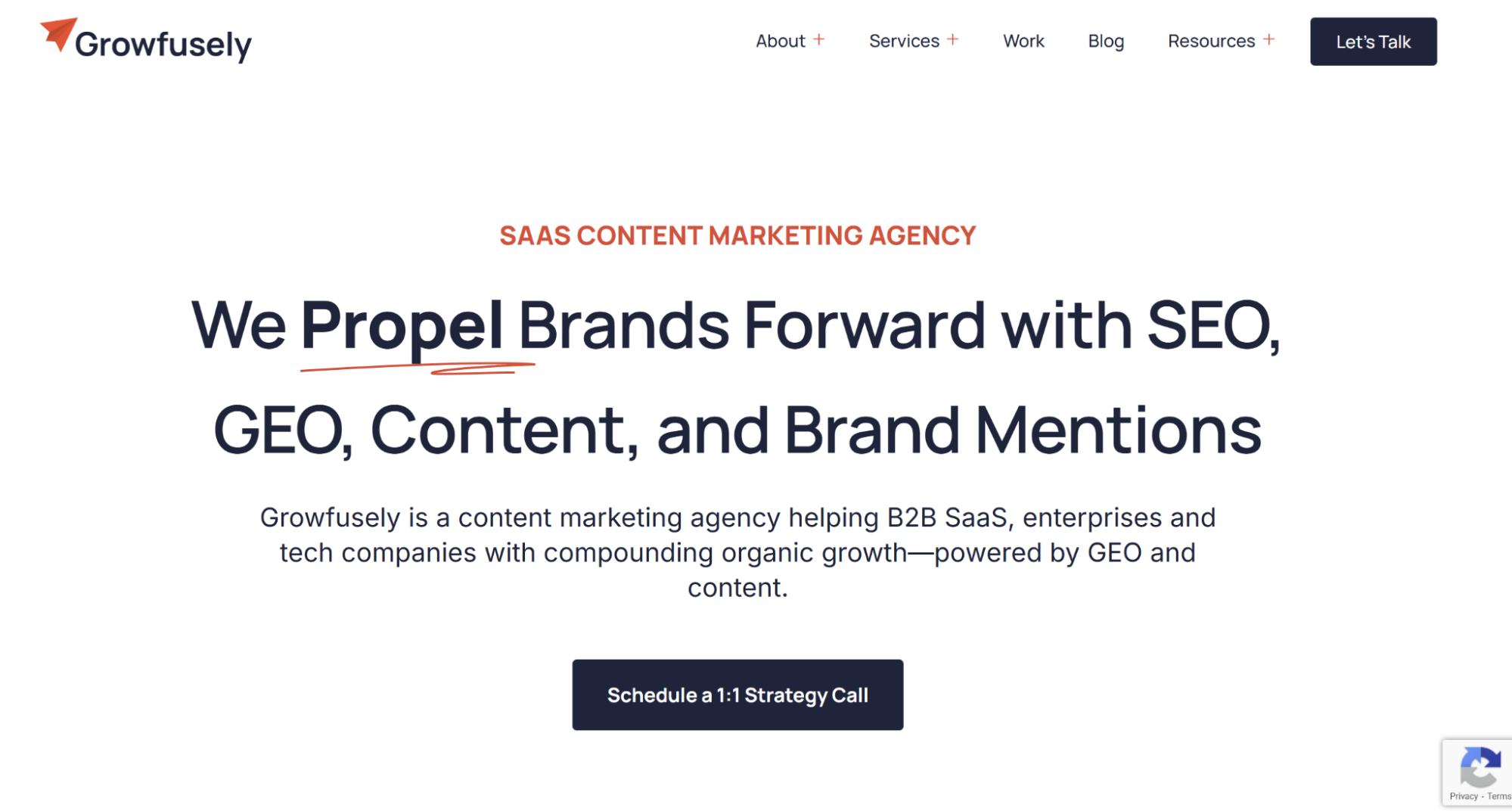
1. Growfusely
Growfusely is a content marketing agency that helps B2B and industrial brands build sustainable organic growth through strategic content. While we serve a range of complex technical and enterprise clients, our focus on structured content, buyer-first planning, and search visibility makes us a strong fit for manufacturing businesses looking to level up how they attract and engage buyers online.
Growfusely combines keyword research and topical planning with high-quality production of long-form articles, guides, and technical explainers that match real buyer intent. We also integrate modern practices like AI SEO and GEO to ensure content performs well across both traditional search engines and AI-driven discovery.
Our approach prioritises clarity, authority, and measurable business outcomes, helping manufacturers improve visibility, drive qualified inquiries, and support longer buying cycles with content that resonates at every stage. Growfusely’s work focuses on turning search traffic into real pipeline growth.
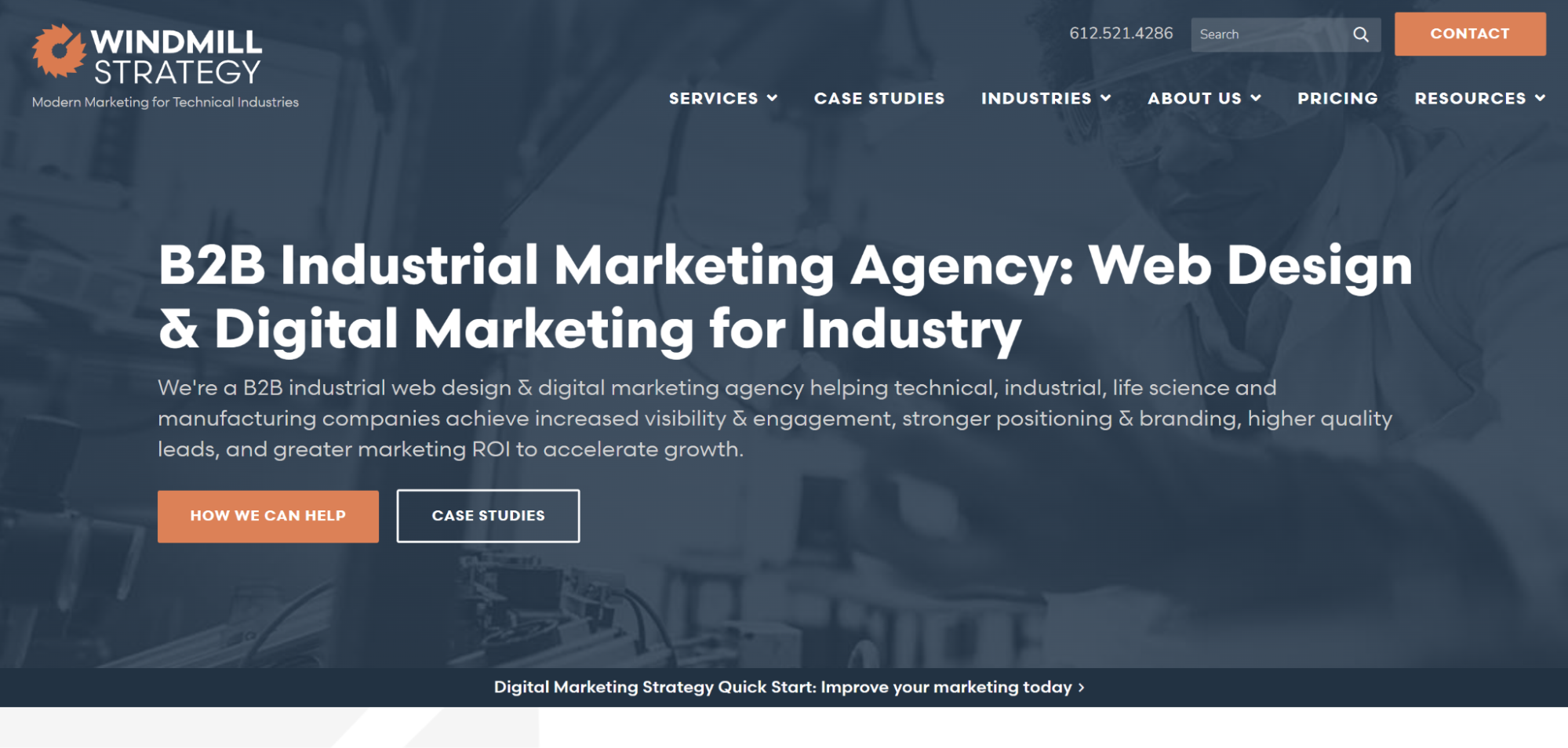
Windmill Strategy is a US-based agency that specialises in marketing for B2B technical companies, including industrial and manufacturing brands. They position themselves as a full-service partner across digital marketing and website work, which makes them a fit when content needs strong positioning, clean IA, and a site that supports long sales cycles.
If your content marketing for manufacturers needs to translate technical capabilities into clear buyer-facing pages and resources, Windmill is built for that type of work.
3. Industrial Strength Marketing
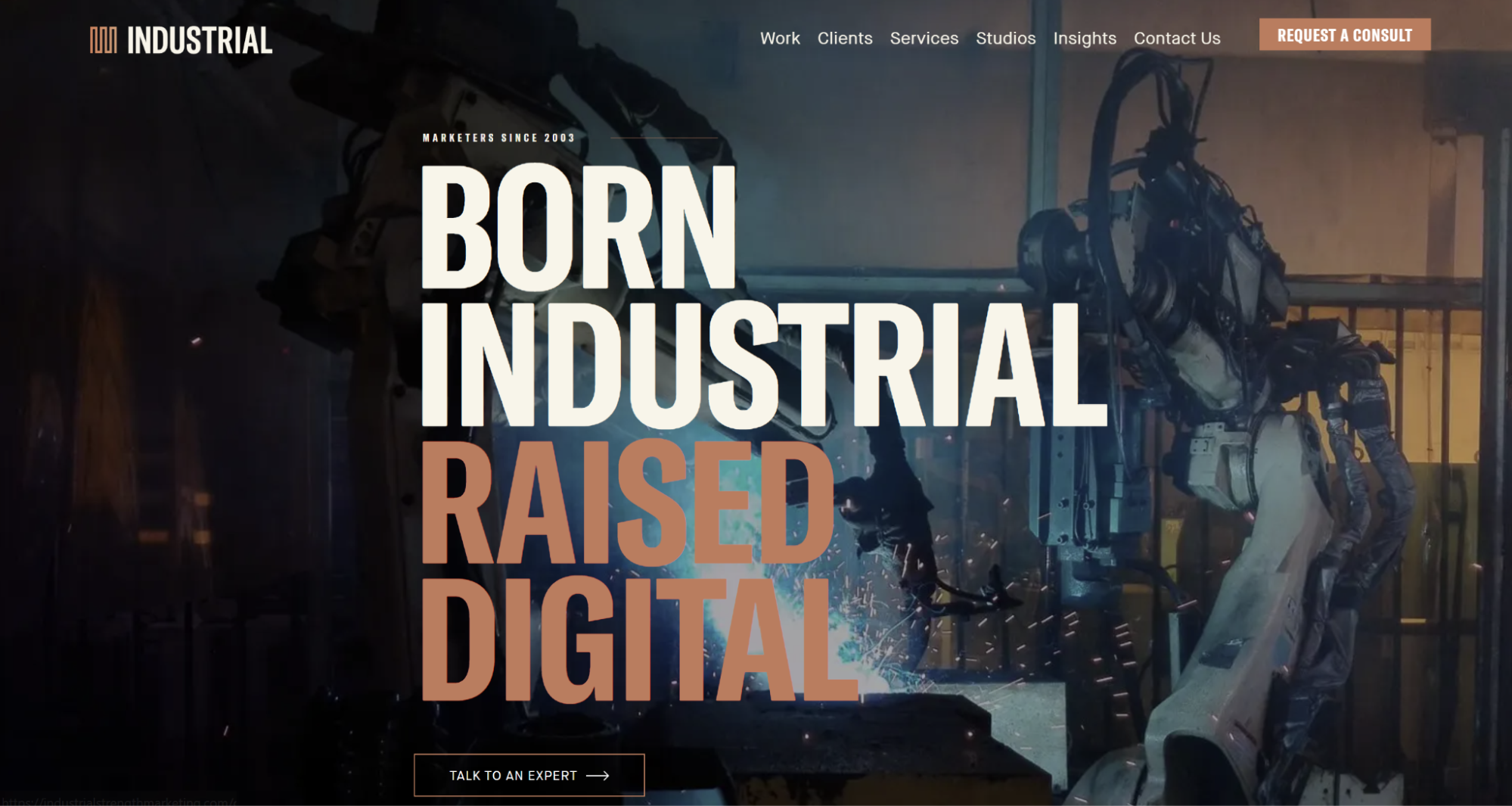
Industrial Strength Marketing is a US-based B2B industrial marketing agency focused on manufacturers and related industrial sectors.
They highlight delivering the “useful content” specifiers need, alongside broader services that typically support industrial content programs (web, digital, and ongoing agency support). This is a practical option if you want an agency that understands industrial buyers and can build content that supports discovery, evaluation, and enquiries.
4. Tiecas, Inc.
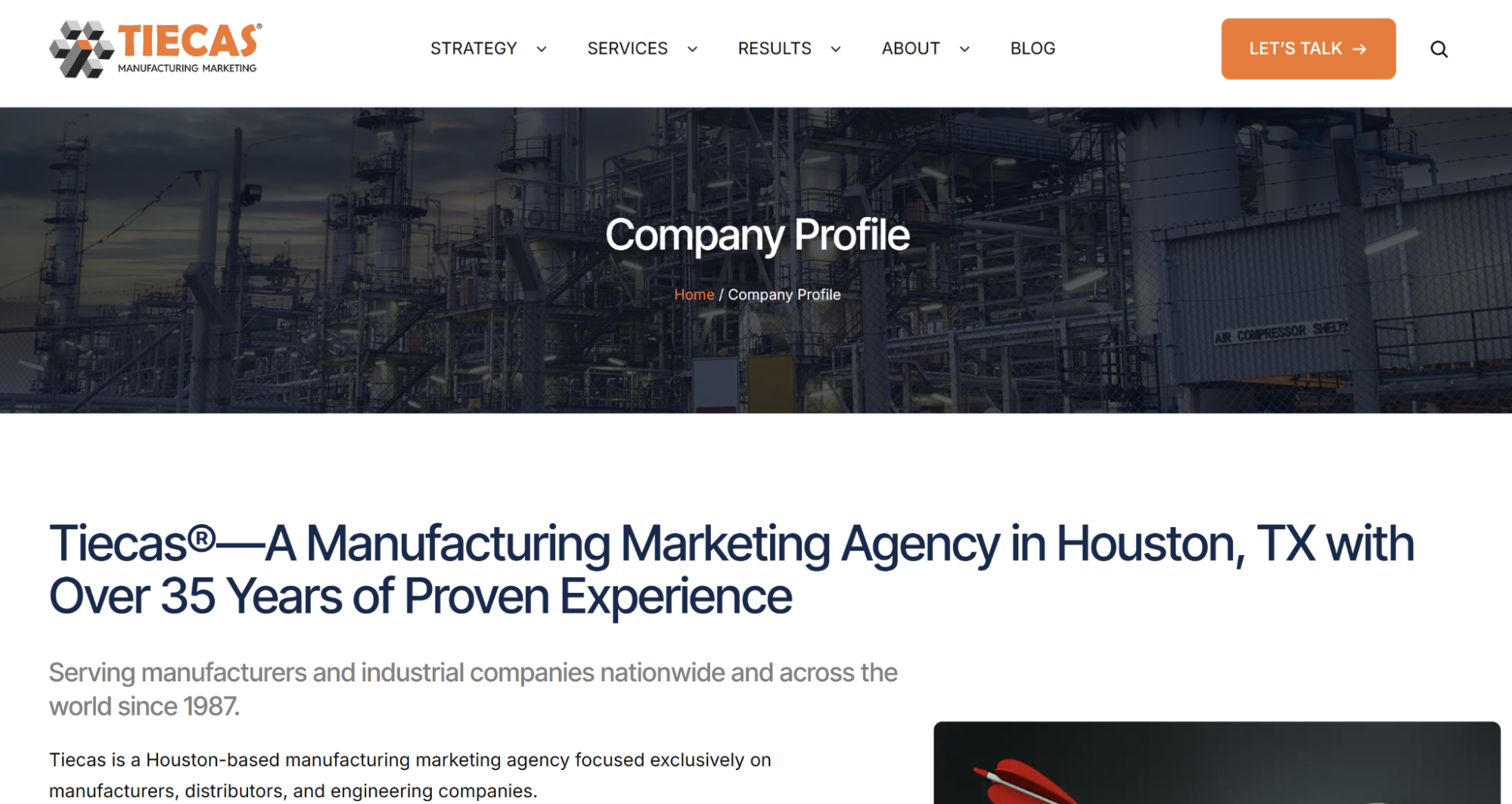
Tiecas is a Houston-based B2B industrial and manufacturing marketing agency. They explicitly state they serve manufacturers, distributors, and engineering companies, and they offer industrial content marketing among their services.
Tiecas is a fit when you want a manufacturing-focused partner that can help plan, produce, and promote technical content while keeping messaging aligned with real capabilities and buyer questions.
5. Industrial Marketing
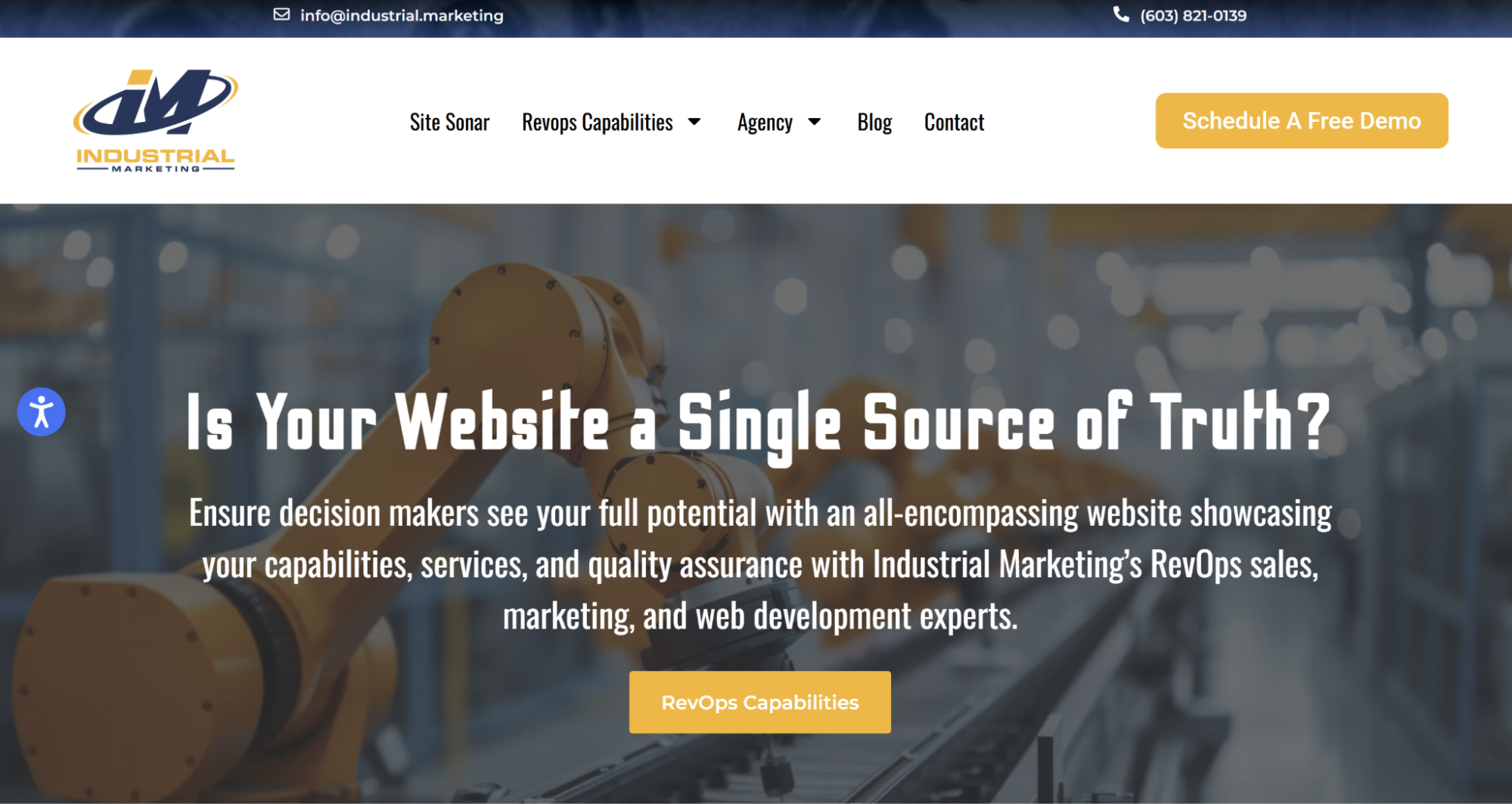
Industrial Marketing positions itself as an industrial marketing agency serving manufacturers and suppliers, with an emphasis on building a “single source of truth” website that showcases capabilities and supports revenue operations.
If your content marketing for manufacturing companies needs tighter alignment between content, web structure, and lead capture (not just more blog posts), their positioning is built around that integrated execution.
Measuring Success
Content marketing for manufacturers should support real buying decisions, not just attract pageviews. Start by mapping your metrics to the buying journey:
At the top of the funnel, track how well your educational content attracts the right audience. Look at organic traffic from target industries, time on page, and scroll depth. Tools like Google Analytics and Search Console can show which application-level topics bring in qualified visitors.
In the middle of the funnel, focus on engagement signals that suggest evaluation is underway. Downloads of spec sheets, newsletter signups, webinar registrations, or use of product calculators are strong indicators. Set these up as events in GA4 or track them through your CRM to understand which content supports supplier shortlisting.
At the bottom of the funnel, measure outcomes tied to revenue. RFQ submissions, consultation requests, or contact form fills should connect back to specific landing pages or case studies. Monitor conversion rates by page to see which assets move buyers toward inquiry.
Qualified traffic matters more than total traffic. Review which pages attract visitors from target industries or applications by integrating Google Analytics data with your CRM.
SEO metrics also help. Track rankings for application-level keywords and process-related queries using tools like Ahrefs or Semrush. Use attribution reports to see how buyers move across resources before reaching out. Many interact with multiple pages over time.
Content marketing strategies for manufacturers improve when performance data connects directly to pipeline impact.
Wrapping Up
Manufacturing buyers now rely on digital research long before they contact suppliers. That makes content marketing for manufacturers a long-term growth priority.
Strong results come from useful, application-focused content that supports buyers at each stage of evaluation. Educational resources build awareness. Technical guides support comparison. Case studies and product pages help move buyers toward RFQ.
SEO ensures your content appears when buyers are actively researching solutions. AI SEO and GEO are also shaping how supplier information is discovered and summarized.
Marketing for manufacturers works best when content supports both visibility and trust over time.
If you want help building a practical content marketing strategy for manufacturers and turning research traffic into qualified inquiries, Growfusely can help.
Schedule a meeting to explore what sustainable growth through content could look like for your manufacturing business.


 About Growfusely
 White LabelMake us your (hidden) helping hand in delivering high-quality work to your SaaS clients.
 TeamCheck out the faces (and their backstories) behind our brand.
 Partner With UsJoin forces with us and earn a recurring monthly commission.
 Careers We're HiringJoin our growing team of passionate content marketing geeks.
 SEO & AI Search VisibilityBoost your search engine rankings with a blend of compelling content and technical tweaks.
 Content Strategy & ProductionFuel your brand awareness and user acquisition with strategic content creation and distribution.
 Authority & CitationsEarn relevant, high-quality backlinks from top websites in and around your niche.
 SaaS InfographicsLearn battle-tested best practices on all things SaaS marketing — visually.
 SaaS InterviewsRead our tête-à-têtes with SaaS marketing experts on achieving content-driven organic growth.