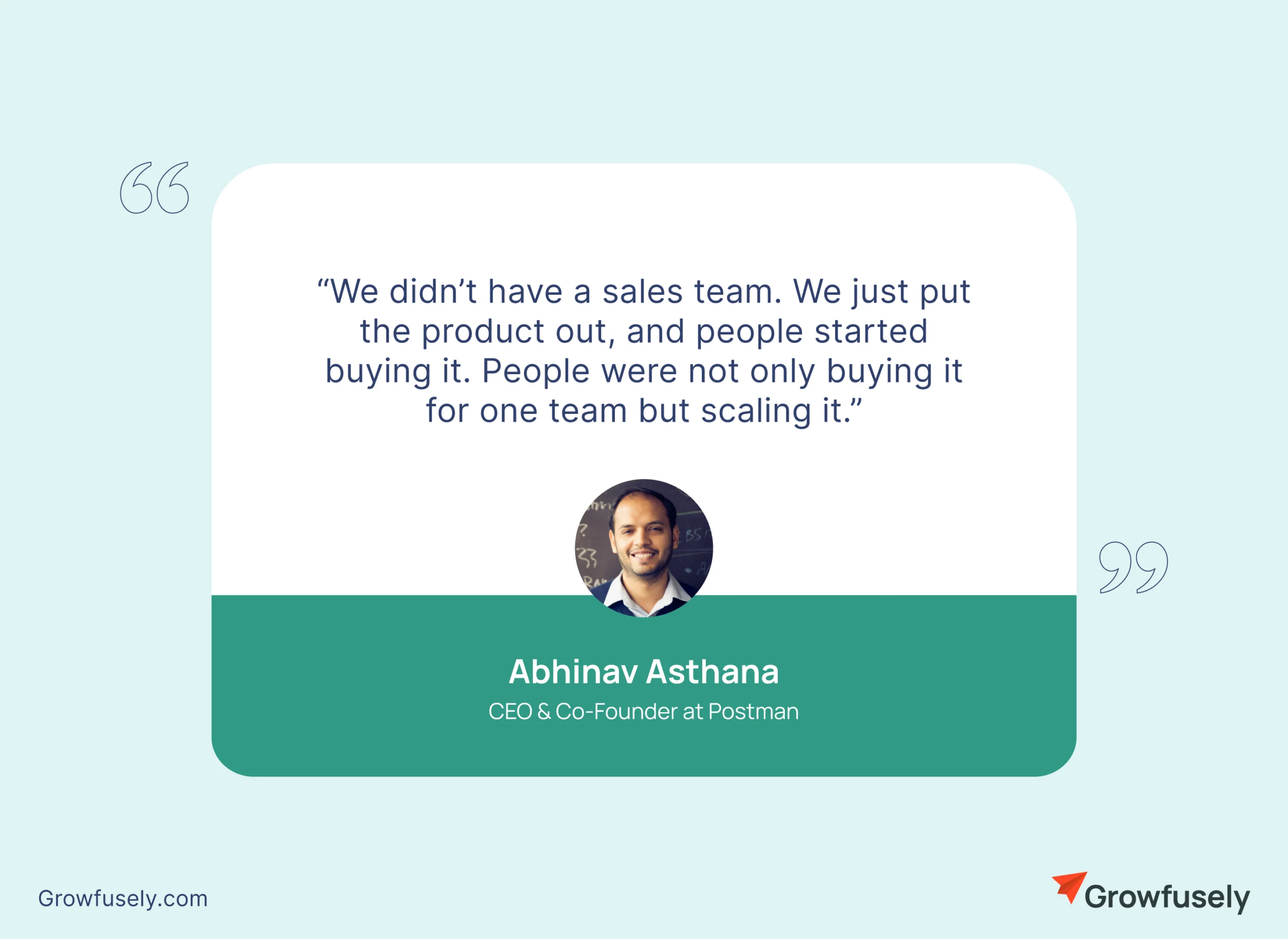
A small coding tool that originated in a Bangalore apartment quietly grew into one of the world’s most widely used developer platforms. Now that’s the kind of story worth telling!
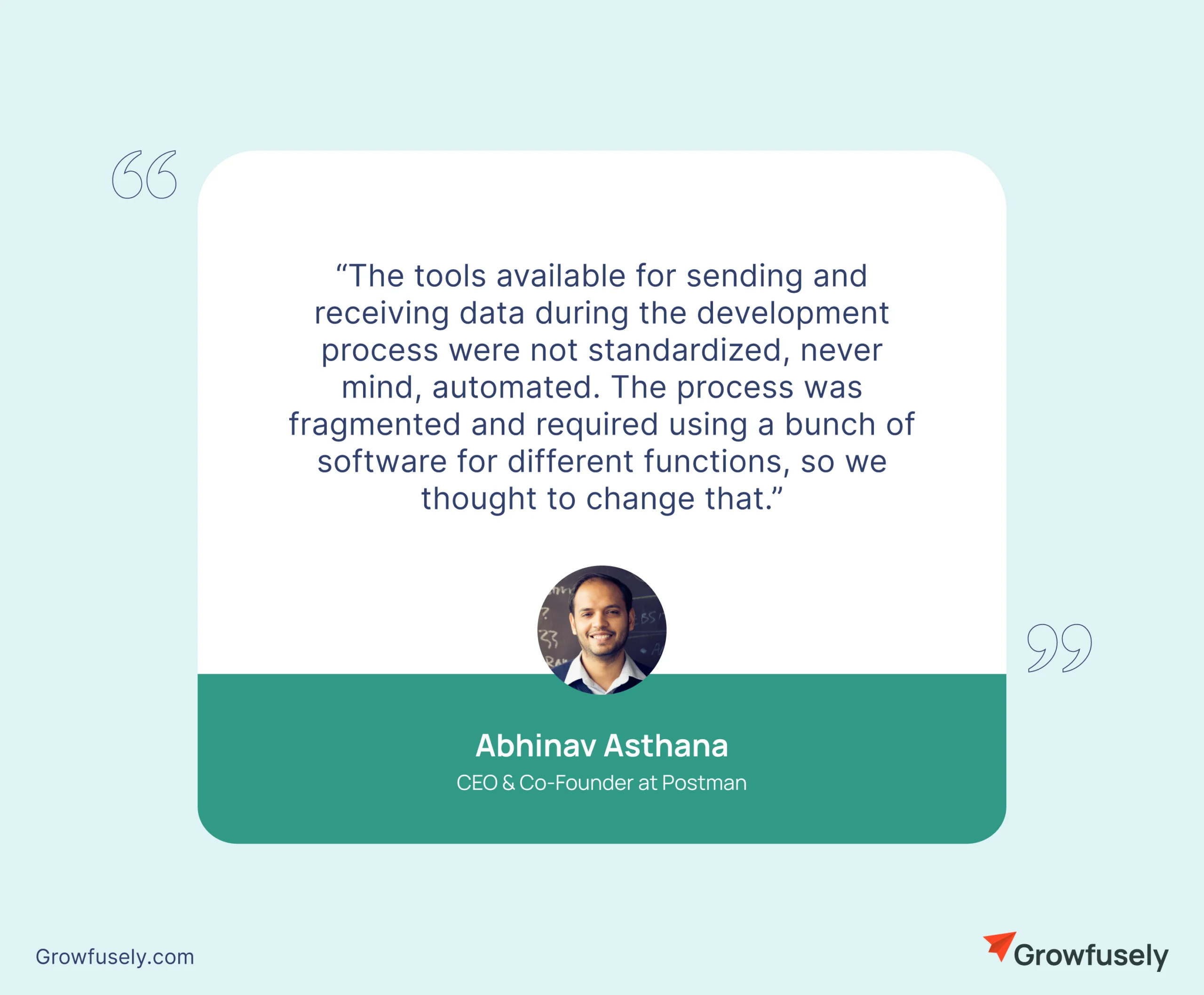
Postman began not as a startup with big ambitions, but as a side project for developers. Its creator, Abhinav Asthana, was trying to make API testing a little less painful. After all, working with APIs meant writing requests, checking responses, debugging, and basically a process full of friction. He thought: there must be a better way.
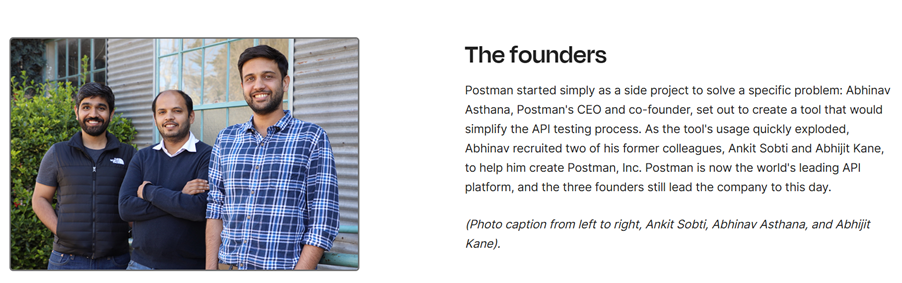
He built a lightweight tool, shared it for free, and to his surprise, people showed up; in tens of thousands. Soon, Abhinav brought in two former colleagues, Ankit Sobti and Abhijit Kane, to turn the project into a full company: Postman, Inc. Together they aimed for something simple: make APIs easy to build, test, collaborate on.
But what started as a small convenience soon became a lifeline for developers worldwide. Postman evolved into an API platform used by tens of millions of developers and hundreds of thousands of organizations.
Today, it sits at the heart of modern software development. Behind that growth is relentless focus on making the hard parts easier, giving teams a place to build together, and turning complexity into clarity.
This story is all about how Postman climbed from a humble extension to a global SaaS powerhouse. We’ll also trace the founders’ journey: their motivations, backgrounds, the challenges they overcame, and the milestones they achieved.
What Is Postman and Why It Matters
Postman API Platform is a software toolset built to help developers create, test, document, and manage APIs. In simple terms: Postman gives developers a central place to build an API, try it out, document it for others, and keep everything tidy.
Rather than juggling multiple tools (one for writing requests, another for testing, another for documentation, yet another for collaboration, and so on) Postman packs them all together. That means design, testing, documentation, monitoring, sharing happen under one roof.
Here’s how it helps dev teams:
Build and define APIs: With Postman you can start a new API definition or import an existing one (OpenAPI, GraphQL, RAML, and more). You choose the structure and specs you need.
Generate documentation automatically: As you build or update APIs, Postman can auto-generate docs. That helps anyone using your API understand endpoints, parameters, responses, without guesswork.
Test and validate APIs: Before you ship, Postman lets you send requests (GET, POST), check responses, validate status codes, and run automated test scripts (even integrate into CI/CD pipelines).
Mock servers: You can set up mock versions of your APIs, returning fake/sample data. That’s useful when the backend isn’t ready but front-end (or partner apps) need to build against expected API behavior.
Collaboration and team workflows: Postman supports workspaces (personal, team, public, partner) so multiple developers can work together. Collections, in-line comments, shared docs, version control, and other functions can be performed together.
Governance and consistency: For larger teams or enterprises that deal with standards, versioning, API governance, security controls, and data management, Postman gives structure so APIs remain stable, secure, and scalable.
Integrations with other tools: It works well with other popular tools for version control (GitHub/GitLab), CI/CD pipelines (Jenkins, CircleCI, etc.), cloud infrastructure tools, and monitoring tools. This makes Postman a practical fit for real-world workflows.
Also, Postman recently evolved to support “AI-ready APIs.” That means if you’re building applications or services that use AI agents, Postman aims to make it easier to build secure, stable, machine-consumable APIs from day one.
Many teams love Postman for what it brings to the table:
Saves time and reduces friction
Keeps everyone on the same page
Simplifies onboarding and sharing
Improves reliability and safer deployments
Offers flexibility and adaptability
How “Postman” Got Its Name and Logo
The name “Postman” isn’t random. It’s part code-nerd joke, and part metaphor. How? When working with APIs, one of the most common operations is the HTTP “POST” request. That’s how clients send data to servers. The co-founders added “man” to that. So “Postman” became a playful nod to a messenger: someone delivering data between systems. The name works on two levels: technical, and human.
But beyond that subtle pun, the name also evokes something familiar: a postman delivering letters. In the world of APIs, Postman plays the role of a messenger delivering requests and responses. That blend of technical reference and metaphor made the name stick.
And the story behind Postman’s logo?
Postman never treated its logo as decoration, but an important part of its identity. When Abhinav Asthana first built Postman as a Chrome extension in 2012, he wanted something that felt familiar. It struck him that APIs send and receive messages all day, and a postman delivers messages. The connection was obvious to him.
Abhijit Kane, one of the early builders of the product, sketched the original version. It looked like a friendly postal worker. Just a visual hint that this tool was built to carry requests from one place to another without drama. It matched the spirit of the tool at the time: useful, unpolished, and made by people who cared more about the work than the spotlight.
As Postman grew, the logo grew with it. The team kept the theme but pushed it forward. The modern symbol, an astronaut holding a letter, looks more like an explorer than a courier. Still delivering messages, but now doing it with the curiosity and courage of someone stepping into a wider universe.
This shift says something about the company. Postman began as a simple helper for a single developer. It turned into a platform used across the world. The logo’s evolution mirrors that journey from “let me send this request” to “let’s explore what APIs can make possible.”
The People behind Postman
Abhinav Asthana started writing code early. As a kid in India, he got a Pentium computer in the 1990s, which opened a door for him. He picked up programming. Over time he began building websites and tools.
Later, as an engineer at Yahoo’s Bangalore office, and then at his own startup (TeliportMe), he kept running into the same pain point: working with APIs was messy. Building, testing, debugging, and sharing them, all required tools that were either incomplete or scattered. Teams had communication problems, errors were slipping in, and stability was suffering.
He realised the problem wasn’t just his. Every developer working with APIs must be facing those same issues. And that thought planted a seed.
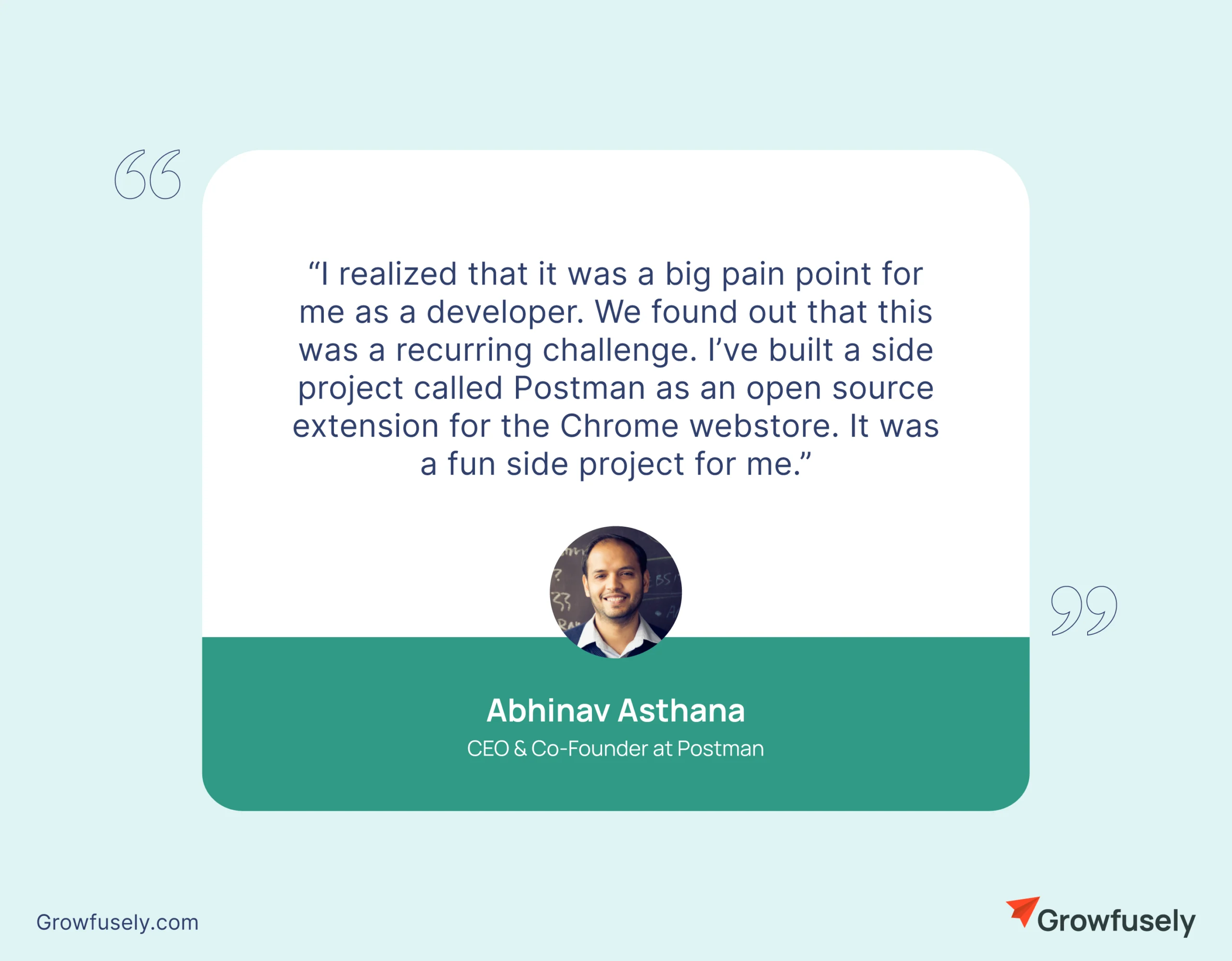
So, in 2012, Abhinav built the first version of Postman while balancing consulting gigs to pay bills. It was nothing fancy: a small Chrome extension, free, made to solve his own problems. He published it on the Chrome Web Store. To his surprise, more and more developers started using it. The quick traction revealed something: this wasn’t just a tool for him. It was answering a real need.
As Postman’s popularity rose, Abhinav reached out to two former colleagues:
Ankit Sobti, a fellow engineer (later CTO) with experience from Adobe and Yahoo. When Abhinav proposed working on Postman full-time, Ankit hopped on.
Abhijit Kane, someone Abhinav had worked with earlier. Abhijit brought complementary skills and energy. He joined the team, and together the three launched the company formally in 2014.
At first, Postman was meant to solve a simple problem: testing APIs. But as more developers adopted it, the team realised they could go beyond that. They began building functionality around collaboration, documentation, sharing, and version control, features useful not only to solo developers but to teams.
They leaned into the idea of “developer experience.” Abhinav often notes that good developer tools tend to grow through word of mouth rather than big marketing budgets. That stayed core to Postman’s strategy.
As adoption grew, Postman expanded from a weekend side-project into a full-blown company. They formalised operations, began funding rounds, and turned their focus to solving the bigger problem: how to manage APIs at scale for companies building many services, teams, and integrations.
Postman’s Deliveries So Far
Let’s look at the timeline of Postman’s key milestones and recognitions, from its first release to major funding, user growth, product moves, acquisitions, and awards.
Hard-earned Business Lessons from Postman’s Journey
1. Solve the Pain Points You Know
Postman began because its founder, Abhinav Asthana, was frustrated with how cumbersome API development was. He built something to ease his workflow. Because he really knew the problem, Postman addressed it deeply and practically. When you start from real pain, your first users will be real converts, not just curious window-shoppers.
2. Let the Product Lead
In the early days, Postman didn’t rely on ostentatious marketing campaigns. It focused on building a product that worked: simple, reliable, and intuitive. Developers used it, talked about it, and shared it with peers. That word-of-mouth, organic growth became its engine. And this kind of growth tends to stick, because users come in with trust earned through honest value.
3. Build with Empathy for Users
As more developers used Postman, the founders observed what worked, what didn’t, and what features people kept requesting. They iterated, and added collaboration, version control, team workflows, and other features that matter once a solo developer becomes a full team. This user-first approach made Postman evolve into the full-fledged platform it is today.
4. Scale with Intent
Rather than stopping at API testing, Postman kept expanding what it could do: design, documentation, mocking, monitoring, collaboration, integrations. It transformed from a convenience tool to a core part of many development workflows. The lesson: start with one strong feature, but remain open to building a platform instead of a feature. That’s growth.
5. Prioritize Clarity, Consistency, and Documentation
APIs are complex, which is why chaos can ensure without clarity of requests, responses, parameters, and versioning. Postman placed high value on documentation, clear UI, and consistent behavior. This reduced friction, lowered onboarding costs, and helped teams scale without breaking things. Similarly, as a business, clear internal processes, transparent communication, and simple pricing help foster trust and long-term relationships.
6. Never Lose Focus on Quality
As Postman grew (users, integrations, enterprise clients), it could have drifted toward over-expansion. Instead, it seemed to preserve a balance: add features, but without compromising usability or performance. This discipline of not chasing every shiny feature or every big opportunity helped protect its core value. The lesson here for other SaaS leaders is, don’t lose what made your product popular, even while scaling.
Conclusion
Postman’s rise didn’t come from hype or lucky breaks; it came from obsessing over a real problem, building something that worked, and then letting that usefulness snowball. Its journey is a reminder that the strongest companies are the ones that stay close to their users, keep their vision practical, and scale only when the foundation is solid enough to hold it.
For anyone building in tech today, Postman’s story hits like a challenge: solve what matters, stay patient, keep listening, and let the product earn its own respect out in the wild. It’s a modern success story built the old-school way, one thoughtful iteration at a time.


 About Growfusely
 White LabelMake us your (hidden) helping hand in delivering high-quality work to your SaaS clients.
 TeamCheck out the faces (and their backstories) behind our brand.
 Partner With UsJoin forces with us and earn a recurring monthly commission.
 Careers We're HiringJoin our growing team of passionate content marketing geeks.
 SEO & AI Search VisibilityBoost your search engine rankings with a blend of compelling content and technical tweaks.
 Content Strategy & ProductionFuel your brand awareness and user acquisition with strategic content creation and distribution.
 Authority & CitationsEarn relevant, high-quality backlinks from top websites in and around your niche.
 SaaS InfographicsLearn battle-tested best practices on all things SaaS marketing — visually.
 SaaS InterviewsRead our tête-à-têtes with SaaS marketing experts on achieving content-driven organic growth.