When you need serious help with money matters, what do you typically do? You pick up your phone and look for assistance on Google (or now, AI tools like ChatGPT and Gemini) to find someone who knows what they’re doing.
So, for financial services companies, SEO is one of the best ways to get found by the right people. It helps you show up when someone types in “financial planner near me” or “how to invest in 2026.” These are people looking for advice, services, or a solution.
SEO for financial services is how your website and content can be clear, helpful, and easy to find.
This guide walks you through everything. From getting the basics right to tackling advanced stuff like AI SEO and GEO, read through this playbook to get your financial SEO game spot on.
Why SEO Matters for Financial Services
Search engines are part of how people choose financial services. They use them to compare options, learn about topics, and check if a firm seems trustworthy.
SEO for financial services providers helps you show up in these moments. It brings in people who are already interested. These visitors are more likely to take action.
Finance SEO also works well over time. A page that ranks can drive traffic for months. You don’t have to pay every time someone clicks.
High rankings also help your brand. When someone sees your firm in the top results, it builds trust. It shows that you’re established and reliable.
Holistically speaking, SEO supports other parts of your content marketing. It improves website engagement. It adds to your visibility across platforms. It helps people find your tools, services, and advice.
The bottom line: if you want a steady flow of qualified traffic, SEO should be part of your core strategy.
Unique SEO Challenges in the Financial Sector
Financial services face more SEO challenges than most industries.
Search engines treat financial topics differently. This content falls under what Google calls “Your Money or Your Life” (YMYL). It means the information must be accurate, trustworthy, and written by people who know what they’re talking about.
This adds pressure. You need more than just keywords and backlinks. You need content that is clear, correct, and helpful.
There are other challenges too.
Compliance: Your site must meet marketing and legal rules. You can’t make claims you can’t prove. You can’t always use testimonials. Some content must be reviewed before publishing.
Topic complexity: Finance is hard to simplify. But your audience doesn’t want jargon. SEO for the finance industry requires you to explain complex things in simple ways.
Heavy competition: You’re not only competing with other firms. You’re up against banks, media sites, and fintech companies. Many of them have big budgets and large SEO teams.
Technical limitations: Some firms use websites that are hard to update. This slows down fixes and changes. It can also create issues with speed, structure, and mobile experience.
To grow, you’ll need an SEO approach built for financial services. One that meets high standards, earns trust, and follows the rules.
Foundations of a Financial Services SEO Strategy
Before you improve rankings or drive traffic, you need a plan. A strong financial SEO strategy starts with understanding what’s working, what’s not, and what your audience actually needs.
Start with an audit. Look at your site’s current performance. Identify slow pages, missing tags, duplicate content, and broken links. Check your mobile experience. Many people search from their phones, especially for local services.
Research your audience and intent. Find out what your audience is searching for. A business owner may want tax advice. A retiree may want income planning. Each query has a different intent. Some are looking to learn. Some are ready to act.
Build a keyword strategy that matches the customer journey.
Use high-intent commercial terms, like “financial advisor near me” or “open a retirement account online.”
Use informational keywords for early-stage topics, like “how to plan for early retirement” or “what is ESG investing.”
Don’t forget long-tail keywords. These may bring less traffic but higher quality leads. Think “401(k) rollover help for small business owners.”
SEO for financial services companies depends on this alignment. Your content should reflect what your audience is trying to do, not just what you want to say.
On‑Page SEO
Once your strategy is clear, you need to focus on the pages themselves. On-page SEO is about making sure each page on your site is clear, well-structured, and easy for both people and search engines to understand.
Write strong titles and meta descriptions: Every page needs a clear title that includes your target keyword. Keep it simple. The meta description should explain what the page is about in one or two lines. This text often shows up in search results. Make it useful and easy to read.
Use proper headers and layout: Break your content into sections using H1, H2, and H3 tags. Use short paragraphs and clear subheadings. This helps readers scan the page and find what they need. It also helps search engines understand your content.
Add schema markup: Structured data, also called schema, helps search engines understand your content better. Use it for things like FAQs, reviews, business info, or services. This can improve how your content appears in search results.
Include trust signals: Show your credentials. Add badges, certifications, or mentions in the media. List associations, awards, or years in business. If you’re a registered financial advisor, say so. Trust matters a lot in financial SEO.
This is where many SEO agencies for financial services fall short. They focus on traffic, but ignore structure. A clean, clear layout supports both rankings and client trust.
Technical SEO Essentials
Good content isn’t enough. If your site has technical problems, your rankings will suffer no matter how well you write.
Structure matters: Start with clean site architecture. Make sure your pages are organized in a clear hierarchy. Keep your URLs short and simple. Link related pages together to help both users and search engines navigate your site.
Make your site easy to crawl: Check that your pages are being indexed. Use an updated sitemap. Avoid duplicate content. Use canonical tags if the same content appears in more than one place.
Prioritize speed and mobile performance: Your site should load in under three seconds. Over 60% of searches come from mobile devices. Slow or broken mobile layouts lead to high bounce rates. Use tools like PageSpeed Insights or Lighthouse to test performance.
Use HTTPS: Security matters for everyone, especially in finance. If your site isn’t running on HTTPS, update it immediately. This protects users and builds trust.
Protect privacy: Financial services SEO often involves pages with forms. Make sure all form data is secure. Add clear privacy policies. Keep your site compliant with data laws.
Fix broken links and errors: Monitor your site for 404s, redirect chains, and outdated content. Clean code and fast load times help your pages rank better.
Technical SEO is invisible when it works well. But when it breaks, everything else slows down. So get the basics right early.
Content Strategy for Financial SEO
Financial advice is everywhere. That’s the problem.
To stand out in search, especially now with AI tools generating summaries, you need a strategy that does more than just publish “10 Tips to Save Taxes.”
You need to say something real. You need to own your niche. You need to signal expertise so clearly that both Google and ChatGPT pick up on it.
Here’s how to do that.
1. Map Content to Your Funnel And Their Questions
Every stage of your buyer’s journey comes with specific questions. Your content should answer them with confidence.
Top of Funnel (TOFU): “What is an RRSP?”
→ Use educational content with expert clarity.
Middle of Funnel (MOFU): “RRSP vs TFSA for high earners?”
→ Offer real comparisons. Include calculators, use cases, and client-type personas.
Bottom of Funnel (BOFU): “Who can help me optimize my RRSP withdrawals?”
→ Write trust-building service pages, detailed case studies, and comparison content.
Always write with intent in mind, not just keywords.
2. Build Authoritative Topic Clusters
Want to dominate a topic like “retirement planning”? Don’t just write one page. Create a cluster:
Master pillar: Retirement Planning in Canada: The Complete Guide
Supporting pages:
TFSA vs RRSP Withdrawal Strategies
Government Pension Rules After 65
RRIF Conversion Timing
Estate Planning for Retirement Accounts
Internal link them. Use consistent headers. Add a human face (author bios). You’re not writing for Google per se: you’re convincing a machine that you’re a financial expert.
3. Publish Deep, Data-Backed Content
Google’s Helpful Content Update punishes fluff. So does ChatGPT.
Don’t tell people how compound interest works. Show them their potential gains in a spreadsheet they can download.
4. Add a Human POV (and Credentials)
If your content touches someone’s money, it’s YMYL (Your Money or Your Life) in Google’s eyes. That means the bar is extremely high. Every post should show who’s behind it. Use:
Expert author bios (CPA, CFP®, CFA)
Headshots
Content signed off by the compliance team (if applicable)
Last reviewed/updated dates
Links to LinkedIn profiles
A point of view
Even if you use AI assistance, ensure your content comes across like a person wrote it.
5. Use Content to Build Trust Before the Call
Your goal isn’t just ranking but trust. Make your blog a resource hub:
Client question? Link to a post.
New law? Break it down in plain English.
Common mistake? Do a teardown post.
This is how you become “the firm that helped me before I even hired them.”
Plus, you can’t just say “trusted.” You need to show it:
For extra impact, add a note on how your firm protects data or adheres to compliance frameworks.
Link Building & Authority Growth
To rank well in finance, you need authority. That means other trusted sites need to link to yours.
Not all links help though. Some do nothing. Some even hurt. Focus on quality. One link from a respected industry site is worth more than a hundred random ones.
Here’s how to build real authority:
Publish data-backed content: Original research gets links. If you can share stats, trends, or client insights (while staying compliant), you give other sites a reason to cite you. Use charts. Break down the data. Keep the source clear.
Run expert interviews or opinion roundups: Interview specialists in your niche. Share their insights in a blog post. Most will link back or share it. This works well in fintech SEO, where expert voices carry weight.
Pitch insights to journalists: Use services like HARO, Qwoted, or Help a B2B Writer. Respond with short, useful answers. If they use your quote, they’ll often link to your site.
Get listed in industry directories: Submit your firm to niche directories, associations, or business listings that relate to financial planning, fintech, or wealth management. These links are often free and carry domain trust.
Write for industry blogs: Guest posts still work when done right. Write for sites in finance, investing, or small business. Share practical insights, not fluff. Include a link back to a related page on your site.
Create content worth linking to: This is the most important point. SEO for financial services companies isn’t just about chasing backlinks. It’s about earning them. That happens when your content is original, helpful, and easy to reference.
Set a monthly goal. One good link a month adds up. Over time, your domain gains strength. Your rankings improve. Your traffic becomes more stable.
Local SEO for Financial Services
Do you operate in specific cities, regions, or service areas? Local SEO helps people nearby find your business when they search for things like:
“financial advisor in Toronto”
“retirement planner near me”
“wealth management firm London”
Here are local SEO tips for financial services:
Set up and verify your business profile: Use Google Business Profile. Add accurate contact details, categories, and business hours. Upload real photos. Keep your profile updated. This improves your chances of appearing in map results.
Use location pages: If you serve more than one region, create a separate page for each. Each page should include unique content, location-specific keywords, and client-specific information. For example, “Tax Planning in LA” vs “Investment Advice in NYC.”
Ensure NAP consistency: NAP stands for Name, Address, Phone number. These must be exactly the same across your site, directories, and social channels. Even small differences can hurt rankings.
Add local schema: Use structured data to tell search engines where you’re located and what services you offer. This can increase your chances of appearing in local packs and voice search results.
Write local content: Share articles or updates that tie into local news, events, or regional financial concerns. This helps you connect with your community and adds location signals for search engines.
Ask for reviews: Encourage happy clients to leave honest reviews. Reviews help your local SEO and build trust. Respond to each review to show you care.
Local SEO for financial advisors is one of the easiest ways to attract nearby clients. It doesn’t require heavy content. Just accurate setup, consistency, and a plan to maintain it.
AI SEO & GEO (Generative Engine Optimization)
You are now asking questions in AI tools like ChatGPT, Gemini, and Perplexity. These tools don’t show 10 blue links. They try to answer the question right away.
This is where Generative Engine Optimization (GEO) comes in. It’s the next frontier of SEO for financial services. GEO focuses on visibility inside AI-generated answers.
If someone asks “What’s the best tax-saving strategy for high-income earners in New York?”, AI tools pull from sources they trust. You want your content to be one of them.
That means:
Clear, accurate, in-depth content
Updated information that reflects current rules and trends
Structured content with headings, bullets, and scannable formats
The thing is, GEO works best when AI tools recognize your site as a go-to source. So instead of one-off blog posts, build out full content clusters.
So if you’re targeting “retirement planning”, you should also cover:
RRSP vs. TFSA
Retirement income strategies
Withdrawal tax optimization
Retirement age planning
Pension splitting
This shows AI and search engines your depth in that area.
To win at GEO, think like the engines. Use ChatGPT or Gemini to ask the kinds of questions your clients might. See what kinds of answers come up. If your website or content doesn’t show up, ask why. Then build what’s missing.
Schema markup (especially FAQ, HowTo, and Author schema) makes your site easier to understand for machines. It increases your chances of being quoted in AI answers. Tools like AlsoAsked, Frase, and Content at Scale are starting to show how your content appears in generative results. Monitor this. Adjust often.
You can consider GEO as an advanced SEO add-on. But for financial firms, especially those offering expert advice, it’s a big opportunity.
SEO Agencies for Financial Services
If you want strategy, financial SEO, content creation, and everything in between done for you, then agencies that specialize in SEO for financial services is what you’re seeking. Here are a few good SEO agencies for financial advisors.
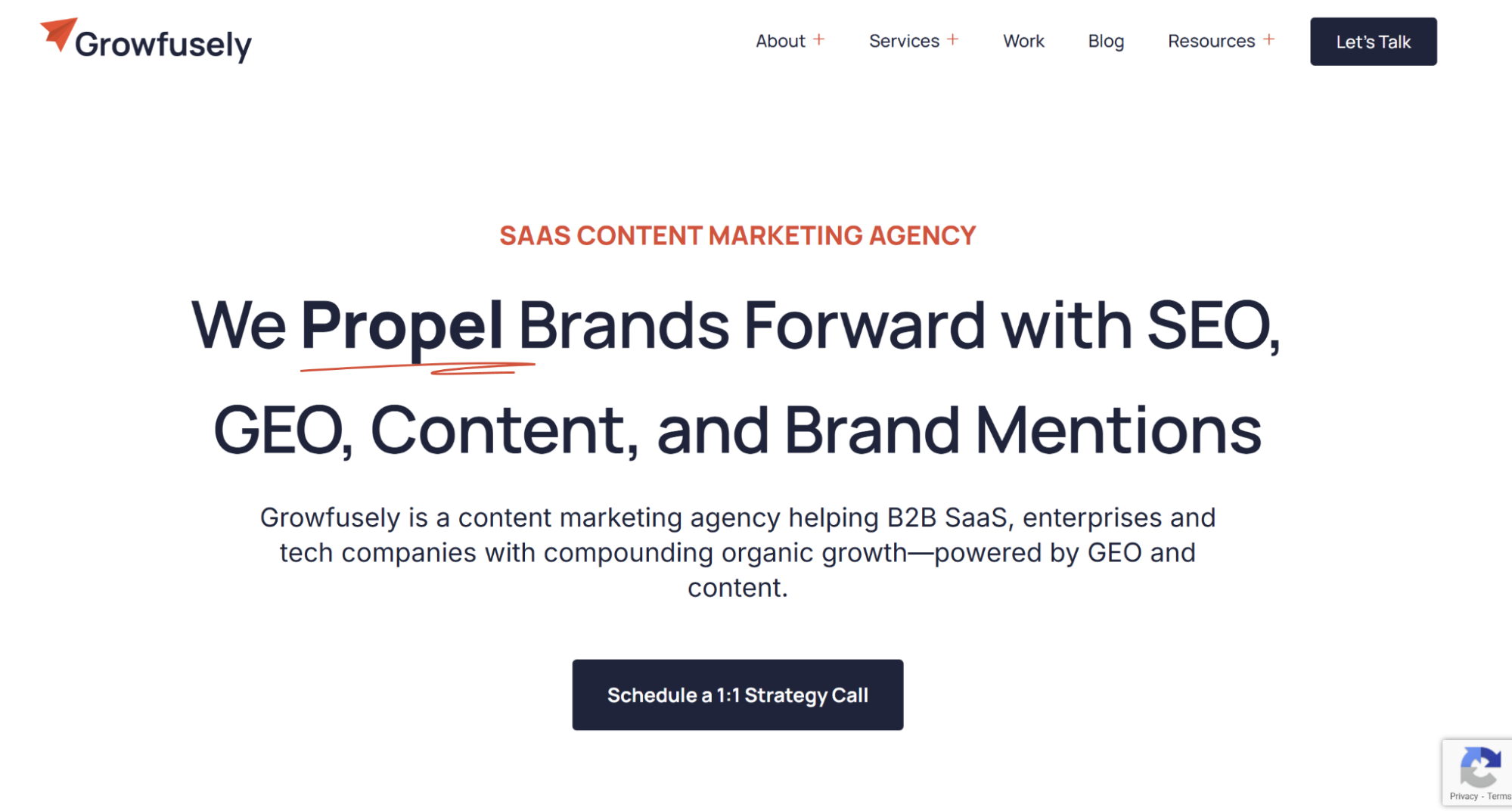
1. Growfusely
Growfusely is a specialist in SEO for financial services, advisors, fintech firms, and institutions. We combine deep knowledge of financial search behavior with practical optimization tactics that drive qualified organic traffic.
Our approach starts with audience and intent research tailored to financial decision stages, then we build a content and technical SEO roadmap designed to meet those needs. Growfusely also focuses on advanced areas like generative engine optimization (GEO) and AI SEO, helping clients appear in both traditional search results and AI-driven summaries, which is increasingly important in highly researched categories like wealth management and retirement planning.
Our services span keyword strategy, on‑page SEO, technical audits, content creation, and performance tracking, all structured to support compliance and long‑term lead generation without risking regulatory issues.
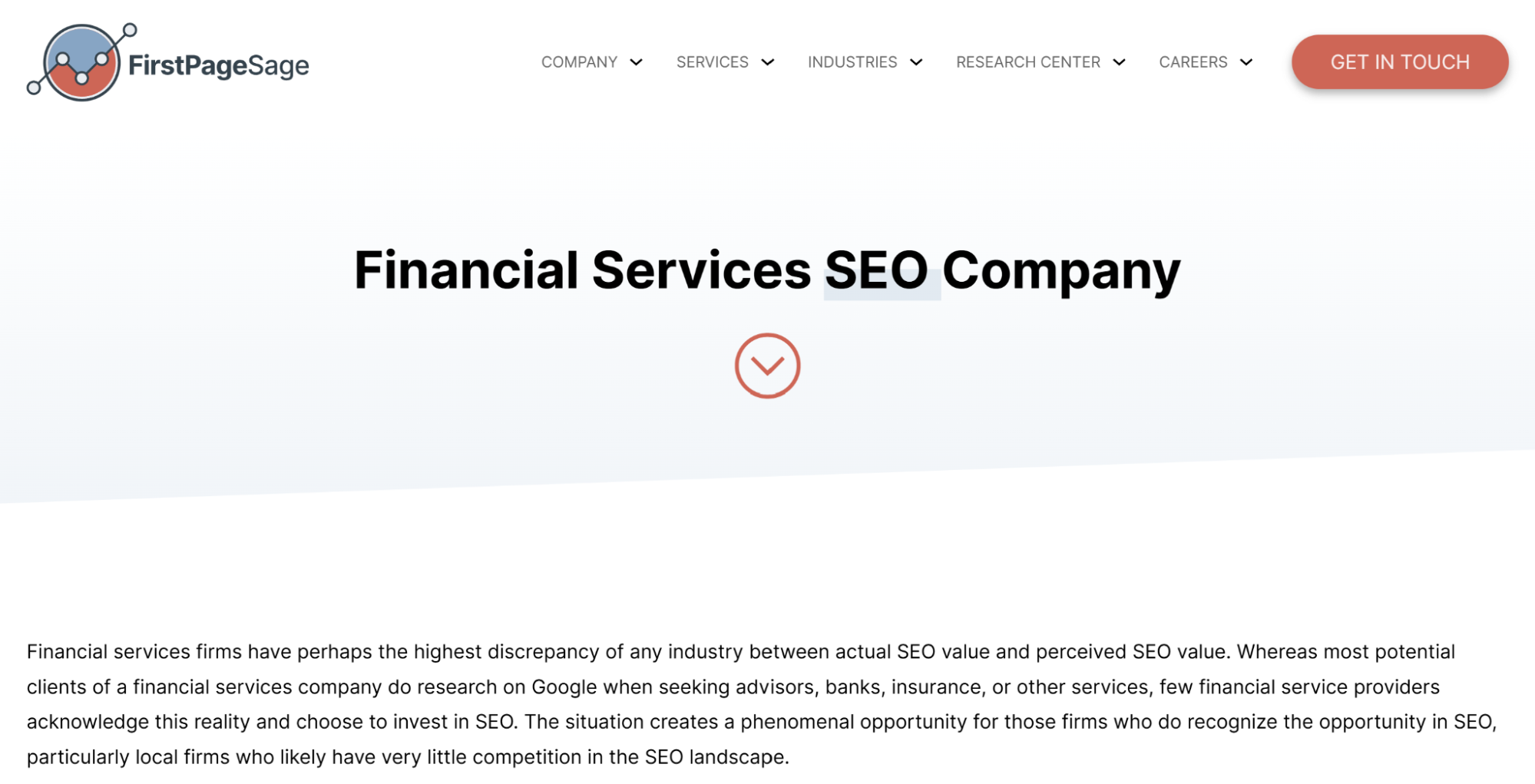
First Page Sage is regarded as one of the top SEO providers for financial services and fintech brands in the U.S. It focuses on authority building and thought leadership content that helps firms rank for competitive financial terms and appear in emerging AI and generative search formats.
The agency works with diverse clients, including banks, investment firms, and credit platforms, aiming to turn search visibility into sustainable lead pipelines. Its strategy includes deep keyword research, content planning, and ongoing optimization to maintain relevance as search behavior evolves.
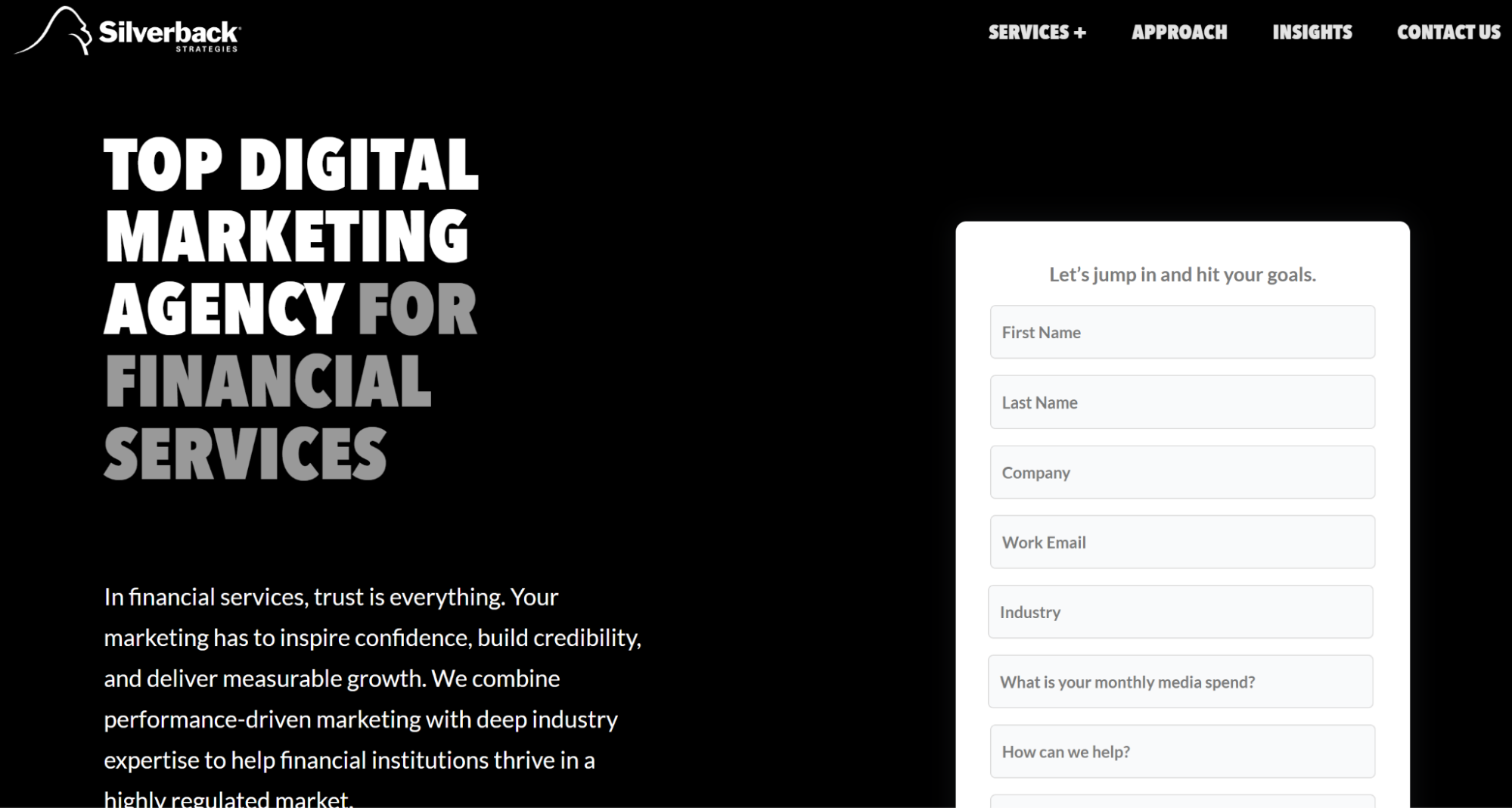
3. Silverback Strategies
Silverback Strategies brings performance marketing and SEO expertise to regulated industries like finance and banking. The agency pairs technical SEO with data‑driven content strategies to improve visibility, increase traffic quality, and lower acquisition costs for financial firms.
Silverback uses advanced analytics, competitive insights, and custom reporting to help clients understand how SEO impacts business results, not just rankings. Their focus is on aligning campaign goals with measurable outcomes, making them a good fit for institutions that need both compliance and performance in their SEO efforts.
4. Searchbloom
Searchbloom is an SEO agency that serves financial organizations, including wealth managers, credit unions, and advisory firms. The agency takes a methodology‑driven approach to SEO and combines search optimization with conversion rate and user behaviour analysis to drive meaningful results.
Searchbloom’s campaigns are built on transparency and actionable insight, helping financial services companies connect search visibility with growth outcomes such as increased organic leads and client engagement. They emphasize customized strategies rather than one‑size‑fits‑all tactics, which suits complex finance use cases.
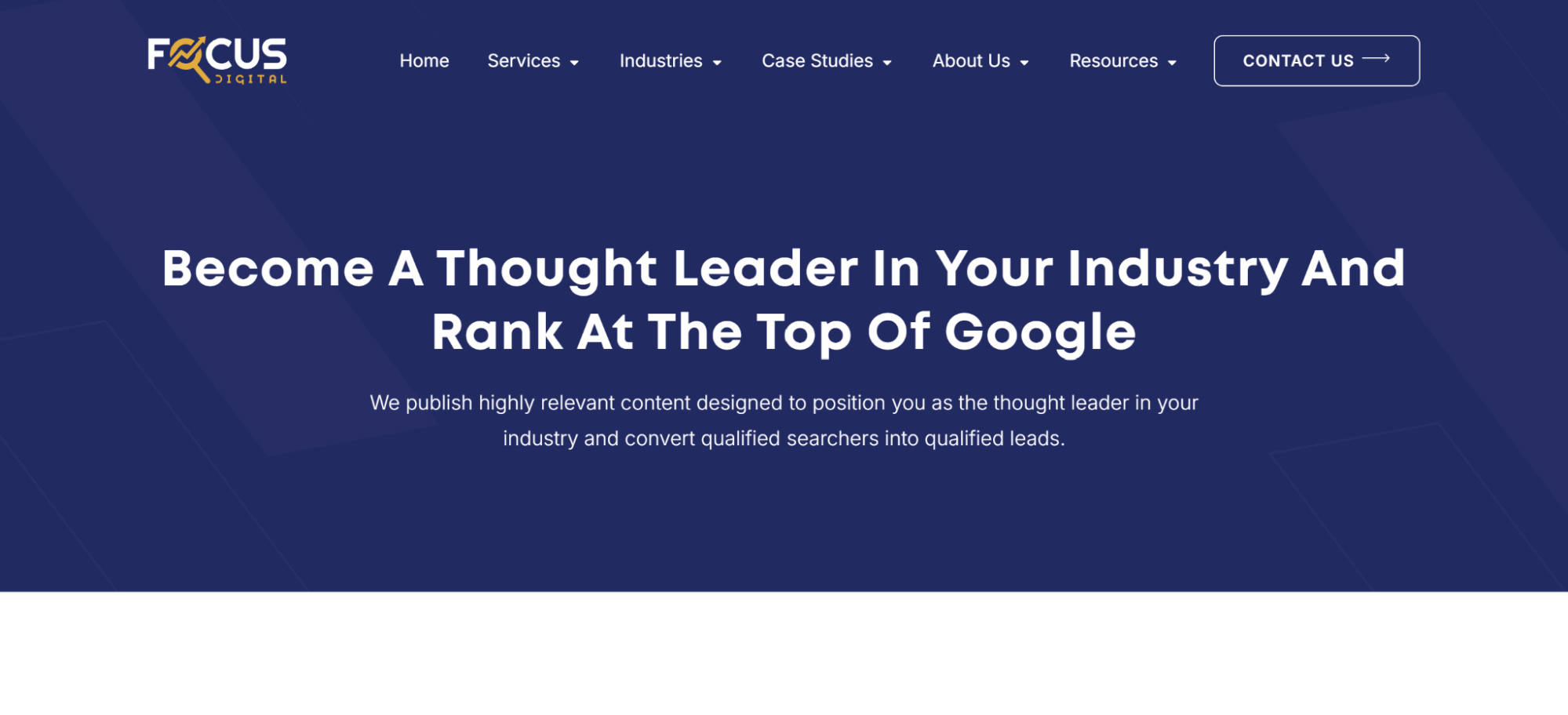
5. Focus Digital
Focus Digital is a boutique digital marketing and SEO firm that works closely with wealth management and retirement planning firms. It blends deep industry knowledge with targeted search tactics that reflect compliance constraints and trust considerations in financial SEO.
The agency’s strength lies in crafting content that resonates with local or niche financial audiences while optimizing for search engines. Its services are often grounded in conversion path thinking, helping clients capture high‑intent local traffic and move visitors toward consultation or contact.
Measuring, Tracking & Iterating
You can’t improve what you don’t measure. Pageviews are nice, but they don’t tell you if your content is working. Start with these essential metrics:
Keyword rankings: Monitor high-intent and branded terms, segmented by location and device.
Organic traffic: Track sessions from search over time, but correlate it with context (e.g. algo updates, B2B content pushes).
Engagement metrics: Bounce rate, time on page, scroll depth, and exit rates help flag content that’s underperforming or overdelivering.
Indexed pages: Keep an eye on what Google is actually indexing via Search Console.
Mid-funnel: “Schedule a call” clicks, calculator usage, resource downloads
Bottom-funnel: Form submissions, booked consultations, completed onboarding
Tag these events properly in Google Analytics (GA4) or HubSpot, and connect them to source/medium so you know what’s working organically. If your blog drives 1,000 views but zero demo requests, it’s time to rethink the CTA, intent match, or placement.
Also, set up a real-time dashboard so you’re not pulling spreadsheets every month. Use a combo of:
Google Search Console (search performance, CTRs, indexing issues)
Google Analytics 4 (organic behavior and conversions)
Ahrefs or Semrush (keyword trends, competitor gaps, backlink analysis)
Looker Studio or Databox to pull it all together
Set up alerts for traffic drops, keyword movement, and crawl errors. Don’t wait for quarterly reviews to catch issues. Let performance shape your content updates and technical audits.
Wrapping Up
SEO strategies for financial services isn’t a short-term play. It’s a compounding growth lever that builds visibility, credibility, and pipeline over time. Done right, SEO becomes your highest-ROI marketing channel.
Ready to grow your rankings and authority with confidence? Looking for the best SEO for financial services? Growfusely helps financial services firms scale organic traffic and conversions with a strategic, no-nonsense approach. Let’s talk.


 About Growfusely
 White LabelMake us your (hidden) helping hand in delivering high-quality work to your SaaS clients.
 TeamCheck out the faces (and their backstories) behind our brand.
 Partner With UsJoin forces with us and earn a recurring monthly commission.
 Careers We're HiringJoin our growing team of passionate content marketing geeks.
 SEO & AI Search VisibilityBoost your search engine rankings with a blend of compelling content and technical tweaks.
 Content Strategy & ProductionFuel your brand awareness and user acquisition with strategic content creation and distribution.
 Authority & CitationsEarn relevant, high-quality backlinks from top websites in and around your niche.
 SaaS InfographicsLearn battle-tested best practices on all things SaaS marketing — visually.
 SaaS InterviewsRead our tête-à-têtes with SaaS marketing experts on achieving content-driven organic growth.