In 2015, Bhavin Turakhia and Ramki Gaddipati started Zeta to build banking differently. Not just faster, but in a way that could actually keep up with how the world was changing.
Today, Zeta powers millions of cards, loans, deposits, and digital banking experiences around the world. The platform runs on a cloud-native, fully API-enabled system, covering everything from issuing cards to managing fraud and loyalty programs.
Behind it is a team of 1,700 people, mostly technologists, spread across the US, Asia, and the Middle East, one of the biggest, most capable teams in banking tech.
Zeta’s story isn’t just about technology. It’s about asking questions, solving problems, and building something that can grow and adapt as the world does. It started with two people wondering if banking could work differently, and it’s still moving in that direction.
What Is Zeta?
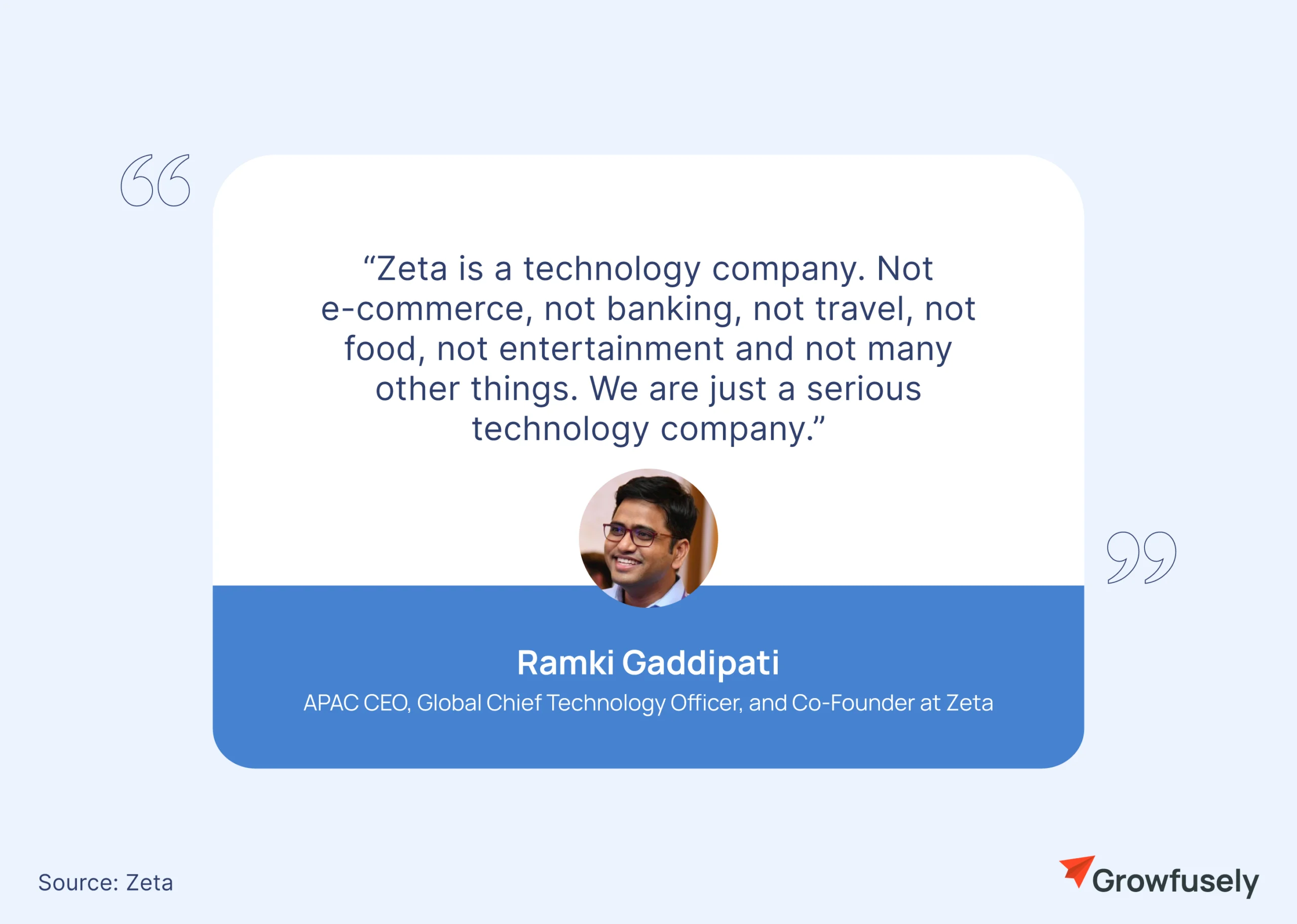
At its core, Zeta is a banking technology company. It builds the systems that banks and financial institutions use to run their products, like cards, loans, deposits, digital apps, and more. Instead of banks having to build all of this from scratch, they can use Zeta’s platform to get operations up and running faster.
The platform is cloud-based and fully API-driven, which means it can connect with other systems easily and grow as banks need it to. It handles everything from issuing and processing cards to managing loans, deposits, loyalty programs, and even fraud checks.
This makes things simpler for the banking sector. They can launch new products without reinventing the wheel. They can scale up without worrying about whether their systems can handle the load. And they don’t have to compromise on rules or compliance because Zeta is built to meet those standards.
Here are some ways Zeta makes a difference for its clients:
Speed: New cards, loans, and deposit products can go live faster.
Coverage: Banks can manage almost everything from one platform, instead of piecing together multiple systems.
Flexibility: APIs let banks tweak or customize products to fit what their customers need.
Scale: The system can handle a few thousand cards or millions without breaking a sweat.
So far, banks using Zeta have issued over 25 million cards. And behind the platform is a team of 1,700 people, mostly engineers, working across the US, Asia, and the Middle East. For banks, this means a strong team and a system built to keep up with real-world needs.
As such, Zeta is all about making banking work better, faster, and more reliably without adding to the stress.
Why Call It “Zeta”?
If you’re wondering why the company is called Zeta, here’s the honest answer: we don’t really know. The founders haven’t publicly shared what inspired the name.
The closest fact we can point to is that “Zeta” is the sixth letter of the Greek alphabet, a simple, strong symbol with broad usage in math, science, and language. Beyond that, any explanation would be speculation.
What we do know is that the name fits the company: short, memorable, and flexible; much like the platform itself. It doesn’t tie the company to a particular product or market.
Regardless of the reason behind it, it’s become a name people associate with modern banking technology, powering millions of transactions around the world.
Zeta grew from the long careers and intense conversations between two people who had spent years in tech and, at some point, just decided to tackle a core problem they both saw in financial services.
Bhavin Turakhia: The Builder Who Keeps Building
Bhavin Turakhia was already a well‑known name in the tech world before Zeta. He started coding as a kid in Mumbai and went on to launch his first tech company in his late teens. Over the years, he built and exited a series of successful ventures, from domain and hosting services to communication tools and email products. Later, he turned his attention to banking technology.
As you can see, Bhavin had witnessed the growth of tech, how that led to cloud migrations, and the changes in the way industries operated. But when he looked at banking tech, he saw something stuck in the past: outdated systems, slow upgrades, complex vendor chains. He didn’t think that made sense anymore and so he decided to change that.
Ramki Gaddipati: The Engineer with a Problem to Solve
Ramki Gaddipati wasn’t new to this world either. He had a long history of building big engineering systems and had worked with Bhavin on other projects before. Where Bhavin brought the broad vision, Ramki brought a deep engineering perspective.
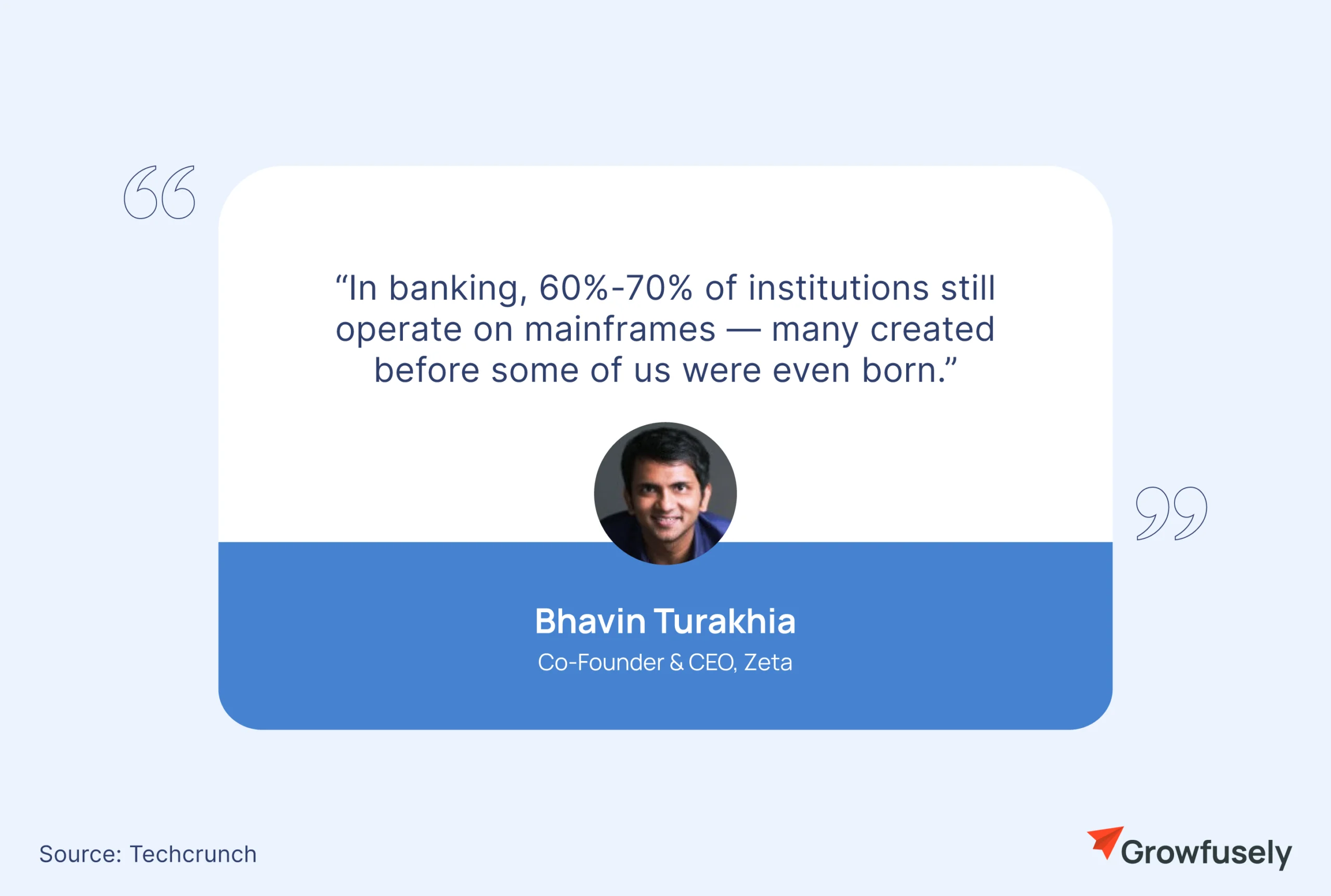
Together, they started to talk about the pain points banks faced: old mainframe systems that couldn’t evolve quickly, fragmented vendors, and processes that slowed everything down. Their conversations laid the groundwork for something bigger.
They didn’t want to create another fintech that could be run from outdated systems. They wanted a platform from the ground up that was cloud‑native, API‑first, flexible. Together, they decided to create a solution that would let banks launch products without grappling with decades‑old tech.
2015: The First Steps
In 2015, this idea turned into reality. Bhavin and Ramki launched Zeta with a simple mission: build a modern stack for banking technology that could scale, integrate, and evolve.
Early work included tools for employee benefits and digital payments, but the founders quickly realized they were building something much broader: a full platform that could power cards, loans, deposits, and more.
From there, they started signing partnerships, getting early customers, and then slowly nudging the company into the global stage. Big milestones like strategic investments and platform launches helped, but the core was always the same: build technology that works the way modern services should.
What Inspired Them and Where They See It Going
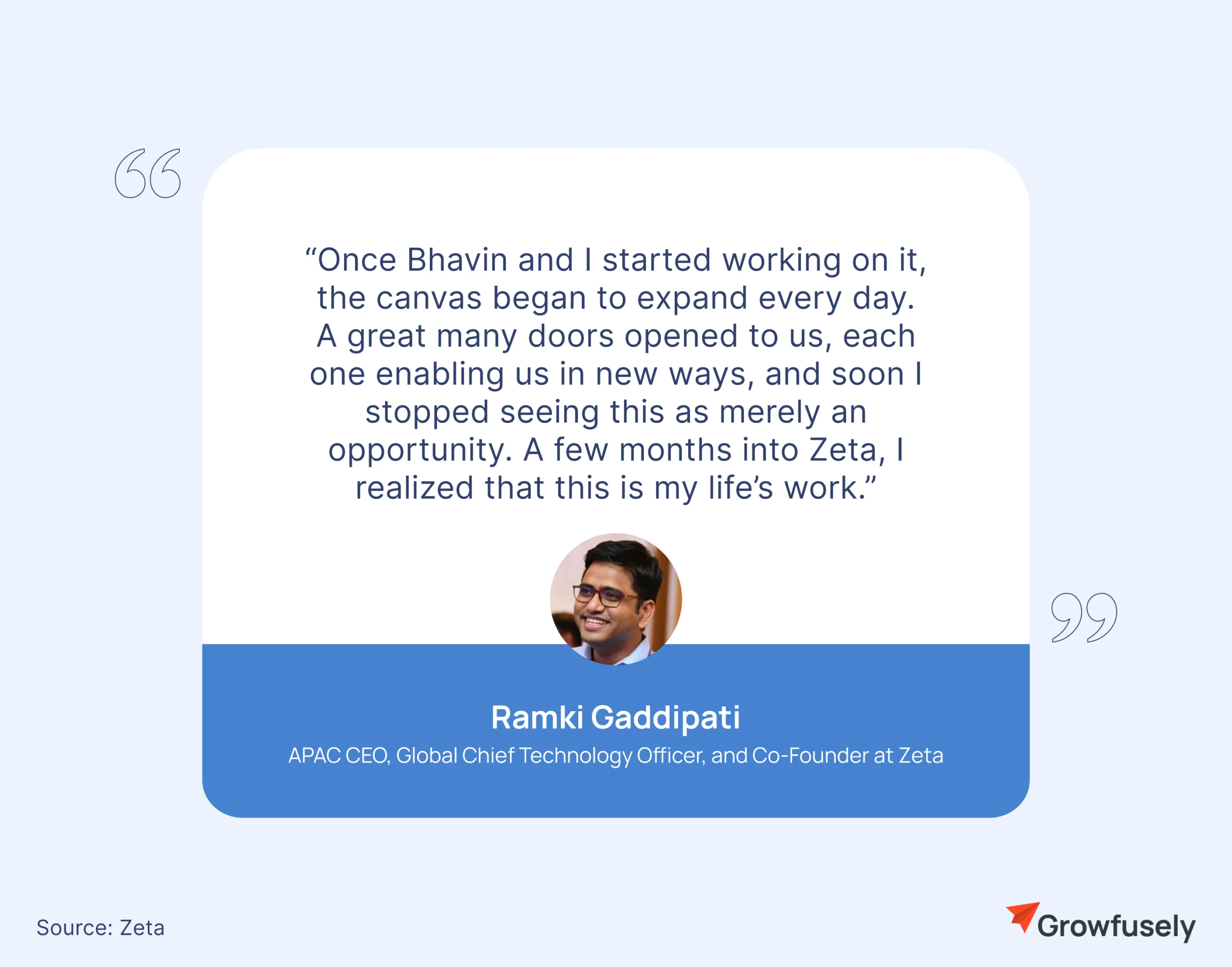
Bhavin and Ramki started Zeta because they saw a giant gap between how modern tech works and how banks’ core systems behaved. They believed that gap would matter more over time; and guess what? It did.
Today, Zeta isn’t just another tech startup. It’s a firm trying to rewire how financial systems think about technology. This vision is still in motion, as they delve deeper into global markets, new products, and broader financial ecosystems.
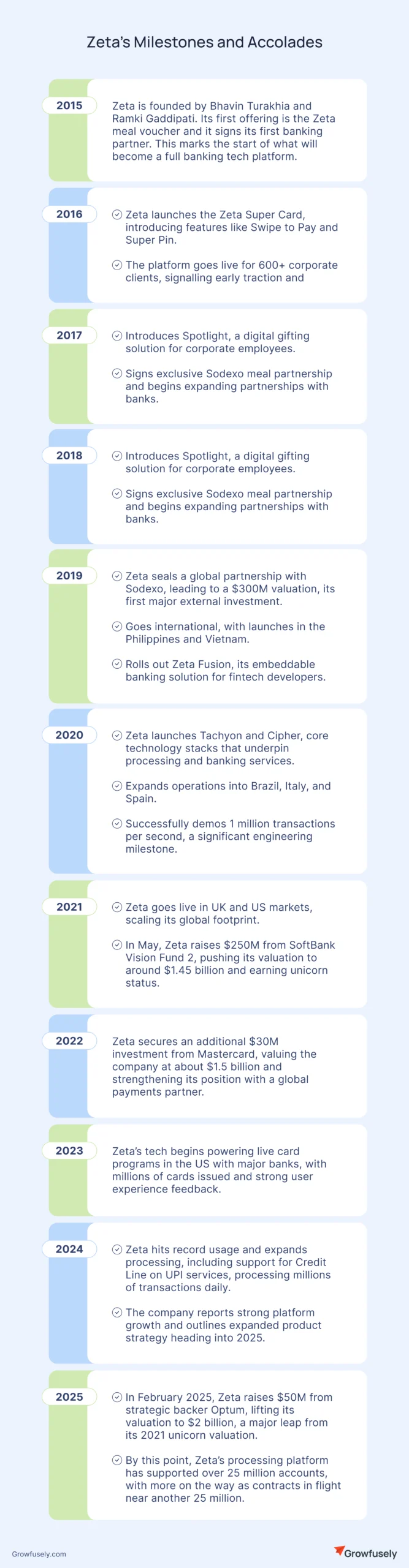
As expected, Zeta has several achievements to its credit that deserve acknowledgement. Let’s take a look at some of its key milestones.
Business Lessons from Zeta’s Journey
1. Solve What Actually Hurts
Before Zeta came along, banks were stuck working with bulky, outdated systems. At this point, Bhavin and Ramki didn’t invent a product to sound cool, but built what the banks needed, even if they weren’t talking about it. That’s why people started paying attention.
2. Think Big from the Start
They didn’t build a system for a few thousand cards. They built it for millions. Planning for that kind of scale early saved them from headaches that crush most startups when they grow too fast.
3. Ideas Aren’t Enough
You can dream all you want, but if your idea doesn’t click, it’s nothing. They rolled up their sleeves and built it, then fixed it, and rebuilt it. The vision mattered because the work made it real.
4. Know When to Lean on Others
Zeta didn’t try to go it alone. They knew it wouldn’t work in the long haul. So, they struck partnerships with banks, Sodexo, Mastercard, and so on. Basically, they opened doors and gave Zeta credibility that a new company just can’t buy.
5. Put the Right People in the Room
They didn’t just hire people; they hired talent who could actually solve the hard problems. Most of their 1,700 employees are technologists. That’s why the platform works the way it does.
6. Keep Moving
The banking landscape is ever-evolving. Zeta started with benefits, moved into cards, loans, deposits, and global banking infrastructure. They didn’t stick to one lane. Being ready to pivot made them survive and thrive when things shifted.
Conclusion
Zeta started because banks were stuck with slow, disorderly systems. Bhavin and Ramki just wanted to make something that worked, and they built it piece by piece. Instead of chasing trends, they focused on the problems people actually faced.
Along the way, they picked the right people, leaned on partners when it made sense, and kept the platform flexible. Today, millions of cards, loans, and deposits move through it without anyone noticing, but it’s there.
What you do notice from their story is simple: what’s broken, put the work in, and keep at it. If you do that, things grow. That’s all there is to it.


 About Growfusely
 White LabelMake us your (hidden) helping hand in delivering high-quality work to your SaaS clients.
 TeamCheck out the faces (and their backstories) behind our brand.
 Partner With UsJoin forces with us and earn a recurring monthly commission.
 Careers We're HiringJoin our growing team of passionate content marketing geeks.
 SEO & AI Search VisibilityBoost your search engine rankings with a blend of compelling content and technical tweaks.
 Content Strategy & ProductionFuel your brand awareness and user acquisition with strategic content creation and distribution.
 Authority & CitationsEarn relevant, high-quality backlinks from top websites in and around your niche.
 SaaS InfographicsLearn battle-tested best practices on all things SaaS marketing — visually.
 SaaS InterviewsRead our tête-à-têtes with SaaS marketing experts on achieving content-driven organic growth.