Search is becoming answer-driven rather than click-driven. To stay visible, brands must ensure they are trusted sources that AI systems are willing to reuse.
And this is just the beginning of the major shift in online discovery that is unfolding right now. If your brand doesn’t show up in ChatGPT, Gemini, Perplexity, and other AI chatbots, and you’re not actively planning on making sure it does, within the next few months, you’ll be left behind by your more savvy competitors.
To prevent this from happening, check out our comprehensive recommendations on the AI visibility topic. Understand how AI search bots select and reuse sources, and learn how to make your brand appear in AI answers more often by following our step-by-step guide.
How AI Search Bots Select and Reuse Sources
AI algorithms try to follow how human brains understand and process information. They read patterns and use deep neural networks to mimic learning to assess which pages and brands demonstrate the clearest signals of trust and relevance.
Core Trust Signals AI Systems Rely On
AI systems have become surprisingly good at imitating the human brain’s habit of evaluating many signals simultaneously. We, humans, observe the world around us in its complexity, comparing and contrasting concepts, ideas, and people.
Similarly, modern AI systems look at the repeated and accumulated trust signals generated by online sources. It’s always about repetition and consistency, and never about isolated mentions, no matter how loud they may be.
That’s how generative engines evaluate trust.
Such accumulated and repeated trust signals typically include:
Consistent topical focus across pages and domains.
Mentions of a brand by independent authoritative sources.
Factual language suitable for reuse and summarization.
Clear alignment between innate positioning and external references.
Structural integrity and stability of information over time.
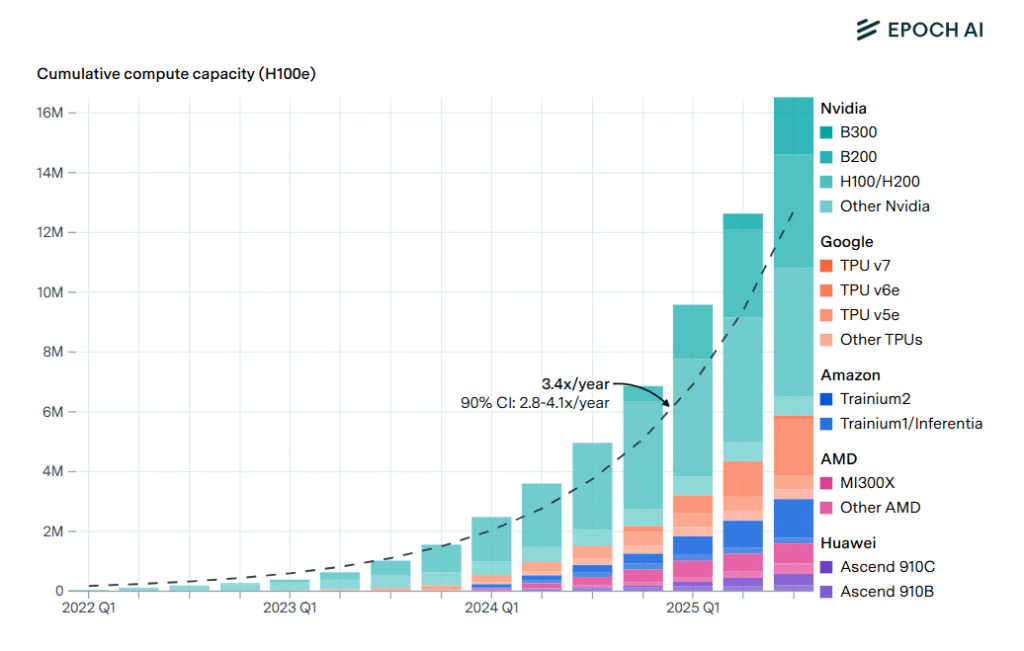
These signals help ChatGPT and other AI search bots decide which content and sources deserve a place in their generated answers. The evolving discipline of answer engine optimization (AEO) is built on this principle. It’s gaining strength as AI chips by the leading manufacturers, like Nvidia, Google, and Amazon, continue to become exponentially more powerful every seven months, or by 3.4x per year:
This growth echoes and is largely driven by the changing consumer behavior and the direction from which websites get their traffic. For instance, one-third of consumers (37%) prefer to search for information online with AI tools instead of traditional search engines. Furthermore, about 69% of websites now receive traffic from AI platforms. AI traffic has grown about 8× in the past year.
Taken together, these trends show that trust signals are no longer optional — they are becoming the foundation of AI visibility.
Content Patterns AI Actively Reuse
Traditional search engines display previews and offer the full content available upon the user’s click. On the other hand, AI looks for content that can be easily validated, synthesized, and extracted into user-friendly summaries.
Content patterns that AI can recognize and reuse in its answers commonly include:
Direct definitions and self-contained explanations.
Laconic headings that match the main body text.
Numbered and bulleted lists that improve readability and emphasize meaning.
Step-by-step explanations with logical progression.
Smart use of the white spaces that add value to the content that surrounds it.
Comparisons that highlight pros and cons.
Just as the human brain prefers simple answers, AI chatbots also try to minimize interpretation effort and look for content that clearly fits recognizable patterns.
As large language models (LLMs) increasingly utilize voice mode to answer user queries, the value of the content that fits a conversational, clear, and easy-to-follow style continues to grow.
Does your content correspond to these patterns and match the voice-first style? If not, let’s jump straight into the next chapter, where you will find practical recommendations on how to make your brand AI-quotable.
How to Make Your Brand AI-Quotable
Making a brand AI-quotable takes more than mentioning its brand name all over the webpage. Embracing AI-driven search and striving for AI citations requires a complete reframing of how content is created, structured, and shared. It’s a step-by-step evolution.
Let’s look at these steps in detail.
1. Create Reusable Content
Persuasion was the king of traditional search optimization, relying heavily on users’ reading comprehension and relatively long attention spans.
Today, AI systems are more likely to reference brands whose content is designed for reuse rather than persuasion.
Reusable content is the one that can be used to answer different adjacent questions and fit several intents. It can be easily compressed and synthesized by chatbots without losing meaning.
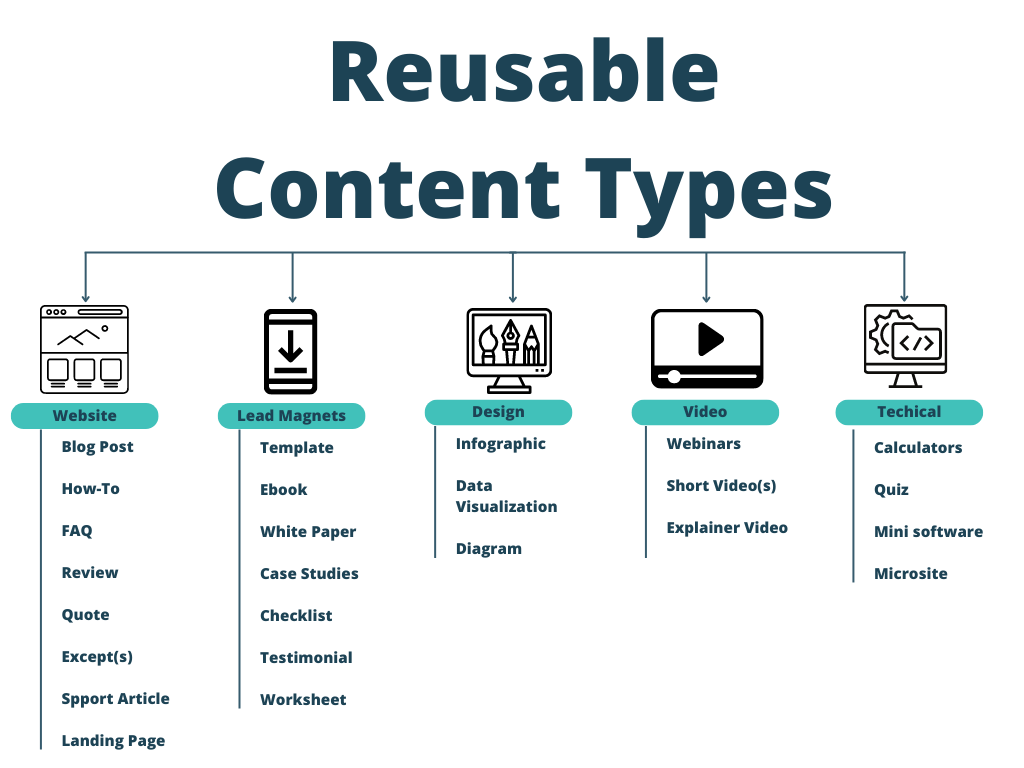
Reusable content starts with a core asset that can be adapted into multiple formats for different channels. Long-form materials like articles, reports, or webinars can be transformed into shorter pieces such as visuals, videos, or social posts. This approach helps extend content lifespan while keeping messaging consistent.
Here are the essential characteristics of the reusable content that works for successful brands in ChatGPT:
One clear intent or question addressed per screen or page.
Self-contained explanations that make sense in isolation.
The main idea or the core principles are reinforced across several pages.
Neutral, factual language without complex/specialized terms.
A smart use of backlinks that connect with authoritative pages on a similar topic.
2. Reinforce Authority beyond Your Website
AI systems evaluate brands based on signals that come from proprietary websites, but even more so, they seek to find brand traces in outside sources. In other words, they look at how many authoritative resources cite your brand name.
However, context matters more than frequency. Positive mentions, such as user comments, feedback, expert reviews, and trusted comparisons, add more value and increase the chances of being cited by AI generative engines.
In particular, AI systems consistently evaluate the following off-site authority signals:
Brand mentions on topically relevant and reputable domains.
Balanced brand mentions across editorial, commercial, and user-generated content.
Consistency of mentions over time, as compared to short-lived and isolated spikes.
Contextual backlinks embedded within educational content.
Backlinks play a crucial role. When you use a new term or product name on your website once, AI systems may look elsewhere to find similar mentions and interpretations on quality resources.
And from an authority perspective, backlinks obtained via premium packages can mirror the signals created by large-scale editorial exposure. Just make sure that when you buy backlinks, you target sources with a domain authority (DA) of 50 and above.
3. Use AI-Friendly Content Formats
Humans like clean structures and a smart use of white spaces that help to keep us focused on the main things.
AI, however, prefers a slightly different content format. It prefers content that can be easily extracted, reused, and summarized without a major loss of meaning. Generative engines are constantly on the lookout for content patterns that enable them to perform these operations.
Such repeatable content patterns that ChatGPT and others prefer include:
Definitions that fit into one sentence format.
Step-by-step guides that are easy to follow.
Lists that help explain a concept, phenomenon, and terms.
Comparisons that clearly differentiate concepts or options.
FAQs that address common user questions.
Dilute your lengthy paragraphs and chapters with small attention grabbers, e.g., exclamation marks, pro tips, key takeaways sections, and emojis. AI systems can take these elements and reuse them in their answers, either intact or with minor modifications.
To assess whether the content and structure of your pages support AI visibility goals, you can run an SEO audit report focusing on several indirect metrics: overall site speed, crawl errors, mobile-friendliness, responsive design, etc.
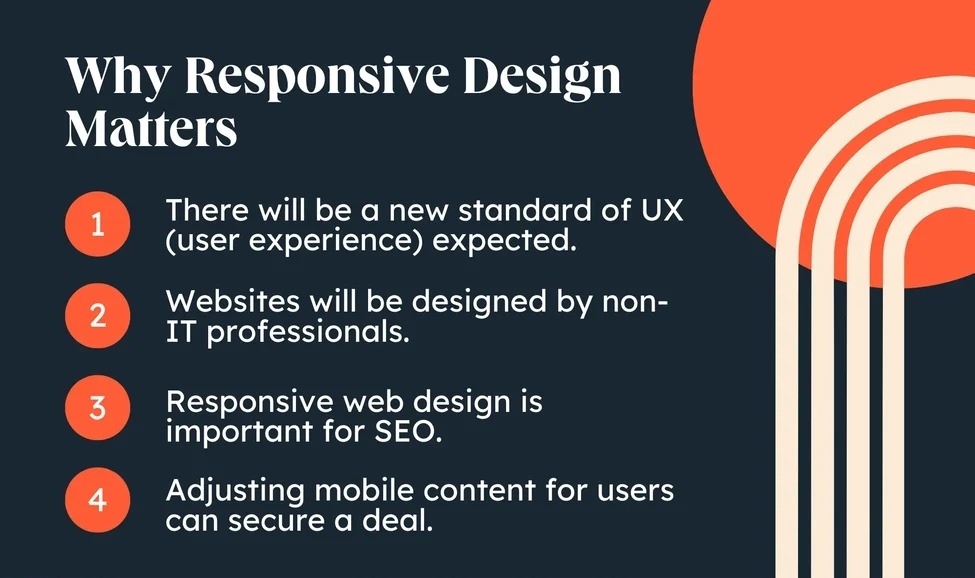
Responsive design plays a key role in this process. Often, it’s the primary factor shaping user perception, influencing engagement and conversion.
Pages that remain useful over an extended period of time draw more AI search bots attention than pages focusing on short-term trends, news, and temporary announcements. Your goal is to create as much evergreen content as possible (not all content can be evergreen).
But how do you decide what to create and maintain over time? Evergreen pages usually share several common traits:
They explain core concepts rather than current news or tactics.
They avoid talking about specific dates and times.
They remain up-to-date largely thanks to the vigilant editorial team.
They discuss strategies and problems that are hard to tackle and, therefore, solve once and for all.
To support these long-term efforts, many teams rely on content marketing tools to support their strategy to manage updates, maintain consistency, and scale evergreen content production.
The stability of your evergreen reference pages becomes a decisive trust signal for AI answer models. Over time, you’ll notice that not just one, but all major LLMs cite your content and provide clear references to your pages.
It’s worth noting here that the stability of your pages plays a major role in this process. Absence of errors, broken links, and a reliance on absolute (not relative) URL structure will help you ensure stability.
5. Apply Digital PR for AI Visibility
Digital PR is often underestimated as a lever for building online visibility.
Part of the problem is its perceived cost, which is noticeably higher than that for organic SEO. However, its results can often outperform SEO and paid ads, effectively reinforcing your brand positioning and expertise.
Here are examples of digital PR activities that you can do today to build your brand’s AI visibility:
Publish original data, surveys, or insights others can reference.
Run webinars, expert roundups, and live streams to build authority and capture audiences’ and AI bots’ attention.
Pitch expert commentary to niche publications.
Secure editorial mentions of your brand in thematic publications.
Team up with opinion leaders to encourage consistent attribution of your brand name.
Additionally, encourage your PR team to engage in brand storytelling through earned media, thought leadership articles, or high-authority backlinks. This will create an authority and popularity vibe around your brand. Further, AI chatbots will pick up those signals when generating their answers.
6. Master Generative Engine Optimization
Data shows that overall AI assistant visits to websites have increased 9.7× in 2025, and this trend is accelerating.
It is estimated that by 2028, AI search traffic could surpass traditional search traffic. Simply put, generative engine optimization (GEO) is the new visibility paradigm that no one can afford to neglect.
Mastering GEO is a gradual process. Here’s a step-by-step approach to get started:
Map your “AI-answer topics”. Ask your team to brainstorm the key questions within the main themes you want your brand to be mentioned in.
Build reference-style pages for those topics. Following the content structure and style recommendations shared above, fill in your website/pages with content that AI can readily reference and reuse.
Strengthen entity signals and consistency. Prioritize adding entity information consistently across your resources (e.g., brand name, product-led content, people, places, and contact information, etc.).
Earn third-party validation in relevant places. Build visibility for your brand externally, i.e., team up with authoritative resources and opinion leaders to earn backlinks and references, enabling AI systems to associate them with your core topics.
Test prompts and monitor AI visibility changes. Track GEO performance over time. See what pages get cited by generative engines and focus on replicating that success across your resources.
Mastering GEO and building your brand visibility in AI will demand certain sacrifices. For instance, refining or stopping your keyword optimization campaigns, or abandoning projects that focus on increasing click-through-rates (CTR) and driving low-value traffic to your website.
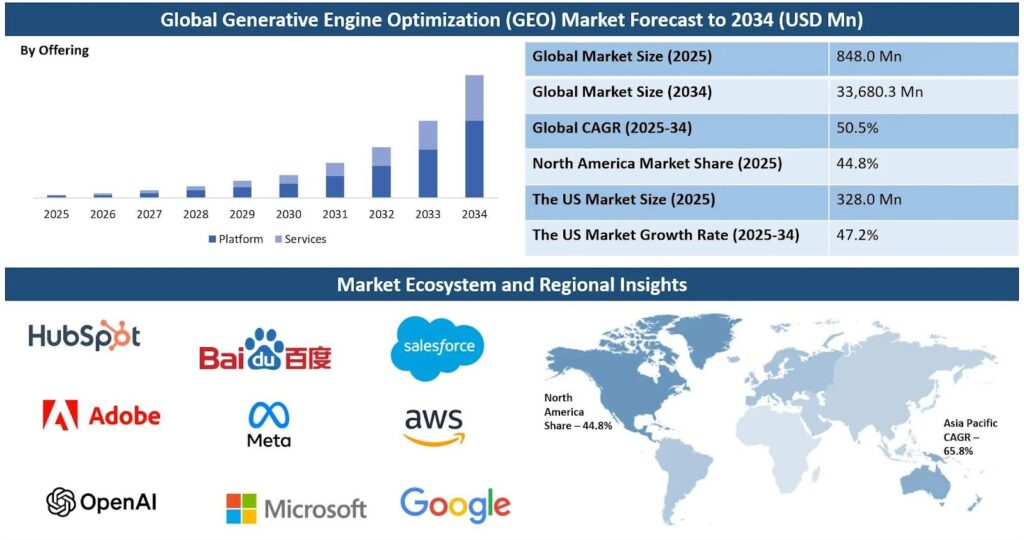
However, the effort will be totally worth it since the global GEO market is projected to grow from 848 million in 2025 to 33,680 million by 2034:
Such projected expansion signals that GEO will soon shift from an emerging practice to a mainstream requirement for online visibility.
Common Mistakes That Block AI Mentions
Oftentimes, good results come not from simply avoiding the wrong moves. Let’s look at the common mistakes that block AI mentions and must be avoided:
Overly promotional or sales-driven language. AI systems are configured to avoid promotional and sales-driven content, which is also a natural human response when we are looking for authentic information.
Generic content without original viewpoints. The web is full of fluffy content, generalizations, and words and expressions that don’t add informational value. Filling your pages with fluff is like heading in the opposite direction from building your brand visibility in AI.
Weak topical focus across the site. ChatGPT looks for topical consistency across multiple pages. That’s how it gauges expertise and authority. Jumping from topic to topic and mixing topics from different domains is the shortest route to AI search bots’ ignorance.
Thin pages lacking depth or structure. A unified topic alone isn’t enough — without depth and original insights, AI algorithms will treat your content as low-value.
Inconsistent brand and expert attribution. Some brands are inconsistent in their digital PR activities, leading to insufficient ChatGPT brand mentions.
The Final Word
The nature of online search is rapidly changing as AI systems gain strength and they begin to share our perception of authority, trust, and expertise. In this reality, for your brand to be quoted by ChatGPT and other AI systems:
Your content must be evergreen and reusable, i.e., easily compressed and synthesized by AI systems without losing meaning.
You must use AI-friendly content formats, i.e., contain lists, step-by-step guides, clear definitions, and comparisons.
Your expertise must be consistently validated across sources, utilizing digital PR and guest posting with contextual backlinks.
Your brand must demonstrate clear authority both on-site and off-site, leveraging internal linking and external brand mentions in authoritative domains.
The emerging discipline that covers all the activities mentioned above is called Generative Engine Optimization (GEO). It’s the first and the must-have tool in your visibility arsenal if you want your brand to be quoted by ChatGPT and other AI search bots.
The key is commitment to a radical transformation, or complete rethinking of your online optimization strategy. Unless you create a new, AI-focused brand visibility architecture, that ChatGPT quotation ambition will be hard to achieve.
Gaurav Belani is a Senior SEO and Content Marketing Analyst at Growfusely, a SaaS content marketing agency specializing in content and data-driven SEO.
Ready for SaaStronomical organic growth?
Let's find out if we're the SaaS content marketing company you’re looking for.


 About Growfusely
 White LabelMake us your (hidden) helping hand in delivering high-quality work to your SaaS clients.
 TeamCheck out the faces (and their backstories) behind our brand.
 Partner With UsJoin forces with us and earn a recurring monthly commission.
 Careers We're HiringJoin our growing team of passionate content marketing geeks.
 SEOBoost your search engine rankings with a blend of compelling content and technical tweaks.
 Content MarketingFuel your brand awareness and user acquisition with strategic content creation and distribution.
 Link BuildingEarn relevant, high-quality backlinks from top websites in and around your niche.
 Content WritingGet consistent, high-quality content that’s loved by users and search engines alike.
 Creative ServicesLeverage our seasoned designers to create custom-branded lead magnets, landing pages, infographics, and more.
 Digital PRSecure strong brand mentions and links on high-authority niche publications.
 SaaS InfographicsLearn battle-tested best practices on all things SaaS marketing — visually.
 SaaS InterviewsRead our tête-à-têtes with SaaS marketing experts on achieving content-driven organic growth.